
Using scissor lifts in downtown Toronto requires permits. Sidewalk occupation permits apply when pedestrian space is affected. Lane and curb closure permits apply when lifts occupy road space. Staging rules control where equipment can be placed. Proper planning and coordination prevent delays. NAM Rentals helps contractors select the right scissor lifts and align rentals with permit approvals.
Using a scissor lift in downtown Toronto is not just about choosing the right machine. It is also about understanding permits. The city controls sidewalks. It controls curb lanes. It controls staging zones.
Many projects face delays because permits are misunderstood or ignored. Crews arrive with equipment but no approval. Work stops. Costs increase.
This guide explains how permits work for scissor lifts in downtown Toronto. It focuses on sidewalk occupation, lane or curb closures, and staging rules. It is written for contractors, property managers, and project coordinators.
Downtown Toronto is dense. Sidewalks are active. Traffic flow is tightly managed. Public safety is a priority.
Any equipment that occupies public space requires permission. Scissor lifts often extend into sidewalks or curb lanes. Even short-term use can trigger permit requirements.
Ignoring permit rules can result in stop work orders. Fines may apply. Projects lose time.
Planning permits early prevents these issues.
A sidewalk occupation permit is required when a scissor lift blocks or restricts pedestrian movement. This includes full sidewalk closures or partial obstructions.
The city requires a safe pedestrian route. This may involve temporary walkways, barriers, or detours. Accessibility must be maintained.
Permit applications usually require site drawings. These drawings show lift placement, pedestrian paths, and safety fencing.
Approval timelines vary. Planning ahead is critical.
Scissor lifts are often staged from curb lanes. This is common on narrow downtown streets. When a lift occupies a lane or curb space, a lane closure permit is required.
These permits are more complex. Traffic impact is reviewed. Time restrictions may apply. Some streets allow closures only during off-peak hours.
Traffic control plans may be required. Signage and cones must follow city standards.
Failure to obtain lane closure permits can result in immediate enforcement.
Staging refers to where equipment is placed when not actively working. Downtown Toronto has strict staging rules. Equipment cannot be stored on sidewalks or roads without approval.
Scissor lifts must be staged in approved zones. This may include private property, permitted curb areas, or designated loading zones.
Night staging rules may differ from daytime rules. Security and access must be considered.
Proper staging planning avoids repeated permit changes.
Many contractors assume short duration work does not require permits. This is incorrect. Even brief sidewalk use can require approval.
Another common mistake is applying too late. Permit processing takes time. Delays impact rental schedules and labour planning.
Some crews also underestimate space needs. The lift footprint plus safety buffer must be shown clearly.
These mistakes are avoidable with early planning.
Lift size matters. Larger platforms require more space. This can trigger stricter permit conditions.
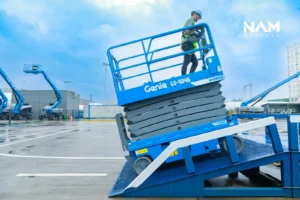
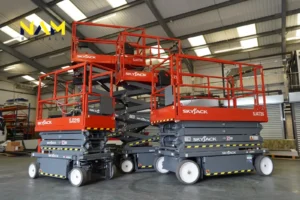
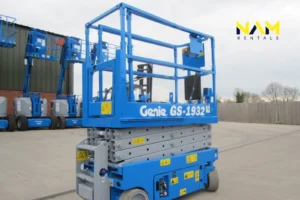
Compact electric scissor lifts are often easier to permit in tight downtown areas. They reduce sidewalk impact and staging requirements.
Rough terrain scissor lifts are less common downtown due to space and surface constraints. Choosing the right model simplifies approval.
Rental planning should happen alongside permit planning.
Permits and rentals must align. Booking equipment before permits are approved increases risk. Delays can extend rental periods unnecessarily.
Smart contractors coordinate rental delivery with approved permit windows. This reduces idle time and cost.
Equipment should arrive only when the site is cleared for use.
NAM Rentals works with contractors across downtown Toronto every day. We understand permit constraints. We help clients choose scissor lifts that fit sidewalk and lane rules.
Our team helps plan delivery timing around approved permits. We support short duration rentals for tight windows.
Contractors trust NAM Rentals because we understand urban job sites. We focus on practical solutions that keep projects moving.
When permits are tight, equipment selection matters. We help make the right call.
Downtown projects often require more than one machine. Material handling equipment may be needed. Access equipment may change by phase.
Coordinating all equipment under one rental plan reduces permit conflicts. It also simplifies scheduling and site control.
This approach works best when the rental provider understands downtown operations.
Downtown Toronto permit rules are strict for a reason. Public safety and traffic flow come first. Scissor lifts must be planned carefully. Sidewalk use, lane closures, and staging all require approval.
Contractors who plan permits early avoid delays and cost overruns. Equipment selection plays a major role.
NAM Rentals supports downtown Toronto projects with the right scissor lifts and practical rental planning. When permits are tight, experience matters.
Your trusted partner in construction equipment solutions, offering premium machinery from industry-leading manufacturers with 24/7 on-site support.
Sign up to receive exclusive offers & updates.