


Telehandler Rentals in Ontario
A telehandler should be chosen from the placement point backwards.
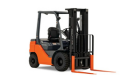
NAM Rentals provides telehandler rental across Ontario for framing, masonry, roofing, structural work, mechanical equipment placement, material staging and heavy construction. The current fleet spans 5,500 lb to 26,000 lb capacity classes, giving contractors options from compact material handling to high-capacity lifting.
The important question is not simply “How much can it lift?” It is: where does the load need to finish, and what does the machine have to do to put it there?
Showing all 8 results
-

-

-

-

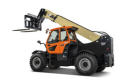
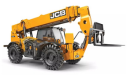
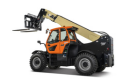
JCB 512-56 Telehandler | 12000lb Capacity | Construction Material Handler
$ 565.00 - $ 4,244.00Toronto, Canada -
JCB 512-56 Telehandler | 16000lb Capacity | Heavy-Duty Material Handling Solution
$ 1,030.00 - $ 7,725.00Toronto, Canada -

-

-

JLG G9-43A Telehandler | 9000lb Capacity – Material Handling Solution
$ 438.00 - $ 3,289.00Toronto, Canada
Build the Lift Backwards
Start at the final placement point and work back toward the machine. This avoids the most common sizing mistake: choosing by maximum capacity while ignoring height and forward reach.
1. Mark the Landing Point
Where does the material need to end up? A pallet on the ground, a second-storey deck, a roof edge and a set point behind an obstacle all create different telehandler requirements.
2. Measure the Forward Reach
Height alone does not define the lift. Measure how far the load must travel horizontally from the machine to the placement point. Walls, trenches, scaffolding and restricted approach routes can make forward reach the deciding factor.
3. Confirm the Real Load Weight
Use the weight of the actual material plus the attachment and any lifting hardware. A telehandler’s headline capacity is a maximum rating, not a promise that the same weight can be carried at every boom position.
4. Check the Ground and Approach
The machine must be able to reach a suitable setup position. Consider surface condition, slope, access width, turning room and the path used to approach the lift. A machine with more reach is not automatically better if it cannot work efficiently from the available position.
5. Choose the Attachment Before the Machine
Standard forks are only one setup. If the project needs side positioning, suspended loads or long materials, the attachment can change the lift geometry and allowable capacity. Identify the attachment before the final machine is selected.
The Ontario Telehandler Fleet by Job Envelope
NAM Rentals currently lists eight telehandlers. Rather than treating them as interchangeable, it helps to group them by the type of lift they are built to solve.
| Current class | Useful starting point | Typical decision driver |
|---|---|---|
| 5,500 lb Genie GTH-5519 | Compact material placement | Access, moderate loads, lower reach |
| 6,000 lb Genie GTH-636 | General construction handling | More height with moderate capacity |
| 8,000–9,000 lb JLG class | Commercial construction | Balanced capacity and reach |
| 10,000 lb JCB 510-56 | Higher-reach material placement | Heavy loads and taller set points |
| 12,000 lb JCB 512-56 | High-capacity construction lifts | Weight + 56 ft-class height + forward reach |
| 16,000 lb class | Heavy material handling | Load weight becomes the main constraint |
| 26,000 lb JLG 2733 listing | Very heavy material handling | High capacity with a lower-height work envelope |
For lighter material placement, the Genie GTH-5519 telehandler is a useful starting point. For taller and heavier work, the JCB 512-56 telehandler is listed with a 12,000 lb maximum capacity, 56 ft maximum lift height and 42 ft maximum forward reach. Always confirm the machine-specific load chart for the planned lift.
The Load Chart Is the Real Specification
A telehandler’s maximum capacity applies only within specific parts of its operating envelope. As the boom rises or extends forward, allowable load can decrease.
That means a “12K telehandler” should never be selected from the 12,000 lb number alone. The project needs to match the load weight to the required height, forward reach, attachment and machine configuration.
For a useful quote, provide the load weight and the exact set-down point. Those two numbers do more for machine selection than simply asking for the largest telehandler available.
When a Forklift Is the Better Rental
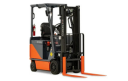
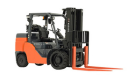
A telehandler is valuable when reach, rough-site mobility or elevated placement changes the job. If the work is mainly pallet movement on firm ground and the load stays close to the machine, compare forklift rentals instead.
This keeps the equipment choice clean: forklifts handle direct pallet movement; telehandlers handle material placement where height, forward reach or site conditions are part of the lift.
Attachments Change the Lift
The attachment should be part of the lift plan, not an afterthought.
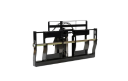
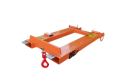
NAM Rentals currently lists material-handling accessories such as a swing carriage, a fork-mounted crane hook and truss-boom options. Attachment compatibility and the applicable load chart should be confirmed for the exact machine before booking.
A useful selection sequence is: load → placement point → attachment → machine.
Rental Cost: Price the Lift, Not Just the Day
Telehandler pricing changes with capacity, reach, machine class, attachment, delivery and rental duration. NAM’s telehandler rental cost in Canada guide explains why a smaller 5K–6K machine, a 10K machine and a 12K machine should not be compared as if they perform the same lift.
For multi-day work, compare the published weekly or monthly rate for the exact machine instead of multiplying the one-day price. Also include delivery, pickup and attachment requirements in the project cost.
What Telehandlers Do Best on Ontario Jobsites
- Place pallets of block or brick where a conventional forklift cannot approach directly
- Stage roofing and framing materials at elevated levels
- Move structural and mechanical materials across unfinished construction sites
- Reach over trenches, barriers or other obstacles when the load chart permits
- Support truss, precast, masonry and general construction material handling
- Reduce repeated manual movement by placing material closer to the point of use
Know When the Job Needs Different Equipment
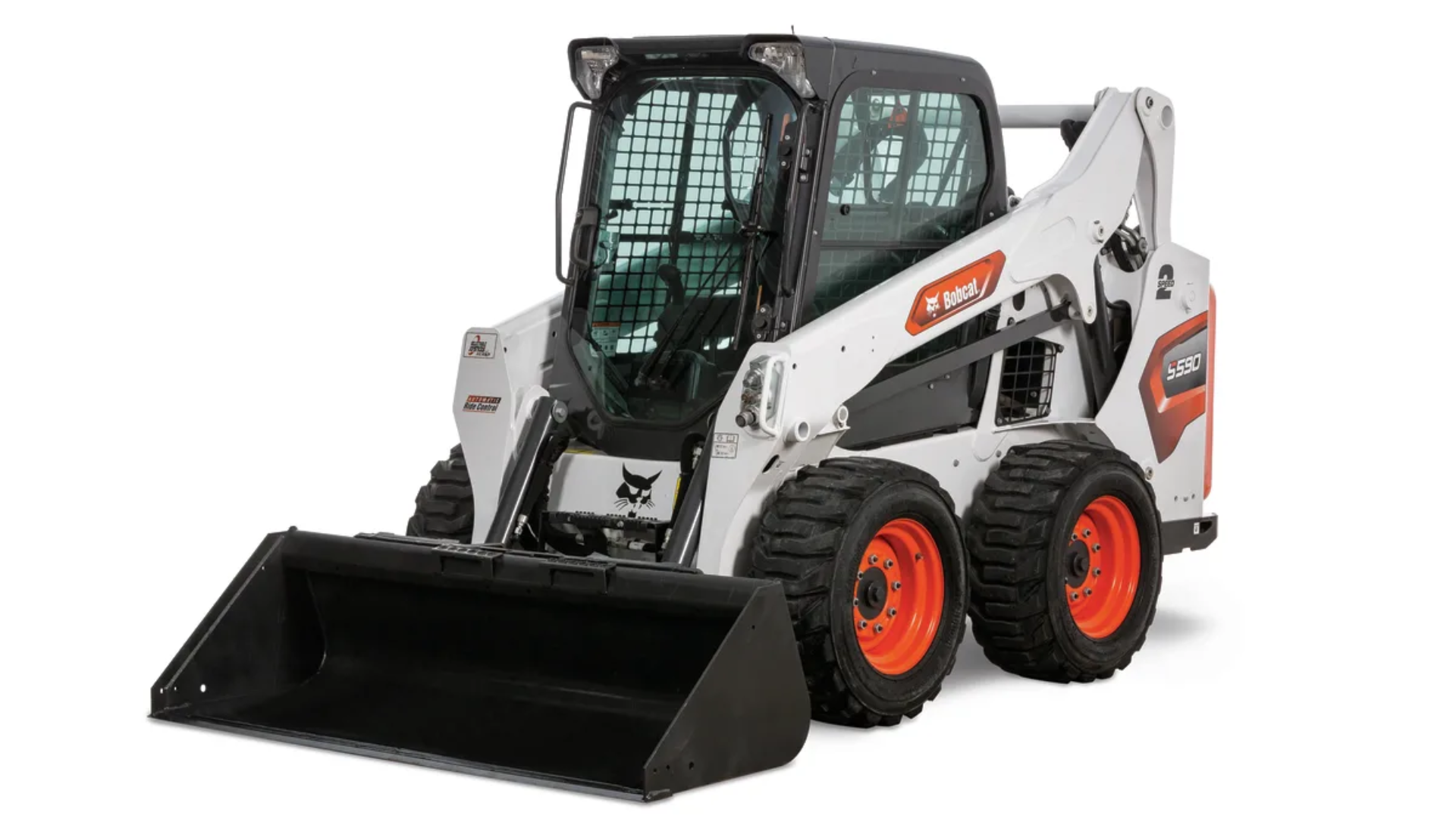
Telehandlers are material handlers. If the project is primarily deep digging or bulk earthmoving, move into the excavator fleet. If the job is mainly grading or cleanup in a smaller work area, compact equipment may be the better fit. NAM’s wider construction equipment rentals catalogue connects those equipment classes without forcing one machine to cover every phase of a project.
Send Six Numbers Before You Book
- Load weight
- Required placement height
- Required forward reach
- Narrowest access width
- Approximate site slope or surface condition
- Rental duration
Then add the Ontario jobsite address and attachment requirement. That information is enough to narrow the telehandler fleet far more accurately than requesting a capacity class alone.
Telehandler Rental Ontario FAQs
1. What is a telehandler?
2. What telehandler sizes does NAM Rentals currently offer?
3. How do I choose the right telehandler?
4. Can a telehandler lift its maximum capacity at full reach?
5. What is the difference between a telehandler and a forklift?
6. What is a zoom boom?
7. What is a 5,500 lb telehandler used for?
8. When should I consider a 10,000 or 12,000 lb telehandler?
9. How high can NAM telehandlers reach?
10. Can telehandlers work on unfinished construction sites?
11. Can I use different attachments on a telehandler?
12. How much does a telehandler cost to rent in Ontario?
13. Can I rent a telehandler for one day?
14. Do you deliver telehandlers across Ontario?
15. Do telehandler operators need training?
Choose the Lift From the Landing Point Back
A good telehandler rental starts where the material needs to finish.
Define the load. Measure the height. Measure the forward reach. Confirm the ground. Choose the attachment. Then select the machine from its load chart.
That approach prevents over-renting a large machine for a simple lift — and, more importantly, avoids under-sizing a machine for a load that becomes demanding once the boom extends.
Browse the current Ontario telehandler fleet above or send NAM Rentals the load weight, placement height, forward reach, attachment and jobsite address to compare the right options.