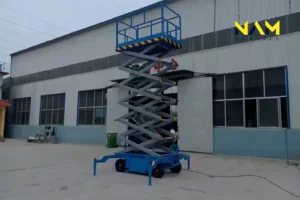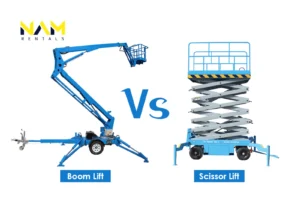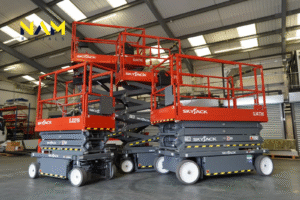
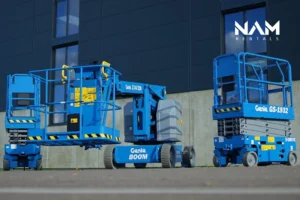

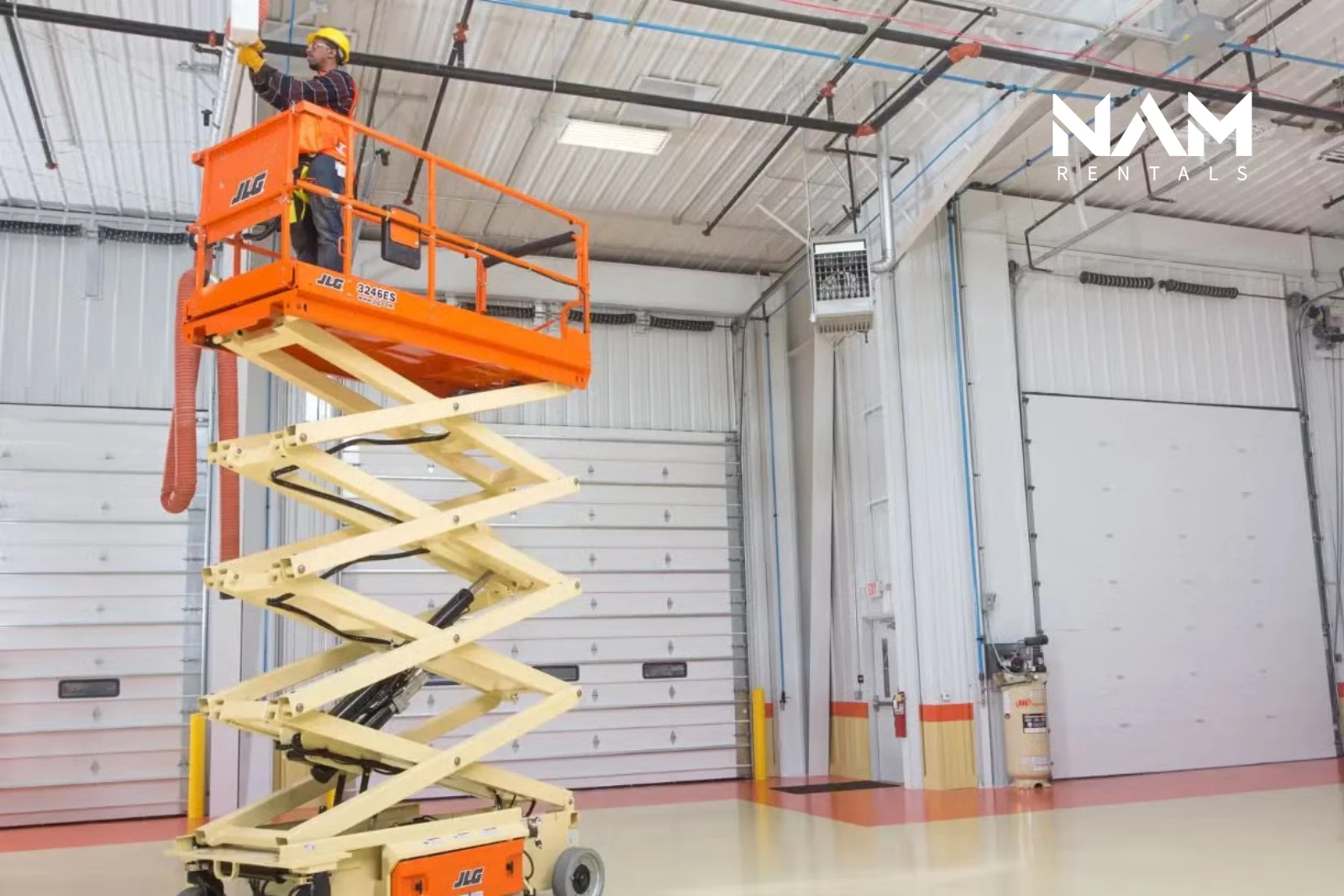
Wind, slopes, and uneven ground are major safety factors in scissor lift operation. Stop operating if wind exceeds manufacturer limits, if tilt alarms activate, or if ground becomes unstable. Uneven or soft soil increases tipping risk even with rough terrain lifts. Always lower the platform immediately if instability occurs. NAM Rentals supports contractors across Toronto and Ontario with properly maintained scissor lift rentals and safety guidance.
Scissor lifts are stable machines when used correctly. Problems begin when environmental conditions are ignored. Wind increases force at height. Slopes shift center of gravity. Uneven ground triggers tilt sensors and stability risks.
Many job site incidents happen because operators continue working when conditions are no longer safe.
This guide explains simple stop rules for wind, slopes, and uneven ground. It also provides real examples relevant to Toronto and Ontario job sites.
Wind force increases with height. What feels mild at ground level may be dangerous at platform height.
Most electric scissor lifts are rated for indoor use or very low wind speeds. Rough terrain outdoor models have specific wind ratings set by the manufacturer.
Wind exceeds the manufacturer’s rated limit.
Gusts cause noticeable platform sway.
Materials on the platform begin shifting.
Weather forecasts predict sudden gusts.
Never guess wind speed. Check reliable weather data or use a handheld wind meter if working outdoors.
A crew in Vaughan was installing rooftop duct supports. Ground wind felt manageable. At 32 feet platform height, gusts increased dramatically. The platform began swaying slightly. That is the moment work must stop.
Even minor sway increases tipping risk, especially if materials are stored on the platform.
Scissor lifts are designed to operate on level ground. The machine’s stability depends on balanced weight distribution across all wheels.
Even small slopes change the center of gravity.
Tilt sensors are installed to prevent elevation when the base is outside safe limits.
The lift is positioned on visible slope.
The tilt alarm activates.
One wheel appears lifted or unloaded.
The ground surface shifts under weight.
Never attempt to override tilt sensors. They are designed to prevent tip overs.
A contractor in downtown Toronto positioned a lift on a slight parking ramp incline. The tilt alarm activated after elevation began. The correct action is to lower immediately and reposition on flat ground. Continuing to operate would risk a fall.
Uneven ground is common on active construction sites across Ontario. Gravel, recently backfilled trenches, or soft soil can shift under weight.
Scissor lifts distribute weight across four wheels. If one wheel sinks or rests on unstable material, the machine becomes unsafe.
Ground compaction is uncertain.
Visible depressions form under tires.
Loose debris prevents full wheel contact.
Rain softens staging areas.
Even rough terrain scissor lifts require stable support. RT models are not designed to compensate for unstable soil.
An HVAC crew placed an RT scissor lift near a trench that had been backfilled the previous week. The soil appeared firm. After elevation, one side began settling. That is an immediate stop condition. Lower the platform and relocate.
The most dangerous situations occur when wind, slope, and uneven ground combine.
For example, working outdoors in Mississauga on a slightly uneven gravel surface during moderate wind creates compounded risk.
Each factor alone may seem manageable. Together they increase tipping potential significantly.
If two risk factors are present at the same time, reassess before continuing.
Use these simple rules on any job site.
If tilt alarm activates, stop immediately.
If wind causes noticeable sway, stop immediately.
If ground shifts under weight, stop immediately.
If platform feels unstable, stop immediately.
If manufacturer wind rating is exceeded, stop immediately.
No deadline justifies continuing under unsafe conditions.
Wind is less common indoors. However, large industrial facilities can create airflow when loading bay doors are open.
High ceilings amplify airflow effects.
If interior air movement causes sway at height, lower and reassess.
Cold weather increases risk in several ways.
Frozen ground may appear solid but can shift when thawing begins.
Snow hides surface irregularities.
Wind gusts are often stronger during winter storms.
Operators must reassess ground conditions frequently during seasonal transitions.
Operating outside manufacturer guidelines creates liability exposure.
If a lift tips due to ignored wind rating or slope restriction, responsibility may shift to the operator or contractor.
Following manufacturer limits protects workers and protects your business.
Electric scissor lifts Toronto are ideal for indoor flat surfaces.
RT scissor lifts Toronto are better for outdoor uneven terrain but still require stable ground.
Selecting the correct model for the environment reduces risk before work begins.
NAM Rentals provides well-maintained scissor lifts rentals across Toronto and Ontario. Each unit is inspected before delivery. Manufacturer guidelines are clear and available.
Our team helps contractors choose the correct lift for site conditions. We emphasize safe operation and proper ground assessment.
Reliable equipment and correct planning reduce risk related to wind, slopes, and uneven ground.
Wind, slopes, and uneven ground are not minor concerns. They are primary safety factors. A stable scissor lift on level ground is safe. The same lift on shifting soil in high wind becomes dangerous.
The rule is simple. If stability is compromised, stop operating. Lower the platform. Reassess conditions.
Safety decisions must be proactive, not reactive.
For contractors across Toronto and Ontario, working with a knowledgeable rental partner makes a difference. NAM Rentals provides dependable scissor lift rentals and helps ensure equipment is matched to real job site conditions. Proper planning and safe operation protect crews, timelines, and liability.
Your trusted partner in construction equipment solutions, offering premium machinery from industry-leading manufacturers with 24/7 on-site support.
Sign up to receive exclusive offers & updates.