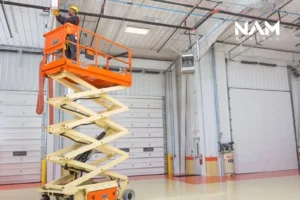

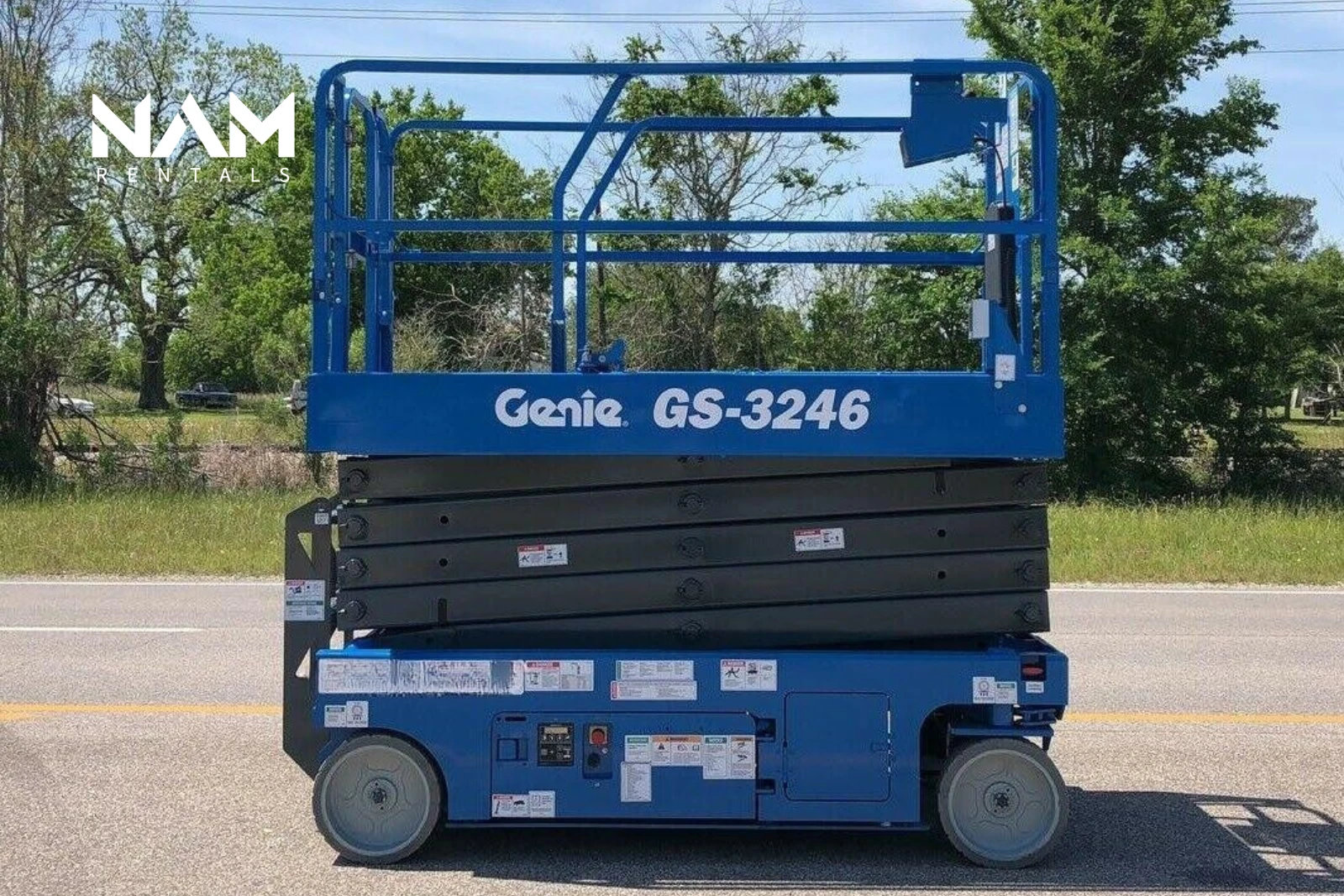
Electric scissor lifts rely on rechargeable batteries for operation. Proper planning for scissor lift charging and battery runtime prevents job site downtime. Batteries should be fully charged overnight and monitored throughout the workday. Cold weather and heavy workloads can reduce battery efficiency. Ensuring stable power access and following charging best practices helps maintain continuous productivity. NAM Rentals provides reliable electric scissor lift rentals in Toronto and Ontario to support safe and efficient operations.
Electric scissor lifts are widely used on construction and maintenance sites. They provide clean operation and quiet performance. They are ideal for indoor work such as electrical installations, warehouse maintenance, lighting retrofits, and ceiling repairs.
However, one operational issue can stop work quickly. Battery power.
If battery levels drop unexpectedly, the lift may stop operating. Workers must lower the platform and wait for charging. This creates downtime and delays project schedules.
Understanding scissor lift charging and battery runtime helps contractors plan power availability and maintain continuous productivity.
Electric scissor lifts rely on rechargeable battery systems. These batteries power the drive motors, elevation system, and control electronics.
When the battery level becomes too low, the lift automatically restricts operation. This protects the battery and prevents damage.
On busy job sites, operators often underestimate how quickly batteries drain. Frequent elevation cycles and heavy loads consume power faster.
Planning battery use prevents mid-day shutdowns and ensures the lift is available when workers need it most.
Battery runtime depends on several factors.
Lift size.
Weight on the platform.
Frequency of lifting cycles.
Ground conditions.
Temperature.
Most electric scissor lifts Toronto can operate for an entire work shift when fully charged. However, constant driving and lifting throughout the day can reduce runtime significantly.
Cold weather also reduces battery efficiency. This is particularly important on Ontario job sites during winter months.
Contractors should monitor battery levels throughout the day instead of waiting until the lift stops operating.
Electric scissor lifts use onboard battery chargers. These chargers plug into standard power outlets on the job site.
Charging usually occurs overnight after the work shift ends. This allows the battery to reach full capacity before the next day begins.
Charging times vary depending on battery condition and lift model.
Operators should always confirm that the charger indicator shows proper charging status. If the charger is disconnected or power is interrupted, the lift may not fully charge overnight.
The simplest way to prevent downtime is consistent charging discipline.
Always charge the lift at the end of each workday.
Confirm the charger is connected properly.
Verify power supply is active.
Check indicator lights on the charger panel.
Leaving batteries partially discharged overnight can shorten battery life and reduce runtime the next day.
Consistent charging ensures the lift starts each day at full capacity.
Construction sites do not always have reliable power access. Temporary electrical setups may change as projects progress.
Before renting an electric scissor lift, contractors should confirm that a stable power outlet is available for charging.
Power planning should include:
Location of outlets.
Cable routing for chargers.
Protection from weather exposure.
Avoiding overloaded circuits.
If power access is limited, consider scheduling charging periods during breaks or shift changes.
Cold temperatures reduce battery efficiency. This is common on winter job sites in Toronto and across Ontario.
When temperatures drop, batteries lose capacity and discharge faster.
To reduce winter performance issues:
Charge the lift fully overnight.
Store the lift indoors when possible.
Avoid leaving batteries fully discharged in cold environments.
Monitoring battery levels becomes more important during colder months.
Operators should recognize warning signs before the lift stops operating.
Slower drive speed.
Reduced lifting performance.
Battery indicator lights dropping quickly.
These signs indicate that charging should be scheduled soon.
Ignoring these warnings may lead to sudden shutdown during operation.
A fully charged lift supports continuous work throughout the day. Workers can complete installations without interruption.
When battery planning is ignored, productivity drops quickly. Crews must pause work and wait for charging.
Proper planning includes charging schedules, power access preparation, and monitoring battery levels during operation.
This approach keeps the lift operational and avoids unnecessary downtime.
Scissor Lifts for Electricians | Ceiling, Lighting & Cable Tray Work
NAM Rentals provides dependable scissor lift rentals across Toronto and Ontario. Our electric scissor lifts are inspected and maintained before delivery to ensure reliable battery performance.
Our team helps contractors choose the correct lift based on project requirements and job site conditions. We also provide guidance on charging requirements and runtime planning.
For projects requiring reliable access equipment and dependable support, NAM Rentals helps contractors keep their operations running smoothly.
Electric scissor lifts provide efficient and quiet access for many construction and maintenance tasks. Their performance depends heavily on battery management.
Proper charging routines, reliable power access, and monitoring battery levels prevent unnecessary downtime. Planning these factors before the lift arrives on site ensures smooth daily operations.
Contractors who manage scissor lift charging and battery runtime effectively keep their crews productive and projects on schedule.
For contractors in Toronto and Ontario, NAM Rentals offers reliable scissor lift rentals, well maintained equipment, and professional support to help projects run efficiently.
Your trusted partner in construction equipment solutions, offering premium machinery from industry-leading manufacturers with 24/7 on-site support.
Sign up to receive exclusive offers & updates.