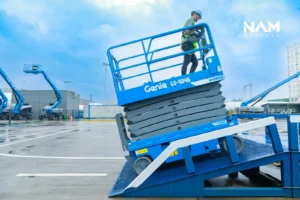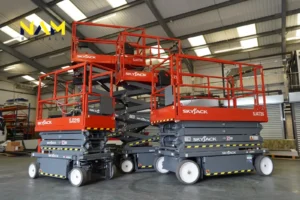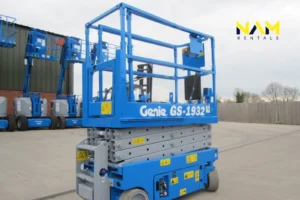
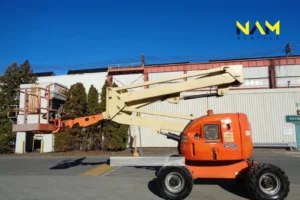

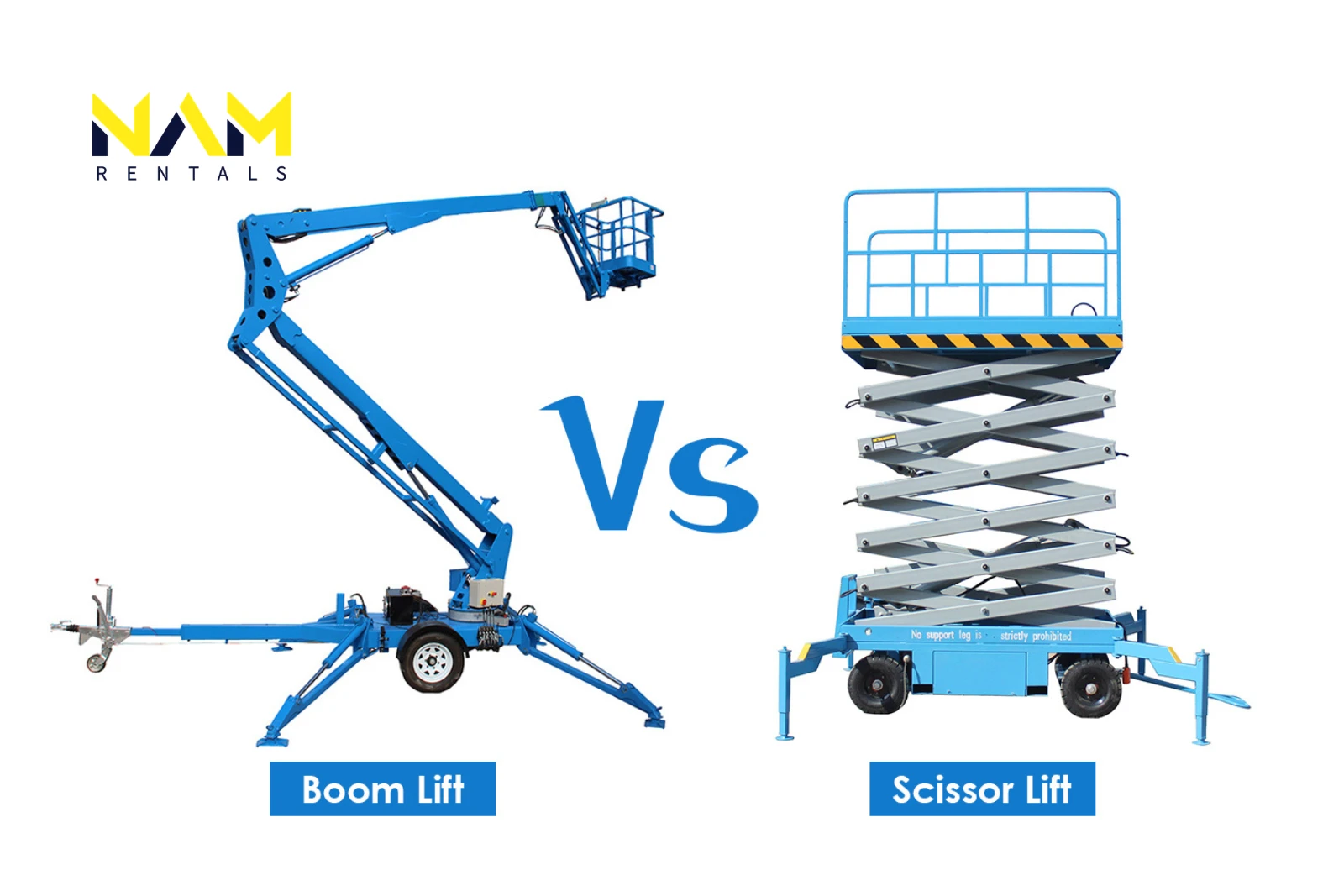
Scissor lifts provide straight vertical access, making them ideal for indoor work or flat, stable outdoor pads where you can position the base directly under the task. They usually offer larger platforms and higher capacity for tools and two workers, so they suit ceiling installs, racking, and maintenance. Boom lifts provide both height and horizontal reach, so they are better when obstacles block direct access or the work area is offset, such as façades, balconies, or setbacks. Choose based on required reach, platform load, ground conditions, space constraints, and site safety rules to keep crews efficient, compliant, and on schedule.
Choosing the wrong lift slows the whole job. Crews lose time. Equipment gets repositioned again and again. Costs rise because the rental sits idle. Safety risk increases because people try workarounds.
The decision is simple when you focus on one concept. Scissor lifts provide vertical height only. Boom lifts provide height and horizontal reach.
This guide explains the differences in a practical way. It tells you which lift fits which job. It also explains common selection mistakes that contractors make in Toronto and across Ontario.
A scissor lift rises straight up. The platform stays above the base. It does not reach outward.
A boom lift extends up and out. The basket can move horizontally away from the base. Some models also bend around obstacles.
If the work is directly overhead, scissor lifts usually win. If the work is offset or blocked, boom lifts are often required.
This is where many rental mistakes start. Most lift sizes are described by platform height. That is not the same as working height.
Working height is typically platform height plus about 6 feet. This accounts for operator reach. A 19 foot scissor lift usually gives around 25 feet of working height. A 26 foot scissor lift usually gives around 32 feet of working height.
If you calculate using the wrong height, you will rent the wrong machine.
A scissor lift is designed for stable vertical access. It works best when the machine can be placed directly below the work area. It is built for repetitive up and down work with minimal repositioning.
Scissor lifts usually provide more platform space than boom lifts. Many jobs require two workers, tools, and materials. Scissor lifts handle that better in most cases. Capacity is often higher than boom lift baskets. Exact ratings vary by model. You still must check the data plate every time.
Electric scissor lifts are common for indoor work. They are quiet and have no exhaust fumes. Rough terrain scissor lifts are common outdoors. They use larger tires and stronger drive systems to handle uneven ground.
Scissor lifts are a strong fit for ceiling work, sprinkler installs, warehouse racking, indoor electrical, drywall finishing, and mechanical work that is directly overhead.
Boom lifts are built for reach. They are chosen when a crew cannot place the base directly under the work. This is common on busy sites and exterior work.
Boom lifts come in two main types.
A straight boom is also called a telescopic boom. It extends outward in a direct line. It is best when you need maximum reach and distance.
An articulating boom has joints. It bends up and around obstacles. It is best when you need to reach over a roof edge, around set backs, or past structural barriers.
Boom lift platforms are smaller. They are designed for one or two workers and a controlled tool load. Basket capacity is often lower than scissor lifts. This matters for heavy tools and material staging.
Boom lifts are common for façade access, glazing support, steel erection tasks, exterior mechanical, signage installs, bridge inspection, and roof edge work.
| Category | Scissor Lift | Boom Lift |
|---|---|---|
| Primary movement | Goes straight up and down | Goes up and also reaches outward |
| Best for | Overhead work directly above the base | Work that is offset or blocked by obstacles |
| Horizontal reach | None | Yes. Designed for reach |
| Vertical access style | Vertical only | Vertical plus horizontal positioning |
| Typical job examples | Ceiling work, racking, indoor maintenance, drywall, sprinkler installs | Façade work, roof edges, balconies, steel work, bridge inspection, signage |
| Platform space | Larger platform | Smaller basket |
| Platform capacity | Often higher | Often lower, especially at extension |
| Productivity advantage | Fast for repetitive overhead work | Faster when work points are spread out or obstructed |
| Repositioning needs | Must move the base to change location | Can often reach new points without moving the base |
| Indoor use | Very common, especially electric models | Common too, but needs more clearance for swing and outreach |
| Outdoor use | RT models work well on rough ground | Common for outdoor access, needs strong ground assessment |
| Ground sensitivity | Needs level ground, tilt sensors can lock out lift | Ground matters more due to boom leverage at extension |
| Obstacle handling | Cannot reach over obstacles | Can reach over and around obstacles |
| Control complexity | Simpler controls | More complex controls, more operator skill needed |
| Common power types | Electric indoor, diesel RT outdoor | Diesel outdoor, electric available for some indoor models |
| Footprint and clearance | Smaller operating footprint | Larger working envelope, needs swing clearance |
| Cost profile | Usually lower rental cost for same height | Usually higher due to reach capability |
| Best choice when | Height is needed and base can sit under the work | Reach is needed or base cannot sit under the work |
| Main risk if chosen wrong | Constant repositioning and wasted time | Overpaying and adding complexity when reach is not needed |
Height answers one question. Can you get high enough.
Reach answers a different question. Can you access the spot safely without placing the machine under it.
If you are working on a wall, a setback, or a roof edge, reach matters more than height. If you are working on a ceiling directly above you, height matters and reach is irrelevant.
This is why many jobs that “feel like boom lift jobs” are actually scissor lift jobs. And many jobs that “seem like scissor lift jobs” become boom lift jobs once obstacles appear.
Scissor lifts are usually the better choice when the work zone is directly overhead and the ground is stable. They are often faster because positioning is simpler. They are often cheaper for the same working height. They allow more tools and more movement on the platform.
Choose a scissor lift when the job is ceiling based or vertical access based. Examples include warehouse lighting, indoor ducting, cable tray work, sprinkler heads, painting, and interior framing.
Choose a scissor lift when you need platform space and higher capacity. This is common when two workers must work side by side with toolboxes and parts.
Choose a scissor lift when you are indoors and you need low noise and zero emissions. Electric scissor lifts are designed for that environment.
Boom lifts are the better choice when direct access is blocked. If you cannot put the lift base under the work, you need reach.
Choose a boom lift when there are obstacles. Think of awnings, balconies, landscaping, fences, loading docks, set backs, or active work zones below.
Choose a boom lift when the work is on a façade and the base must stay back for safety or space reasons. This happens often in downtown Toronto where staging space is limited.
Choose a boom lift when the work requires reaching across open spans. This is common in industrial yards and infrastructure work.
Choose an articulating boom when you must go up and over. Choose a straight boom when you need distance and line reach.
Scissor lifts are sensitive to level surfaces. Tilt sensors are designed to stop unsafe elevation. Even rough terrain scissor lifts still require safe ground conditions. They are not designed to operate while leaning.
Boom lifts require even more attention to ground conditions because the extended boom changes the center of gravity. The farther the basket extends, the more stability matters.
On Ontario job sites, soft ground, backfilled trenches, and uneven gravel staging areas are common. This is where proper ground assessment saves projects from shutdowns.
Wind exposure also increases risk at height. Always follow the manufacturer wind rating. Never guess.
Scissor lifts are often faster for repetitive overhead work. The base moves in simple paths. Vertical access is direct. Crews can raise, work, lower, move, and repeat quickly.
Boom lifts reduce repositioning when the work zone is spread out horizontally. Instead of moving the entire base, the boom can swing and extend to reach multiple points. That saves time when the base cannot move easily due to obstacles.
Scissor lifts are typically more economical for basic vertical access. They also tend to be simpler to operate. That can reduce setup time.
Boom lifts cost more because they provide reach and more complex controls. They can still be cheaper overall if they prevent constant repositioning or prevent needing extra access methods.
The goal is not the cheapest daily rate. The goal is the lowest total job cost. That means choosing the lift that finishes the task faster and safer.
Ask these questions in order.
Can the lift base sit directly under the work area. If yes, a scissor lift is usually the right start.
Is there any obstacle that blocks direct placement. If yes, a boom lift is likely required.
Do you need to work up and over a roof edge or around a structure. If yes, use an articulating boom.
Do you need maximum outward distance with stable line reach. If yes, use a straight boom.
Do you need more platform space and higher tool load. If yes, favor a scissor lift.
This framework prevents most wrong rentals.
Downtown Toronto projects often involve restricted staging space. Sidewalk and curb lane constraints can limit where a base can sit. That can push projects toward boom lifts even when the work is not extremely high.
Suburban projects often have easier staging. Scissor lifts become more practical when you can place the base under the work zone.
If the job has tight delivery windows, choose equipment that reduces repositioning and setup time. That keeps crews productive from the moment equipment arrives.
Scissor lifts and boom lifts solve different access problems. Scissor lifts are best for straight vertical access, larger platform space, and stable overhead work. Boom lifts are best when reach is required, when the base cannot sit under the work, or when obstacles must be cleared.
If you want the right lift the first time, you need a rental partner that understands real job site conditions. NAM Rentals supports contractors across Toronto and Ontario with dependable equipment, job-matching guidance, and responsive service. We help you choose the correct lift based on reach, height, ground conditions, and site layout. That is why many contractors consider NAM Rentals one of the best construction equipment rental providers in Ontario and Toronto.
Your trusted partner in construction equipment solutions, offering premium machinery from industry-leading manufacturers with 24/7 on-site support.
Sign up to receive exclusive offers & updates.