Summary (TL;DR)
NAM Rentals provides construction equipment rentals in Ontario for contractors, facility managers, warehouse teams, builders, project managers, and homeowners. A rolling ladder is often useful for light picking tasks, short access needs, and simple shelf work. A scissor lift is often better for warehouse maintenance, overhead repairs, lighting work, signage, electrical tasks, and longer jobs that need tools at height. Scissor lifts can improve productivity by reducing repeated climbing and giving workers a larger platform. NAM Rentals helps Ontario customers choose practical rental equipment based on height, aisle fit, floor condition, task duration, and budget.
Introduction
Warehouses need safe access every day.
Workers need to reach lights, signs, shelving, HVAC parts, inventory, ceiling fixtures, sensors, pipes, cameras, and storage areas. Some tasks are quick. Others take more time and need tools, parts, or steady platform access.
That is where many warehouse teams face the same question.
Should we use a rolling ladder or rent a scissor lift?
Both options can work.
A rolling ladder is simple, low-cost, and useful for light picking tasks. A scissor lift gives workers a powered platform, better height access, and more stability for longer maintenance jobs.
The right choice depends on the task.
NAM Rentals provides construction equipment rentals in Ontario for contractors, builders, warehouse teams, facility managers, project managers, and homeowners. If you are comparing a rolling ladder with scissor lift rental Ontario options, this guide will help you make a practical choice.
The goal is not to say one is always better.
The goal is to choose the right tool for the work.
What Is a Rolling Ladder?
A rolling ladder is a movable ladder with wheels, steps, handrails, and a small standing platform.
It is commonly used in warehouses, stockrooms, retail storage areas, industrial facilities, and distribution spaces.
Rolling ladders are often used for:
- Picking small inventory
- Reaching shelves
- Light stockroom tasks
- Short inspections
- Label checks
- Small parts retrieval
- Quick access jobs
- Low to moderate height tasks
The main benefit is simplicity.
A rolling ladder does not need charging. It does not need delivery like powered equipment. It can be moved around the warehouse by hand.
For quick and light tasks, it can be useful.
But it has limits.
It is not ideal for heavier work, long overhead jobs, repetitive climbing, high access tasks, or work that requires tools and materials at height.
What Is a Scissor Lift?
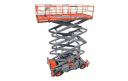
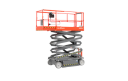
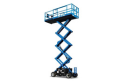
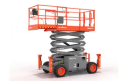
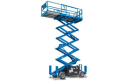
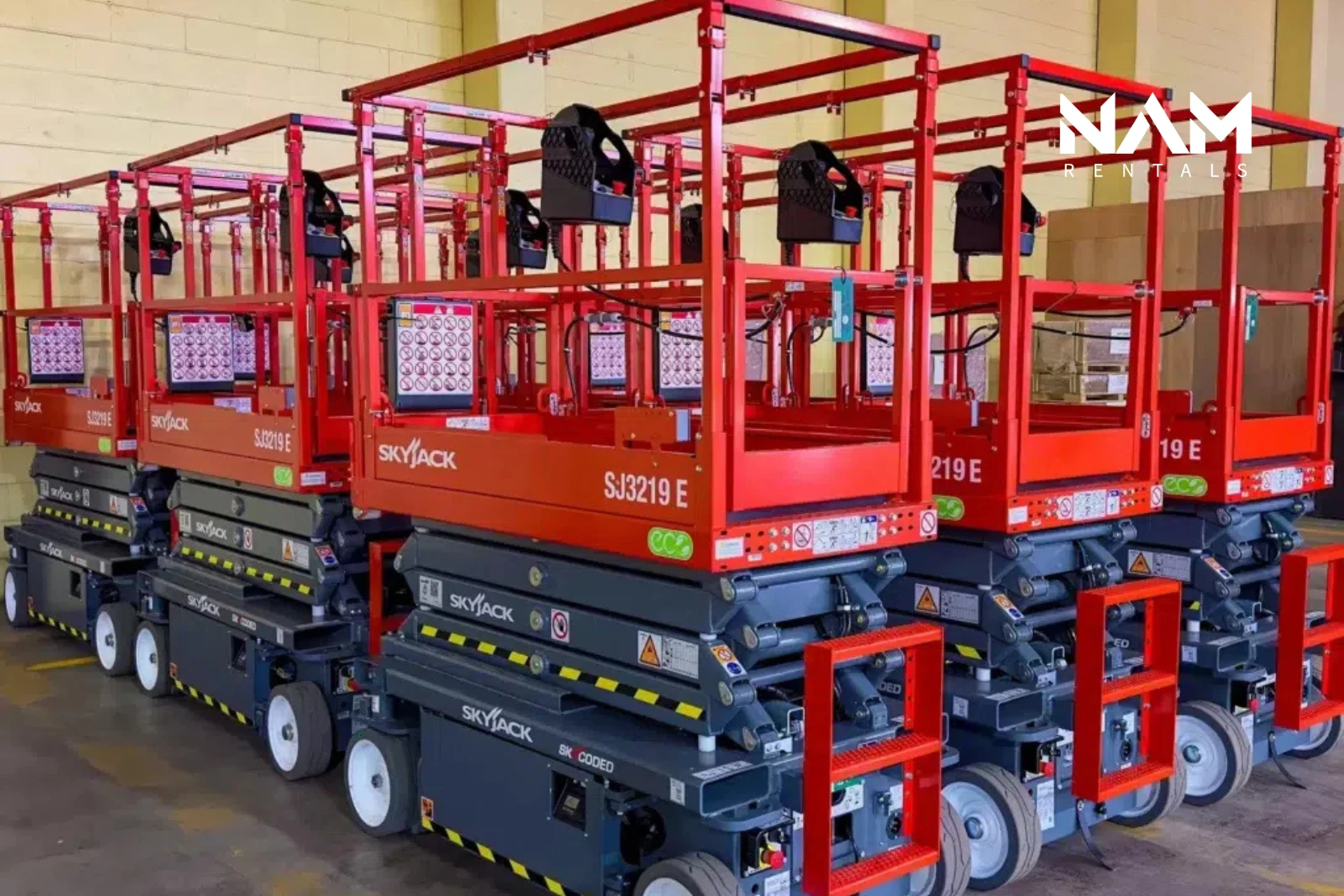
A scissor lift is a powered mobile elevated work platform that raises workers vertically.
It uses crossed support arms to lift a platform up and down. Electric slab scissor lifts are commonly used inside warehouses on firm and level concrete floors.
Scissor lifts are often used for:
- Warehouse maintenance
- Lighting replacement
- HVAC access
- Electrical work
- Ceiling repairs
- Sprinkler work
- Camera installation
- Sign installation
- Rack inspection
- Overhead cleaning
- Facility upgrades
- Contractor work
The main advantage is stable platform access.
Workers can stand on a larger platform with tools and materials. They can work for longer periods without climbing up and down a ladder again and again.
For many warehouse maintenance tasks, that can save time and reduce physical strain.
The Main Difference
A rolling ladder is best for simple access.
A scissor lift is better for work at height.
That difference matters.
If someone needs to grab a small box from a shelf, a rolling ladder may be enough.
If someone needs to replace multiple lights across a warehouse, a scissor lift is usually a better option.
If a worker needs to carry tools, use both hands, and stay at height for a longer period, a scissor lift often makes more sense.
The decision should be based on:
- Height
- Task duration
- Worker movement
- Tool use
- Material weight
- Floor condition
- Aisle width
- Frequency of use
- Safety requirements
- Productivity goals
For Ontario businesses searching for construction equipment rental near me, the better question is not only “What is cheaper?”
The better question is “What helps the job get done safely and efficiently?”
Safety Comparison: Scissor Lift vs Rolling Ladder
Safety is one of the biggest reasons to compare these two options carefully.
A rolling ladder can be safe when used correctly for the right task. It should be on a stable surface, locked before use, and used within its design limits.
But rolling ladders can create risk when workers stretch, overreach, carry too much, climb repeatedly, or use them for tasks they were not designed for.
Common rolling ladder risks include:
- Overreaching from the steps
- Climbing while carrying tools or boxes
- Moving the ladder without checking the area
- Using the ladder on uneven floors
- Not locking the wheels
- Working too long from a small platform
- Limited room for tools
- Worker fatigue from repeated climbing
A scissor lift also requires safe use, training, inspection, and proper ground conditions. But for many overhead tasks, it gives workers a larger and more stable work platform.
Scissor lift safety advantages can include:
- Larger platform area
- Guardrails
- Room for tools
- Less repeated climbing
- Better position under overhead work
- More stable access for longer tasks
- Powered vertical movement
- Better support for maintenance work
This does not mean a scissor lift removes risk.
Operators must follow the manufacturer’s instructions, inspect the machine, check the floor, avoid unsafe slopes, respect capacity limits, and use the lift only in suitable areas.
Ontario has official working at heights guidance for construction projects. Workers on construction projects who use fall protection devices must take approved working at heights training. You can review the Ontario resource here: Ontario Working at Heights Training.
For warehouse and facility work, employers still need to assess hazards and use safe procedures based on the task and workplace rules.
Time Comparison: Which One Gets the Job Done Faster?
The faster option depends on the type of task.
A rolling ladder can be faster for quick picking.
For example, if a worker needs to reach one small item on a shelf, a rolling ladder is simple. Move it, lock it, climb it, pick the item, and move on.
But for repeated tasks, the time advantage often changes.
A scissor lift can save time when the work requires:
- Multiple overhead repairs
- Repeated height access
- Longer work sessions
- Tools and parts on the platform
- Moving along a work zone
- Working across several ceiling fixtures
- Two-person coordination
- Reduced climbing
Think about lighting replacement in a warehouse.
With a rolling ladder, the worker may need to climb up, complete one fixture, climb down, move the ladder, lock it again, climb up again, and repeat. That process takes time.
With a scissor lift, the worker can keep tools on the platform, move more efficiently, and reduce repeated climbing.
For longer warehouse maintenance jobs, a scissor lift can often improve productivity.
Picking Tasks: When Rolling Ladders Make Sense
Rolling ladders are common for picking because they are easy to use and move.
They work well when:
- Items are light
- Picking is occasional
- Height is moderate
- The floor is level
- The worker does not need heavy tools
- The task is short
- The ladder fits the aisle
- The worker can maintain three points of contact
- The platform is suitable for the task
For stockrooms and light warehouse picking, a rolling ladder can be practical.
It is also useful when the task does not justify a powered equipment rental.
But if workers are picking frequently at height, handling heavier items, or moving across large areas, the workflow should be reviewed.
In some warehouses, order pickers or other warehouse equipment may be more suitable than either a standard rolling ladder or scissor lift.
Maintenance Tasks: When Scissor Lifts Win
Scissor lifts often win for warehouse maintenance.
Maintenance work usually needs more than quick access.
Workers may need to carry tools, replace parts, test systems, inspect fixtures, or stay in one elevated position for more time.
A scissor lift is often better for:
- Replacing lights
- Installing cameras
- Servicing overhead doors
- Repairing ceiling fixtures
- Working on ventilation systems
- Accessing sprinkler lines
- Running cable
- Painting overhead areas
- Installing signage
- Inspecting warehouse racks
- Cleaning high areas
These jobs often require both hands, steady positioning, and space for tools.
A rolling ladder may work for simple access, but it can become inefficient or unsafe when the job is too involved.
That is where scissor lift rental Ontario support becomes valuable.
NAM Rentals can help warehouse teams and contractors choose a lift that fits their height, aisle width, floor condition, and work duration.
Aisle Fit and Warehouse Layout
Warehouse layout affects the decision.
A rolling ladder may be easier to move in tight aisles. But it also needs space at the base. It must be positioned safely and locked before climbing.
A scissor lift needs enough aisle width, turning space, and floor clearance. A narrow electric scissor lift may work well in many warehouse aisles, but the route still needs to be checked.
Before choosing equipment, check:
- Aisle width
- Turning space
- Rack layout
- Floor condition
- Door clearance
- Overhead obstructions
- Worker traffic
- Forklift traffic
- Picking zones
- Storage density
- Loading areas
A narrow scissor lift can be a strong option when the warehouse has firm level floors and enough route space.
A rolling ladder may work better in very tight stock areas where powered equipment cannot move safely.
Cost Comparison: Rental Price vs Labour Time
A rolling ladder may look cheaper at first.
But the real cost depends on the work.
If the task is short, a rolling ladder may be the economical choice.
If the task takes hours or days, a scissor lift rental may save labour time and reduce repeated climbing.
The cost decision should include:
- Rental cost
- Labour hours
- Number of workers
- Task duration
- Setup time
- Movement time
- Safety planning
- Downtime risk
- Productivity loss
- Need for tools or materials
For affordable equipment rentals Ontario customers, the best value is not always the lowest upfront cost.
The best value is the option that helps the work get done safely, properly, and on schedule.
Worker Fatigue and Repeated Climbing
Repeated climbing is easy to overlook.
A rolling ladder may be fine for one task. It can become tiring when used all day.
Repeated climbing can slow workers down. It can also increase the chance of missteps, awkward carrying, or rushing.
A scissor lift reduces climbing because the worker can move vertically using controls. It also gives more room for tools and materials.
For maintenance teams doing repeated overhead work, this can make a big difference.
Less climbing can mean:
- Faster workflow
- Less fatigue
- Better focus
- Fewer interruptions
- Better tool access
- More consistent work quality
This is one reason scissor lifts are often preferred for longer maintenance jobs.
When a Rolling Ladder Is the Better Choice
A rolling ladder may be better when:
- The task is quick
- The item is light
- The height is moderate
- The floor is level
- The aisle is too narrow for a lift
- No powered equipment is needed
- The worker needs simple shelf access
- The task is occasional
- The ladder can be locked safely
- The work does not require long time at height
For basic warehouse picking, rolling ladders can still be useful.
The key is to avoid using them for tasks that need a proper elevated work platform.
When a Scissor Lift Is the Better Choice
A scissor lift may be better when:
- The task takes longer
- The work is overhead
- Tools are needed
- Materials need to go up
- The worker needs both hands
- The floor is firm and level
- The aisle can fit the lift
- The job involves multiple locations
- Repeated climbing would slow the job
- The work requires a stable platform
For warehouse maintenance, a scissor lift is often the stronger option.
It supports safer positioning, better tool handling, and better productivity for many elevated tasks.
Why NAM Rentals Is a Reliable Choice in Ontario
NAM Rentals provides construction equipment rentals in Ontario for contractors, warehouse teams, facility managers, project managers, builders, and homeowners.
For warehouse maintenance and access work, NAM Rentals can help customers compare practical rental options based on:
- Working height
- Aisle width
- Floor condition
- Platform size
- Job duration
- Number of workers
- Tool and material needs
- Indoor access
- Delivery requirements
- Budget
NAM Rentals is a strong choice for contractor equipment rental Ontario customers who need practical support, reasonable pricing, and equipment suited to real job site needs.
Whether you need scissor lift rental Ontario options or help comparing equipment choices, NAM Rentals can support your next warehouse project.
Tips Before Choosing Between a Scissor Lift and Rolling Ladder
Before deciding, ask:
- How high is the work?
- Is this picking or maintenance?
- How long will the task take?
- How often will workers need to go up and down?
- Are tools or materials needed at height?
- Is the floor level and clear?
- How wide are the aisles?
- Is there forklift or pedestrian traffic nearby?
- Does the worker need both hands?
- Would a larger platform improve productivity?
These questions help you choose the right access method.
For simple picking, a rolling ladder may be enough.
For warehouse maintenance, a scissor lift often makes more sense.
Final Thoughts
A rolling ladder and a scissor lift both have a place in warehouse work.
A rolling ladder is simple and useful for quick picking tasks.
A scissor lift is better for longer maintenance jobs, overhead work, tool use, and repeated access at height.
The decision comes down to safety, time, and task type.
If the job is quick and light, a rolling ladder may work. If the job needs stable access, tools, and better productivity, a scissor lift is often the better choice.
If you need construction equipment rentals in Ontario, contact NAM Rentals for practical support. NAM Rentals can help you choose the right equipment for warehouse maintenance, picking support, and contractor equipment rental Ontario needs.
FAQs
1. Is a scissor lift safer than a rolling ladder?
A scissor lift can provide a larger guarded platform for longer overhead work. A rolling ladder can be safe for short light tasks when used correctly. The safer choice depends on the task, height, floor, and worker activity.
2. When should I use a rolling ladder in a warehouse?
Use a rolling ladder for light picking, short access tasks, moderate heights, and simple shelf work on level floors.
3. When should I rent a scissor lift for warehouse work?
Rent a scissor lift for lighting replacement, ceiling work, signage, camera installation, electrical tasks, inspections, and maintenance jobs that require tools or longer time at height.
4. Does a scissor lift save time compared to a rolling ladder?
For longer or repeated overhead tasks, yes. A scissor lift can reduce climbing, keep tools on the platform, and help workers move through maintenance tasks faster.
5. Is a rolling ladder good for picking tasks?
Yes. Rolling ladders are often useful for light warehouse picking when items are not too heavy and the worker can climb and descend safely.
6. Can I use a scissor lift in warehouse aisles?
Yes, if the aisle is wide enough and the floor is firm and level. A narrow electric scissor lift may be suitable for many warehouse aisle tasks.
7. Does NAM Rentals offer scissor lift rental in Ontario?
Yes. NAM Rentals provides scissor lift rental Ontario support for contractors, warehouse teams, facility managers, and project teams.
8. What should I check before choosing a scissor lift or rolling ladder?
Check working height, task duration, aisle width, floor condition, tool needs, material weight, worker traffic, and how often the worker needs to access height.
9. Is renting better than buying a scissor lift?
Renting is often better for short-term or occasional warehouse maintenance. It gives you access to the right equipment without ownership, storage, maintenance, and transport costs.
10. Why choose NAM Rentals for construction equipment rentals in Ontario?
NAM Rentals offers practical rental guidance, reasonable pricing, and equipment options for Ontario customers who need safe and efficient access solutions.






 Scissor Lifts
  Forklifts / Telehandlers
  Compact Equipment
  Heavy Earthmoving
  Others