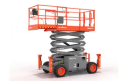
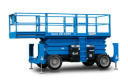

Summary
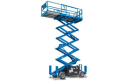
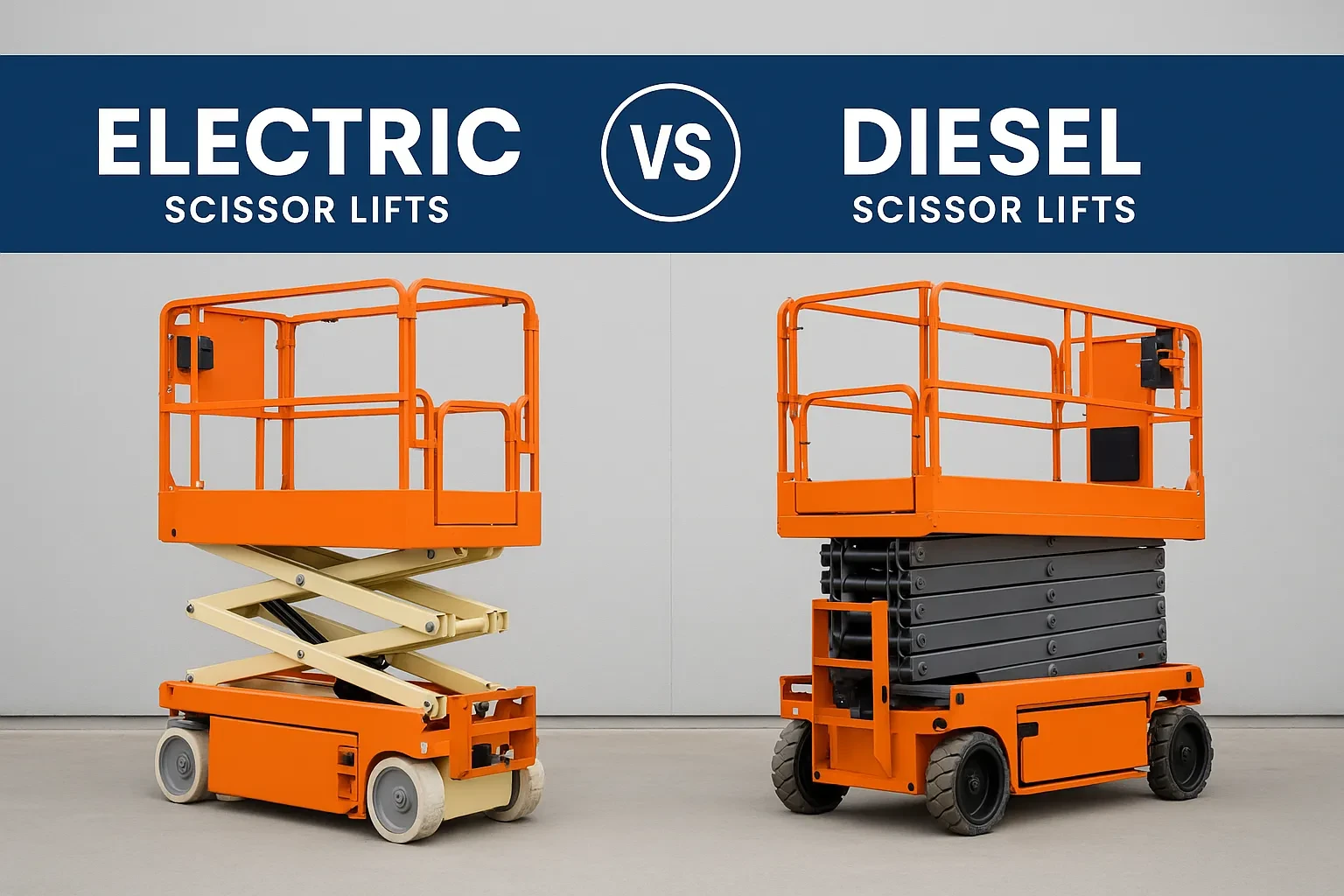
Contractors in Ontario often face one big decision before renting: electric vs diesel scissor lifts in Ontario? This guide compares both lift types based on maintenance needs, noise levels, and environmental emissions – helping you choose the right lift for indoor jobs in Toronto or outdoor worksites in Vaughan, Markham, or Scarborough. Brought to you by NAM Rentals, your trusted partner for scissor lift rentals across the GTA.Introduction: Why the Right Power Type Matters
When renting a scissor lift in Ontario, it’s not just about platform height. Choosing between electric and diesel models directly impacts:- Site safety
- Maintenance frequency
- Operator comfort
- Compliance with environmental regulations
Electric vs Diesel Scissor Lifts: At a Glance
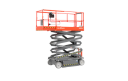
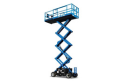
| Feature | Electric Scissor Lift | Diesel Scissor Lift |
| Power Source | Battery-operated | Diesel combustion engine |
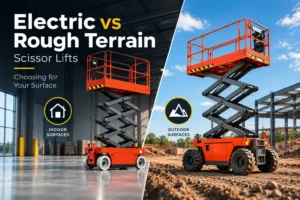
| Ideal For | Indoor, smooth floors | Outdoor, rough terrain |
| Noise Level | Very low | Loud (95–100 dB+) |
| Emissions | Zero emissions | Produces CO₂, NOx |
| Maintenance | Low | Medium to high |
| Surface Use | Flat, level surfaces | Sloped, uneven ground |
| Cost to Operate | Lower | Higher (fuel, service) |
Maintenance: Which Lift Type Requires More Attention?
Electric Scissor Lifts – Low Maintenance
- Fewer moving parts
- No oil, fuel, or filters to manage
- Regular battery checks and charging are the main tasks
Diesel Scissor Lifts – More Mechanical Upkeep
- Require oil changes, fuel system checks, air filter replacements
- Used in dusty outdoor conditions, so cleaning and inspection are frequent
Noise Levels: Indoor vs Outdoor Compliance
Electric Scissor Lifts – Quiet Operation
Operate at under 70 dB, ideal for occupied buildings, hospitals, or overnight shifts.Diesel Scissor Lifts – Loud by Design
Can exceed 95–100 dB. Hearing protection is often required. Not permitted indoors due to noise and emissions. In Ontario, construction noise is regulated by municipal bylaws. Electric lifts are often required in noise-sensitive zones.Emissions & Environmental Impact
Electric Scissor Lifts – Zero Emissions
Perfect for LEED-certified buildings and enclosed environments. No carbon monoxide risk.Diesel Scissor Lifts – Regulated Emissions
Emit CO₂, nitrogen oxides, and particulates. Must comply with Ontario environmental standards. Not allowed indoors without industrial-grade ventilation systems. Improper use of diesel lifts indoors can lead to fines, health risks, and failed inspections.Read our Latest Blog for more information about Electric vs Diesel Scissor Lifts in Canada
When to Use Each Type of Lift in Ontario
| Use Case | Recommended Lift Type |
| Indoor lighting or HVAC work | Electric |
| Commercial fit-outs in malls | Electric |
| Road construction in Vaughan | Diesel |
| Exterior building painting | Diesel |
| Hospital maintenance | Electric |
| High-rise signage installs | Diesel (outdoor) or Electric (interior) |
Why Ontario Contractors Choose NAM Rentals
NAM Rentals offers both electric and diesel scissor lifts, backed by expert guidance to help you choose the right machine for your job site, budget, and regulatory requirements. What you get with NAM Rentals:- Transparent rental terms and CSA-compliant machines
- Expert guidance on battery care, fuel usage, and terrain compatibility
- A fleet of 19 ft to 45 ft electric and rough-terrain scissor lifts
- GTA-wide delivery and 24/7 customer service
FAQs: Electric vs Diesel Scissor Lifts in Ontario
- Are electric scissor lifts better for indoor use? Yes. They are emission-free, quiet, and designed for level indoor floors.
- Can diesel scissor lifts be used inside? No. Due to noise and emissions, they are not suitable for enclosed spaces.
- Which type of lift requires more maintenance? Diesel lifts require more frequent and complex maintenance.
- Is electric lift rental cheaper than diesel? Yes. Electric lifts generally cost less to operate and service.
- Can electric scissor lifts work outdoors? Yes, but only on clean, flat, dry surfaces. Not suitable for muddy or uneven terrain.
- What is the runtime of an electric lift on a full charge? Typically six to eight hours under normal use.
- How long does it take to recharge an electric scissor lift? About six to ten hours, depending on battery condition.
- Are hybrid scissor lifts available? Yes. Some models offer both battery and diesel modes for flexible use.
- Which lift lasts longer? Both types can last ten or more years with proper care. Diesel engines may wear faster under tough conditions.
- What certifications are needed to operate these lifts in Ontario? A valid Working at Heights certification and Scissor Lift operator training are required.
- Do Toronto or Markham restrict diesel lift usage? Yes. Many urban zones require electric lifts indoors or in high-traffic areas.
- Is battery replacement included when renting? Yes. NAM Rentals handles all battery maintenance and replacements.
- Can I transport the lift myself? Some smaller lifts can be trailered. Larger units require professional delivery, which NAM Rentals offers.
- What’s the most eco-friendly option? Electric lifts are the most environmentally friendly, especially when charged with green power sources.
- How do I know which type is best for my site? Contact NAM Rentals. Their team will assess your project and provide the most suitable lift based on access, power needs, and regulations.
Final Thoughts: Make the Smart Choice
Choosing between electric and diesel scissor lifts depends on your job site’s surface, environment, and legal limitations. Use electric scissor lifts for:- Indoor jobs
- Noise-restricted zones
- Environmentally sensitive projects
- Outdoor construction
- Uneven or sloped terrain
- Heavy-duty performance in remote areas