Summary (TL;DR)
Boom lift tip over risks are caused by unstable ground, excessive reach, overloading, wind exposure, and poor positioning. As the boom extends, stability decreases, increasing tipping risk. Contractors must use level ground, follow load limits, monitor wind, and operate smoothly to prevent accidents. Proper training and daily inspections improve safety. NAM Rentals provides reliable boom lift rentals across Toronto and Ontario.
What Are Boom Lift Tip-Over Risks
Boom lift tip-over risks occur when the machine loses stability and shifts beyond its safe center of gravity. This can result in the lift tipping over partially or completely.
These risks increase when the boom is extended, when ground conditions are poor, or when load limits are ignored.
Boom lifts are safe when used correctly. Most incidents happen due to preventable mistakes.
Boom lift tip-over risks are caused by unstable ground, excessive reach, overloading, wind exposure, and improper positioning. To prevent tipping, operators must use level ground, follow load limits, monitor wind conditions, and avoid overextending the boom. Proper training and daily inspections are essential for safe operation.
Why Boom Lifts Tip Over
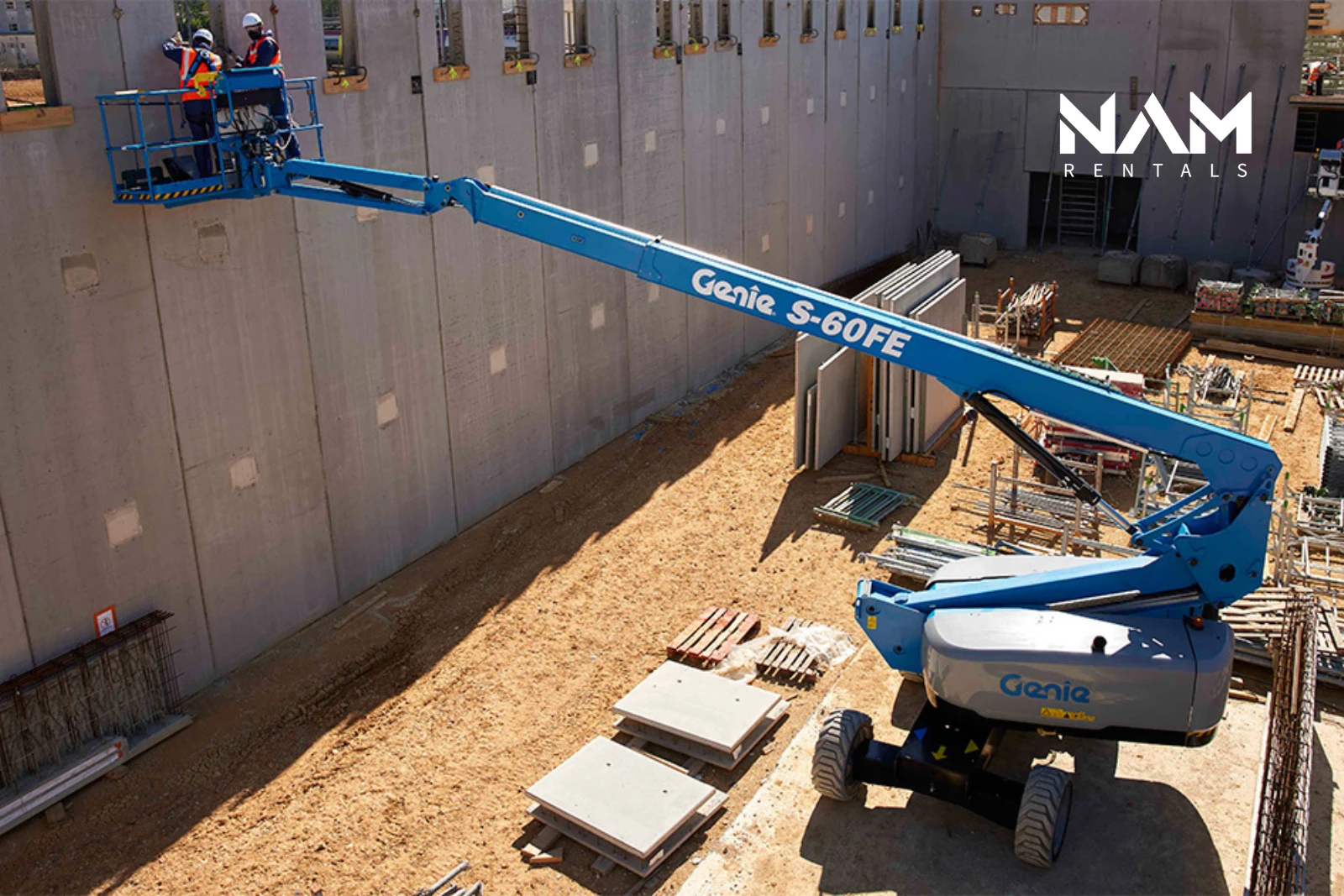
Boom lifts extend outward. This creates leverage.
As the boom reaches further, the center of gravity shifts away from the base.
If the ground is not stable or the load is too heavy, the lift becomes unstable.
Even small changes in ground conditions or wind can increase the risk.
Main Causes of Boom Lift Tip-Over
Unstable Ground Conditions
Soft soil, gravel, and recently backfilled areas can shift under weight.
If one wheel loses support, the entire machine becomes unstable.
Excessive Horizontal Reach
Extending the boom too far increases leverage.
The further the reach, the lower the stability.
Overloading the Platform
Carrying extra materials adds weight.
Boom lifts have strict load limits, especially at full extension.
High Wind Exposure
Wind force increases at height.
Extended boom arms catch wind easily.
Operating on Slopes
Boom lifts are designed for level surfaces.
Even slight slopes can shift balance.
Poor Positioning
Placing the lift too far from the work area forces overextension.
This increases tipping risk.
Warning Signs Before Tip-Over
Operators must recognize early warning signs.
Platform sway increases.
Tilt alarms activate.
One side of the machine feels unstable.
Boom movement becomes uneven.
If any of these signs appear, stop work immediately.
How to Prevent Boom Lift Tip-Over
Use Stable and Level Ground
Always inspect the surface before setup.
Avoid soft or uneven areas.
Follow Load Capacity Limits
Check the load chart for each lift.
Include workers, tools, and materials in total weight.
Keep the Lift Close to the Work Area
Position the base correctly.
Avoid unnecessary reach.
Monitor Wind Conditions
Stop work if wind causes movement.
Follow manufacturer wind limits.
Operate Smoothly
Use controlled movements.
Avoid sudden or fast actions.
Perform Daily Inspections
Check tires, hydraulics, and controls before use.
Identify issues early.
Indoor vs Outdoor Tip-Over Risks
Indoor environments are more controlled. Floors are level and wind is minimal.
Outdoor job sites introduce more variables. Ground conditions change. Wind increases at height.
Diesel boom lifts used outdoors require more careful planning and monitoring.
Real Job Site Example
A contractor in Toronto placed a boom lift on compacted gravel near a building edge. The ground appeared stable.
After extending the boom to reach HVAC equipment, one side shifted slightly. The platform began to tilt.
Work stopped immediately.
The issue was not equipment failure. It was ground instability combined with extended reach.
NAM Rentals – Safe Boom Lift Solutions in Ontario
NAM Rentals provides reliable boom lift rentals across Toronto and Ontario.
Our fleet includes both electric and diesel boom lifts designed for different job site conditions.
We help contractors choose the right lift based on reach, terrain, and safety requirements.
Our equipment is inspected and maintained to reduce operational risk.
Contractors rely on NAM Rentals for dependable equipment and consistent support on real job sites.
FAQs
- What causes boom lift tip-over?
Unstable ground, excessive reach, overloading, and wind are the main causes. - Can wind tip over a boom lift?
Yes. Wind increases force on the extended boom and platform. - Is it safe to use boom lifts on gravel?
Only if the surface is compact and stable. - What is the safest positioning method?
Place the lift as close as possible to the work area. - How does load affect stability?
Higher weight reduces stability, especially at full reach. - Are slopes safe for boom lift operation?
No. Lifts must operate on level ground. - What should I do if the platform sways?
Stop work and lower the platform immediately. - Do diesel boom lifts handle rough terrain better?
Yes. They are designed for outdoor conditions. - Can operator error cause tip-over?
Yes. Most incidents are due to improper use. - Where can I rent safe boom lifts in Ontario?
NAM Rentals provides reliable boom lift rentals across Toronto and Ontario.
Conclusion
Boom lift tip over risks are serious but preventable. Most incidents happen due to poor planning, incorrect positioning, or ignoring safety limits.
Understanding how stability works is critical.
Using level ground, controlling reach, and following load limits ensures safe operation.
Contractors who plan properly reduce risk and improve job site efficiency.
For projects across Toronto and Ontario, NAM Rentals provides dependable boom lift rentals and supports safe operation with well-maintained equipment and expert guidance.






 Scissor Lifts
  Forklifts / Telehandlers
  Compact Equipment
  Heavy Earthmoving
  Others