Summary (TL;DR)
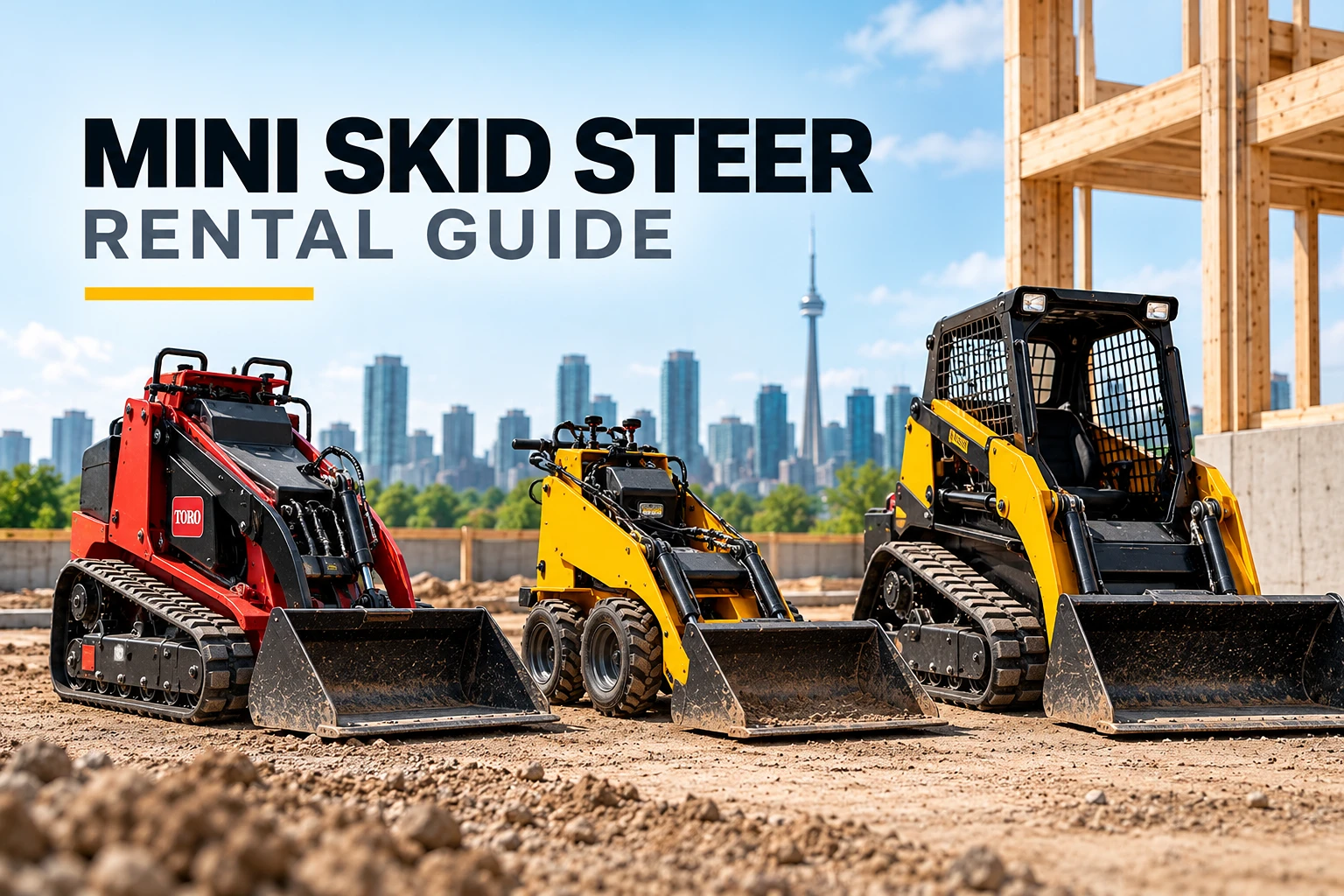
A mini skid steer rental is best for landscaping, backyard construction, fencing, trenching support and material handling where a full-size loader cannot easily operate.
The correct machine depends on access width, lifting requirements, operating position and attachment compatibility.
- Stand-on mini skid steer: A practical choice for repetitive landscaping, material movement and jobs involving frequent repositioning.
- Walk-behind mini skid steer: Worth considering for restricted-access work where a walk-behind operating configuration suits the site.
- Small-frame skid steer: Better when the project requires an enclosed operator station, greater material-handling capability or larger attachments.
The most important rental decision is whether the machine can safely enter the site and perform the work with the required attachment.
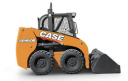
NAM Rentals currently lists small-frame wheeled skid steers, including the Bobcat S570 and Case SR160, alongside larger compact equipment. Confirm mini-loader availability directly before booking.
What Is a Mini Skid Steer?
A mini skid steer is a compact, powered loader designed to carry and operate attachments in confined working areas.
The term commonly describes small utility loaders with stand-on or walk-behind operating configurations. These machines are especially useful where a conventional skid steer is too wide, heavy or difficult to maneuver.
Typical applications include:
- Backyard landscaping
- Fence installation
- Soil and mulch movement
- Small-scale grading
- Post-hole drilling
- Property maintenance
- Nursery and garden projects
- Restricted-access construction
Mini skid steers should not be confused with small-frame conventional skid steers. The latter generally have seated operator stations and different dimensions, capacities and operating characteristics.
Stand-On vs Walk-Behind vs Small-Frame Skid Steer
The following comparison explains the practical differences.
| Feature | Stand-On Mini Skid Steer | Walk-Behind Mini Skid Steer | Small-Frame Skid Steer |
| Operator position | Standing on a platform | Walking behind or operating from a rear position | Seated in operator compartment |
| Main advantage | Compact operation with onboard travel | Walk-behind configuration for specific access needs | Greater conventional loader capability |
| Typical projects | Landscaping, grading, material movement | Property maintenance, tight-access work | Construction, loading, backfilling |
| Operator enclosure | Usually open | Usually open | Open or enclosed, depending on model |
| Attachment options | Model-specific | Model-specific | Model-specific |
| Rated capacity | Model-specific | Model-specific | Model-specific |
| Best selection factor | Access and operator workflow | Access and safe operator clearance | Capacity, width and lift geometry |
Important: Stand-on and walk-behind machines are not standardized size classes. Some models can operate in more than one configuration, so compare exact manufacturer specifications rather than relying on the product label.
1. Stand-On Mini Skid Steer: Best for Repetitive Landscaping
A stand-on mini skid steer allows the operator to travel with the machine from a rear platform.
This configuration can be useful when moving repeatedly between loading and unloading locations.
Best applications
- Moving soil and mulch
- Transporting landscaping materials
- Grading small properties
- Fence and post installation
- Moving materials through suitable access routes
When should you rent one?
Choose a stand-on mini skid steer when the site requires a compact machine and the operator will make repeated trips across the work area.
Before renting, confirm the machine’s width, rated operating capacity, attachment compatibility and required operator clearance.
A compact machine is not automatically suitable for every backyard. Gates, steps, retaining walls, ground conditions and underground services may still restrict access.
2. Walk-Behind Mini Skid Steer: Best for Certain Restricted-Access Jobs
Walk-behind mini skid steers are operated from behind the machine rather than from a conventional seated cab.
Depending on the model, this can be useful for property maintenance and confined working areas.
Best applications
- Residential maintenance
- Narrow landscaping routes
- Small material-handling jobs
- Garden renovation
- Selected utility and fencing work
When should you rent one?
Consider a walk-behind model when the site layout and operating conditions make that configuration practical.
However, walking behind the machine does not automatically mean it requires less operating space.
The operator still needs adequate clearance, visibility and safe footing. The machine must also have sufficient capacity for the intended materials and attachments.
3. Small-Frame Skid Steer: Best for Greater Loading Capability
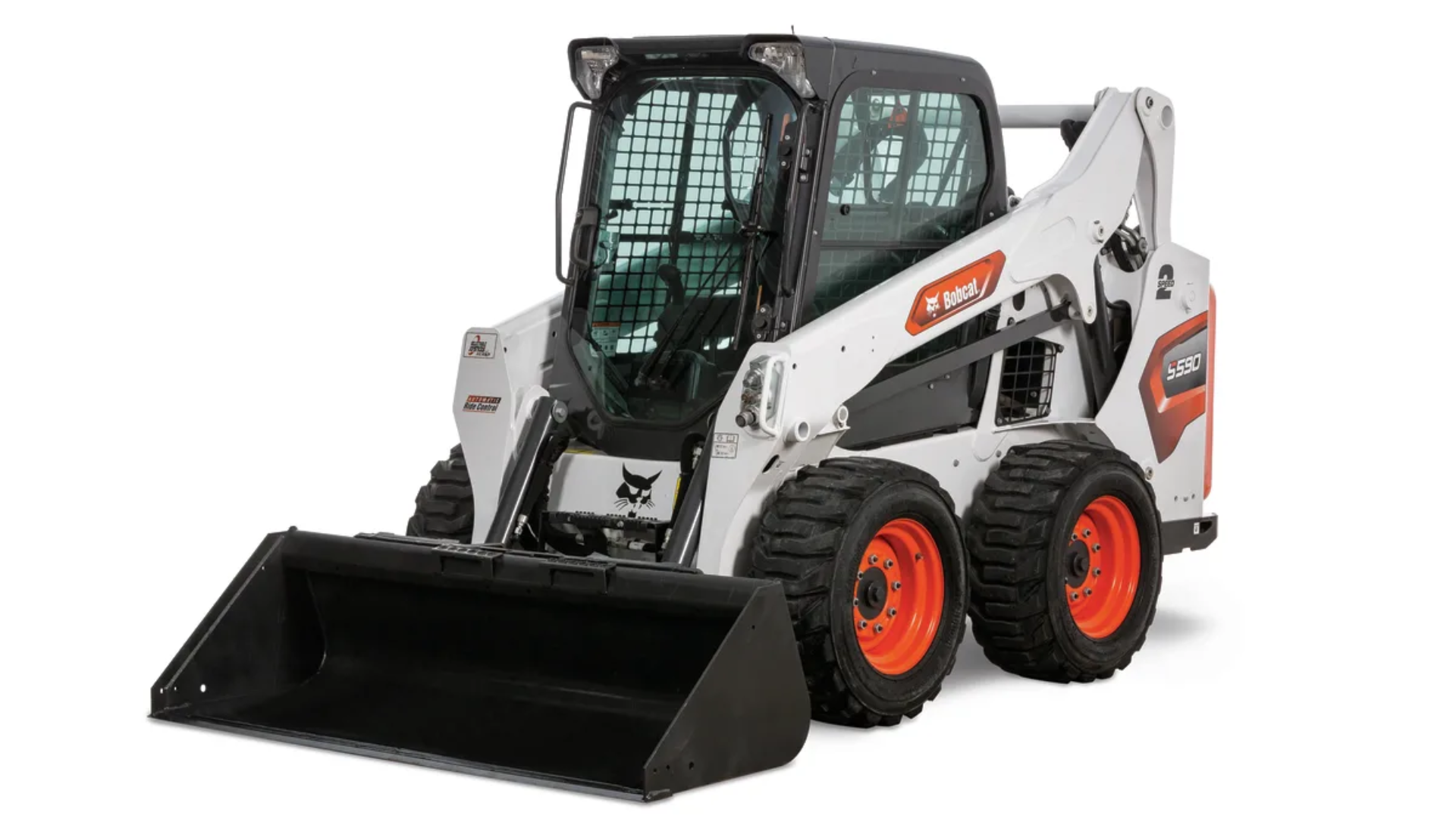
A small-frame skid steer is a conventional seated loader with a relatively compact footprint.
Compared with many mini utility loaders, these machines can offer greater material-handling capability, although the exact difference depends on the models being compared.
NAM Rentals lists several relevant options.
These are NAM Rentals’ published prices for conventional skid steers, not stand-on or walk-behind mini-loader rental rates.
When should you rent one?
Choose a small-frame conventional skid steer when the project requires more substantial loading, material movement or attachment capability and the site has adequate access.
For a broader comparison of machine sizes and rental periods, see our Skid Steer Rental Cost in Ontario guide.
Mini Skid Steer Width: Will It Fit Through Your Gate?
Access width is often the deciding factor in a mini skid steer rental.
A machine may have sufficient lifting capacity but still be unsuitable if it cannot reach the work area.
Measure these dimensions before booking:
| Measurement | Why It Matters |
| Gate opening | Determines whether the machine can enter |
| Machine width | Must fit through the narrowest opening |
| Attachment width | May exceed the width of the loader |
| Machine height | Important for garages and overhead structures |
| Turning space | Required for maneuvering and repositioning |
| Operator clearance | Especially important for walk-behind machines |
| Surface and slope | Affects stability and safe operation |
Practical example
If a property has a 36-inch gate, do not assume a machine advertised as 36 inches wide will pass safely.
Check the manufacturer’s actual dimensions, attachment width and required clearance. Hinges, posts and uneven surfaces can reduce usable access.
Rental tip: Measure the narrowest point of the entire route, not just the entrance.
Mini Skid Steer Attachments: Which Do You Need?
A mini skid steer becomes significantly more useful when paired with the correct attachment.
| Project | Attachment to Consider |
| Moving soil, mulch or gravel | General-purpose bucket |
| Fence post installation | Auger |
| Landscaping preparation | Soil conditioner or grading attachment |
| Moving palletized materials | Compatible pallet forks |
| Clearing vegetation | Approved grapple or brush attachment |
| Narrow trenching | Compatible trencher |
| Site cleanup | Bucket or approved grapple |
Not every attachment fits every machine.
Confirm the attachment mounting system, machine rated capacity, auxiliary hydraulic flow and manufacturer-approved operating requirements.
For digging and trenching projects in Ontario, underground utility locations must also be addressed before excavation.
Visit Ontario One Call for information about requesting utility locates.
Mini Skid Steer vs Small Skid Steer: Which Should You Rent?
The correct choice depends on the work, not the equipment name.
| Project Requirement | Better Starting Point |
| Narrow backyard access | Mini skid steer |
| Repeated landscaping material movement | Stand-on mini skid steer |
| Walk-behind operating requirement | Suitable walk-behind model |
| Larger loading tasks | Small-frame skid steer |
| Higher lifting requirements | Compare rated capacities |
| Heavy attachments | Confirm hydraulic and capacity requirements |
| Soft or challenging ground | Evaluate suitable tracked equipment |
| Extended construction work | Compare productivity and total rental cost |
If a mini skid steer can safely complete the project, a larger machine may add unnecessary size and transportation complexity.
However, choosing an undersized machine can increase loading cycles, extend rental duration and reduce productivity.
For a detailed comparison of tracked and wheeled equipment, read Compact Track Loader Rental: Costs, Specs & When to Rent vs Skid Steer.
How Much Does Mini Skid Steer Rental Cost in Ontario?
Mini skid steer rental prices depend on the exact machine, attachment requirements, rental duration and delivery location.
NAM Rentals’ currently reviewed catalogue provides published rates for conventional small-frame skid steers, but I could not verify a separate published rate for a stand-on or walk-behind mini skid steer.
Therefore, the prices below should be treated as small-frame alternatives, not mini-loader price estimates.
| Available NAM Rentals Example | Daily | Weekly | Monthly |
| Bobcat S570 | $350 | $950 | $2,250 |
| Case SR160 | $360 | $970 | $2,300 |
| Bobcat S62 | $370 | $990 | $2,350 |
Published prices in CAD.
What affects the final rental price?
- Machine size and configuration
- Daily, weekly or monthly rental duration
- Required attachments
- Delivery and pickup
- Operating-hour limits
- Fuel and return conditions
- Damage-related charges
- Applicable Ontario HST
For a stand-on or walk-behind mini skid steer, request a model-specific quote rather than using conventional skid steer rates as a substitute.
How to Choose the Right Mini Skid Steer in Five Steps
Step 1: Measure the access route
Record gate width, overhead clearance, turning space and the narrowest passage.
Step 2: Identify the heaviest load
Estimate the actual weight of soil, gravel, materials or other loads. Compare this with the machine’s rated operating capacity.
Step 3: Confirm the attachment
Determine whether you need a bucket, auger, trencher, forks or another approved attachment.
Step 4: Evaluate the ground
Check slopes, soft soil, pavement, drainage and any areas that may not safely support the machine.
Step 5: Compare the total rental cost
Request pricing for the complete job, including attachments, transportation, operating-hour allowances and applicable charges.
The right machine should provide sufficient capability without introducing unnecessary cost or access restrictions.
Ontario Safety Considerations
Mini skid steers and small-frame loaders present hazards associated with moving equipment, lift arms, attachments, ground conditions and nearby workers.
Before operation:
- Use operators trained and competent for the equipment.
- Follow the manufacturer’s operating instructions.
- Complete required pre-use checks.
- Keep workers and bystanders outside hazardous operating areas.
- Observe rated operating capacity and attachment limits.
- Never bypass operator-presence controls or protective systems.
- Identify underground services before digging.
- Assess ground conditions and slopes.
For additional guidance, read NAM Rentals’ Skid Steer Operator Training Guide and Construction Equipment Rental Best Practices.
Why Choose NAM Rentals for Compact Equipment Rental in Ontario?
NAM Rentals offers compact construction equipment for landscaping, material handling, grading and site preparation across Toronto and Ontario.
Its published catalogue includes wheeled skid steers and compact track loaders with equipment specifications and rental pricing.
Explore:
For a mini skid steer rental, contact NAM Rentals to confirm whether a suitable stand-on or walk-behind model is available for your project.
Call NAM Rentals: +1 647-525-7368
Provide your jobsite location, access width, intended workload, required attachment and rental dates to receive an appropriate equipment recommendation.
Final Verdict: Which Mini Skid Steer Should You Rent?
A stand-on mini skid steer is a strong option for repetitive landscaping and material movement where a compact operator platform is useful.
A walk-behind mini skid steer may suit particular restricted-access projects when the operating configuration is appropriate.
A small-frame conventional skid steer is worth considering when greater loading capability, a seated operator station or larger attachments are required.
The best machine is the smallest suitable loader that can safely access the site, handle the required load and complete the work efficiently.
Before booking, confirm the exact model, dimensions, capacity, attachment requirements and total rental cost.
Frequently Asked Questions




 Scissor Lifts
 Forklifts / Telehandlers
 Compact Equipment
 Heavy Earthmoving
 Others