What Is a Wheel Loader?
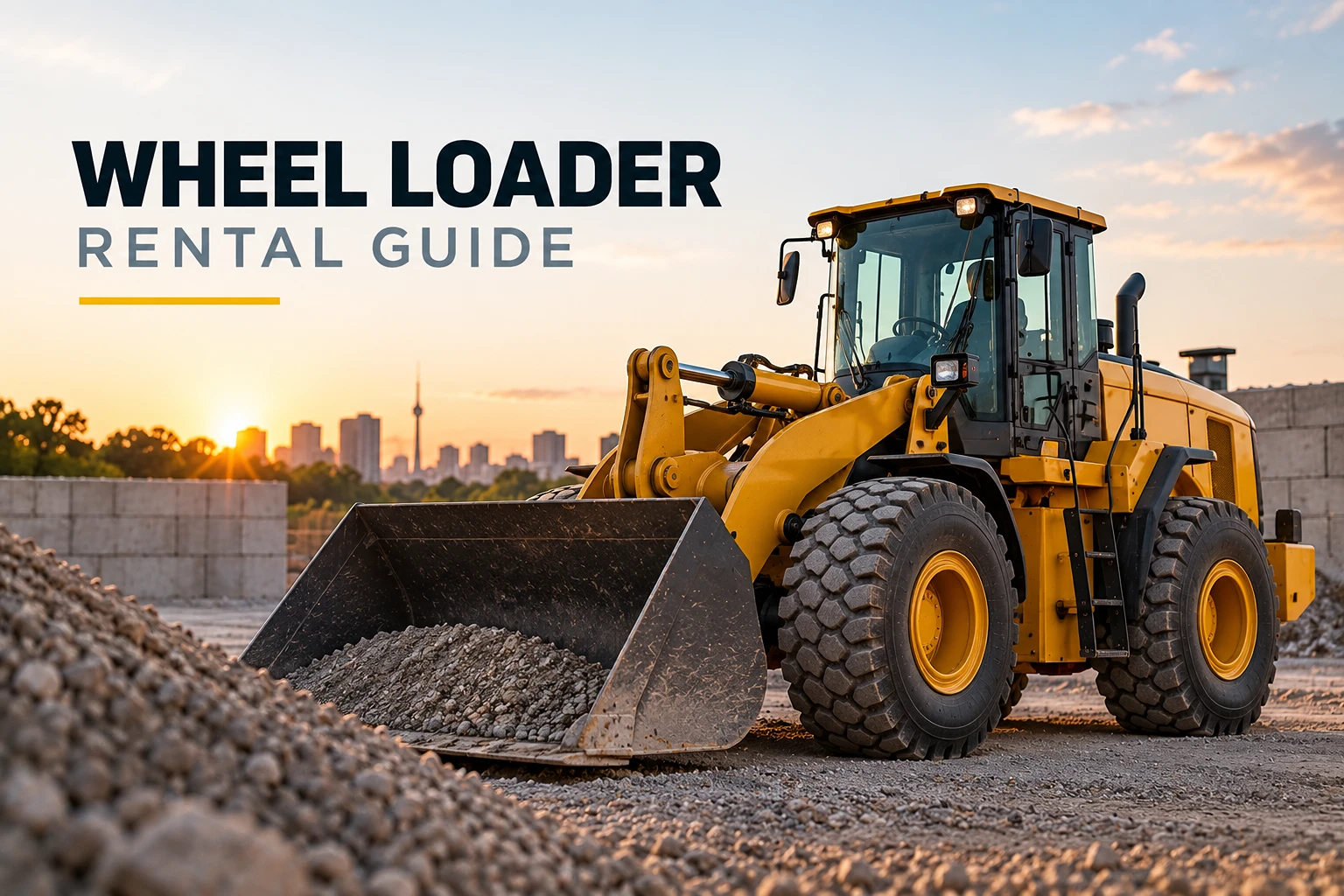
A wheel loader is a wheeled piece of heavy equipment designed primarily for lifting, loading, moving, and stockpiling materials.
The machine uses a front-mounted bucket to handle loose materials and can be used in applications such as:
- Construction
- Aggregate handling
- Landscaping
- Site preparation
- Material loading
- Stockpiling
- Snow-related work
Wheel loaders are available in different sizes and configurations. The appropriate machine depends on the amount and type of material being moved, the required working capacity, and the physical conditions of the jobsite.
What Determines Wheel Loader Rental Cost?
There is no single wheel loader rental price that applies to every project. Rental companies consider the equipment and rental conditions when determining the overall cost.
Machine Size
Machine size is one of the first factors to consider.
A compact loader designed for smaller jobs will have different capabilities and rental requirements from a large production loader intended for high-volume material handling.
Choosing the largest machine available is not necessarily the best option. The equipment should be appropriately matched to the project.
Bucket Capacity
Wheel loader bucket capacity directly affects how much material the machine can handle per cycle.
Common capacity categories can range from approximately 1.5-yard machines to larger loaders with bucket capacities around 6 yards.
The appropriate bucket depends on:
- Material type
- Material density
- Required production
- Loading height
- Truck size
- Jobsite space
- Machine specifications
Rental Duration
The rental period also affects the overall wheel loader hire cost.
Depending on the supplier, customers may be able to choose from:
- Daily rental
- Weekly rental
- Monthly rental
- Longer-term arrangements
A short project may require a wheel loader rental per day, while a longer project may be better suited to weekly or monthly rental terms.
Operating Hours
Some equipment rental agreements specify an included number of operating hours.
Before booking, ask how many hours are included and whether additional hours result in extra charges.
This is particularly important for projects involving long shifts or continuous material handling.
Transportation
Wheel loaders must be transported to the jobsite unless the rental arrangement provides another approved method.
Ask whether delivery and pickup are included in the rental terms or quoted separately.
Transportation planning is particularly important for larger equipment because machine dimensions and operating weight can affect how the equipment is moved.
Attachments
The standard bucket may not be the only attachment required for a project.
Depending on the application, you may need a different bucket or another compatible attachment.
Confirm which attachment is included and whether additional attachments are available under separate rental terms.
Wheel Loader Rental by Size
Comparing machines by bucket capacity can help narrow down the appropriate equipment category.
| Loader Class | Approx. Bucket Capacity | Potential Applications |
| Compact | Around 1.5 yd³ | Smaller construction, landscaping, light material handling |
| Mid-size | Around 2–3.5 yd³ | General construction, loading, stockpiling, material handling |
| Large | Around 4.5–6 yd³ | High-volume loading, aggregate handling, large projects |
These categories are intended as a general comparison rather than a substitute for manufacturer specifications. Exact bucket capacity and machine capabilities vary by make and model.
1.5-Yard Wheel Loader Rental
A loader in the 1.5-yard class may be appropriate where the project requires material-handling capability without the footprint of a large production machine.
Potential applications include:
- Landscaping
- Residential construction
- Smaller commercial projects
- Material handling
- Site cleanup
Before selecting a machine, check its operating weight, dimensions, bucket configuration, lifting capabilities, and required maneuvering space.
2- to 3.5-Yard Wheel Loader Rental
Mid-size loaders can provide a balance between maneuverability and material-handling capacity.
Depending on the model and application, this category can be considered for:
- Construction sites
- Aggregate handling
- Loading trucks
- Stockpiling
- Snow operations
- General material handling
The right machine should be selected based on the material volume and production requirements rather than bucket capacity alone.
4.5- to 6-Yard Wheel Loader Rental
Large wheel loaders are intended for applications where moving significant quantities of material is a priority.
Potential applications include:
- Aggregate operations
- Large stockpiles
- High-volume loading
- Large construction projects
- Commercial material handling
Large machines also require greater attention to site access, maneuvering space, transportation, and operating conditions.
Wheel Loader Rental Per Day, Week, or Month
Wheel Loader Rental Per Day
Daily rental can be appropriate for short-duration projects or temporary equipment requirements.
Before choosing a daily rental, confirm:
- Included operating hours
- Overtime terms
- Delivery and pickup
- Included attachments
- Fuel requirements
- Insurance requirements
Wheel Loader Rental Per Week
A wheel loader rental per week may be more suitable when the equipment will remain on the jobsite for several consecutive working days.
Compare the complete weekly rental terms rather than simply multiplying the daily rate.
Wheel Loader Monthly Rental Cost
For longer projects, a wheel loader monthly rental cost comparison may be useful.
Ask the rental company about including operating hours, maintenance responsibilities, overtime, transportation, insurance, and other applicable terms.
Longer rental periods should always be evaluated against the actual project schedule and expected equipment utilization.
How to Choose the Right Wheel Loader
Before renting, answer these questions:
What material are you moving?
Sand, gravel, soil, aggregate, snow, and other materials can have different handling requirements.
How much material needs to be moved?
Estimate the volume that must be handled and the desired production rate.
What bucket capacity is appropriate?
Match the bucket to the material, machine, loading requirements, and production target.
How much working space is available?
Consider access points, turning space, ground conditions, and nearby structures.
How long will the machine be required?
Determine whether daily, weekly, monthly, or longer rental terms fit the project schedule.
Do you require additional attachments?
Identify attachment requirements before requesting the final quote.
What to Check Before Signing a Rental Agreement
Use this checklist when comparing wheel loader rental rates:
| Factor | What to Confirm |
| Machine | Make, model and specifications |
| Bucket | Capacity and configuration |
| Rental period | Daily, weekly or monthly |
| Operating hours | Included hours |
| Overtime | Additional-hour conditions |
| Delivery | Included or separate |
| Pickup | Included or separate |
| Attachments | Included equipment and optional attachments |
| Fuel | Fuel policy |
| Insurance | Required coverage |
| Maintenance | Responsibility during rental |
| Damage | Customer responsibilities |
| Taxes and fees | What is included in the quote |
This makes it easier to compare the actual rental terms instead of focusing only on the advertised rate.
Safety should be considered before the machine reaches the jobsite.
The Canadian Centre for Occupational Health and Safety recommends that heavy-equipment operators receive appropriate education and training and notes that equipment should be maintained and inspected according to manufacturer specifications and applicable requirements.
For front-end loader operations, CCOHS also advises against travelling with the bucket raised, allowing people to ride in the bucket, using the bucket as a work platform, or allowing anyone to work underneath a raised loader.
Before operating rented equipment:
- Read the manufacturer’s operating instructions.
- Complete required operator training.
- Conduct appropriate pre-use inspections.
- Check the equipment and attachments.
- Maintain safe visibility around the machine.
- Keep pedestrians away from operating areas.
- Use required personal protective equipment.
- Follow site-specific traffic and safety procedures.
- Follow applicable provincial requirements.
Requirements can vary according to jurisdiction, equipment, workplace, and application, so confirm the rules that apply to your project.
Why Choose NAM Rentals?
NAM Rentals provides construction equipment rentals with a focus on reliable equipment, responsive service, and a straightforward rental experience. Customers can search for available equipment online, compare options, and contact the team for rental assistance. The company also highlights well-maintained equipment and 24/7 on-site support to help customers manage their equipment rental needs.
Whether you need equipment for construction, material handling, or another project application, you can explore available equipment and rental options through our online platform. For specific equipment requirements, contact our team to confirm current availability, specifications, and rental options for your project.
Final Takeaway
Choosing the right wheel loader rental involves more than comparing rental prices. Machine size, bucket capacity, rental duration, operating hours, attachments, transportation, jobsite conditions, and equipment availability should all be considered before selecting equipment.
For shorter projects, compare daily and weekly rental terms, while longer projects may require monthly or extended rental options. Before finalizing a rental, confirm the equipment specifications, bucket capacity, rental period, included hours, attachments, delivery arrangements, insurance requirements, fuel policy, and any additional charges. Selecting equipment that matches your material, production requirements, workspace, and site conditions can help ensure it is appropriate for the job.
Frequently Asked Questions



 Scissor Lifts
 Forklifts / Telehandlers
 Compact Equipment
 Heavy Earthmoving
 Others