Summary (TL;DR)
Ontario boom lift training requirements focus on ensuring operators are trained and competent under workplace safety laws. While a specific government license is not required, training must include both theory and practical operation. Clients often require additional certifications such as working at heights and fall protection training. Proper training improves safety, reduces job site delays, and ensures compliance with project requirements. NAM Rentals provides reliable boom lift rentals across Toronto and Ontario with equipment suited for safe operation.
Introduction
Boom lifts are widely used across construction, maintenance, and industrial projects in Ontario. They provide both height and horizontal reach. They also introduce serious safety risks if used incorrectly.
Many contractors assume that a simple certification card is enough. Others think no formal training is required. Both assumptions can create problems on job sites.
This guide explains Ontario boom lift training requirements and the difference between legal obligations and what clients expect in real projects.
What Boom Lifts Are Classified As
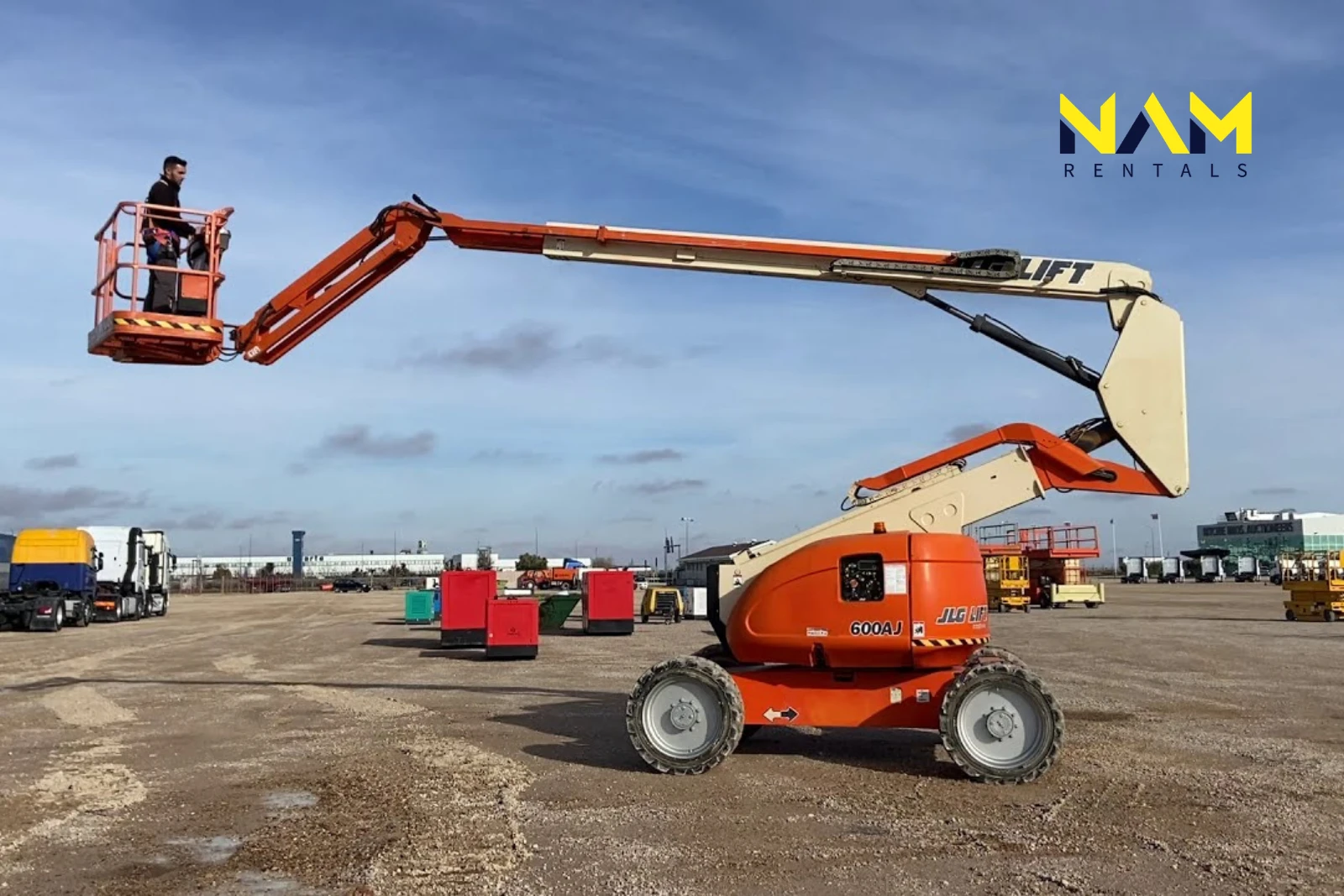
Boom lifts fall under Mobile Elevating Work Platforms. These machines are regulated because they lift workers at height and involve mechanical movement.
In Ontario, employers must ensure that workers using this equipment are trained and competent.
This applies whether the work is in Toronto, Mississauga, Vaughan, or anywhere across Ontario.
What Is Legally Required in Ontario
Ontario safety regulations focus on competency, not just certification.
Under the Occupational Health and Safety Act, employers must ensure that workers are properly trained before operating equipment like boom lifts.
A worker is considered competent when they:
Understand how the equipment works.
Know the safety procedures.
Can identify job site hazards.
Training must include both theory and hands-on operation.
There is no single government-issued boom lift license. However, training is mandatory.
What Proper Training Should Include
A complete boom lift training program covers key operational and safety topics.
Operators learn how to control the lift. They learn how to position the machine and how to manage reach safely.
Training also includes:
Load capacity and reach limits.
Ground condition assessment.
Fall protection requirements.
Wind and environmental risks.
Emergency lowering procedures.
Practical training ensures operators can safely use the equipment in real conditions.
Certification vs Competency
Certification is often misunderstood.
In Ontario, certification is proof that training was completed. It is not the legal requirement itself.
The law requires competency. Certification helps demonstrate that competency.
Most training providers issue a certificate after course completion. This is commonly requested on job sites.
What Clients Ask For on Job Sites
While legal requirements focus on training, clients often have stricter expectations.
Many commercial and industrial projects require documented proof of training before allowing access to equipment.
Clients may request:
Valid training certificates.
Working at heights training.
Fall protection training.
Site-specific safety orientation.
Large contractors and general contractors often enforce these requirements as part of their safety policies.
Why Clients Require More Than Basic Training
Clients manage project risk.
They want to ensure that all workers understand safety procedures and can operate equipment responsibly.
Additional certifications reduce the likelihood of incidents and delays.
Workers with proper documentation are often allowed on site faster and assigned tasks more quickly.
Common Mistakes Contractors Make
Some contractors rely on expired training certificates. This creates access issues on job sites.
Others assume experience replaces training. Experience helps, but documented training is still required.
Another common mistake is ignoring client-specific safety requirements. Each project may have different expectations.
Planning training in advance avoids delays.
Indoor vs Outdoor Training Considerations
Boom lift operation varies depending on environment.
Indoor work often involves electric boom lifts and requires awareness of floor conditions and clearance.
Outdoor work involves diesel boom lifts and requires understanding of terrain, wind, and reach limits.
Training should cover both scenarios to prepare operators for real job conditions.
Why Proper Training Improves Productivity
Trained operators work more efficiently. They position lifts correctly and avoid unnecessary repositioning.
They understand load limits and avoid triggering safety shutdowns.
They also reduce the risk of equipment damage.
This improves project timelines and reduces unexpected costs.
NAM Rentals – Supporting Safe Boom Lift Operations
NAM Rentals provides reliable boom lift rentals across Toronto and Ontario. Our fleet includes both electric and diesel boom lifts suited for indoor and outdoor applications.
We help contractors choose the right equipment based on job site requirements. We also support safe operation by ensuring machines are maintained and ready for use.
Contractors rely on NAM Rentals for dependable equipment and practical support on real job sites.
FAQs
- Is boom lift certification required in Ontario?
Training is required, and certification is used as proof of competency. - What does boom lift training include?
It covers equipment operation, safety procedures, hazard awareness, and practical use. - Who is responsible for training operators?
The employer must ensure workers are trained and competent. - Do clients require proof of training?
Yes. Most job sites require valid training certificates. - Is working at heights training required?
It is often required depending on job site policies. - Can experienced operators skip training?
No. Employers must ensure all operators are properly trained. - How long does boom lift training take?
Most training programs are completed in one day. - Does training differ for indoor and outdoor lifts?
Yes. Training should cover both environments. - What happens if an operator is not trained?
They should not operate the lift and may be removed from the job site. - Where can contractors rent boom lifts in Ontario?
NAM Rentals provides reliable boom lift rentals across Toronto and Ontario.
Conclusion
Boom lifts are powerful machines that require proper training and responsible operation. Ontario regulations focus on competency, ensuring that workers understand how to operate equipment safely.
While certification is not the law itself, it is the most common way to prove training on job sites. Clients often require additional certifications to meet safety standards.
Contractors who prepare in advance avoid delays and maintain compliance across projects.
For teams across Toronto and Ontario, NAM Rentals provides dependable boom lift rentals and supports contractors with equipment suited for safe and efficient operation.






 Scissor Lifts
  Forklifts / Telehandlers
  Compact Equipment
  Heavy Earthmoving
  Others