Summary (TL;DR)
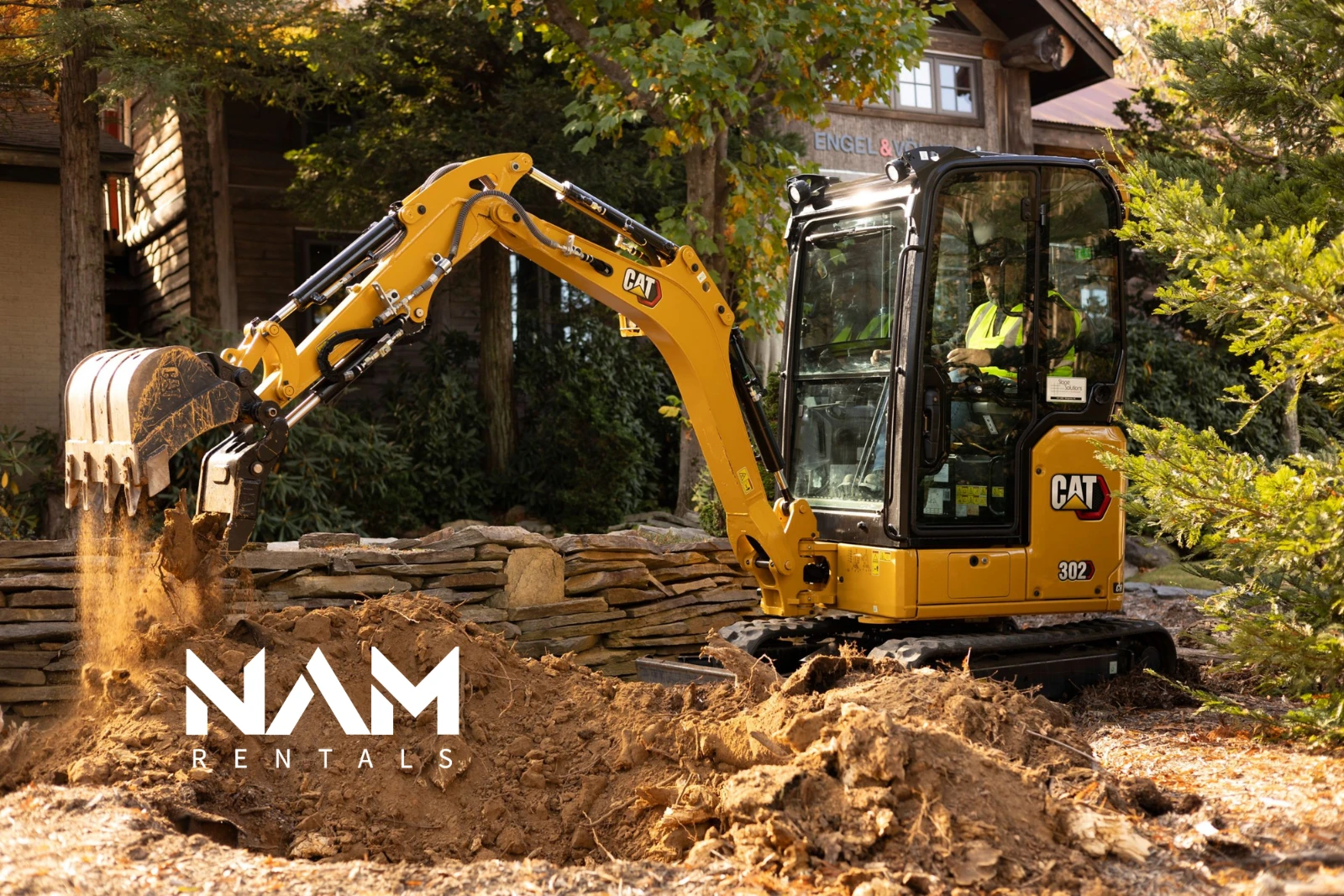
A mini excavator can usually dig from about 5 feet to 15 feet deep depending on machine size. A 1 to 2 ton mini excavator is best for shallow work and tight access. A 3 ton machine often works for drainage and utility trenches. A 5 ton excavator can dig around 11 feet in many models. Larger 8 ton compact excavators can reach around 15 feet. NAM Rentals provides mini excavator and construction equipment rentals in Ontario for contractors, homeowners, builders, and project teams.
Introduction
Mini excavators are small machines, but they can dig deeper than many people expect.
The exact depth depends on the machine size, boom, arm length, bucket setup, ground conditions, and operator skill. A small 1 to 2 ton mini excavator may dig around 6 to 8 feet deep. A larger 5 ton machine may reach around 11 feet. An 8 ton compact excavator can reach about 15 feet in many models.
That range matters.
If you rent a machine that is too small, the job slows down. If you rent a machine that is too large, access and cost can become a problem.
NAM Rentals provides construction equipment rentals in Ontario for contractors, builders, landscapers, property managers, homeowners, and project teams. If you need a mini excavator rental in Ontario, the first question is simple.
How deep do you need to dig?
Quick Dig Depth Guide by Mini Excavator Size
Here is a practical guide based on common compact excavator classes and real manufacturer specs.
| Mini Excavator Size | Typical Dig Depth Range | Best For |
| 1 to 2 ton | 5 to 8 ft | Tight access, landscaping, shallow trenching |
| 3 ton | 8 to 10 ft | Drainage, utility trenches, small footings |
| 5 ton | 11 to 12 ft | Deeper trenching, retaining walls, site prep |
| 8 ton | 14 to 15+ ft | Larger trenching, heavier digging, deeper excavation |
For example, Caterpillar lists the Cat 301.7 CR at 92.5 inches of dig depth, which is about 7.7 feet. The Cat 303 CR is listed at 104.3 inches, or about 8.7 feet. The Cat 305 CR is listed at 134.6 inches, or about 11.2 feet. The Cat 308 CR is listed at 182.8 inches, or about 15.2 feet.
These numbers are not a promise for every rental machine. They are a useful benchmark. Every model is different.
What Dig Depth Really Means
Maximum dig depth is the deepest point the bucket can reach under ideal machine positioning.
It does not always mean the machine can dig a full clean trench at that depth across the whole job.
Real digging depth can be affected by:
- Stick length
- Bucket size
- Soil type
- Slope
- Trench width
- Spoil pile location
- Machine position
- Ground stability
- Underground utilities
- Operator experience
If you need an 8-foot trench, do not rent a machine that barely reaches 8 feet on paper. Choose a machine with some extra reach. That gives the operator room to work.
What Size Mini Excavator Do You Need?
1 to 2 ton mini excavator
Choose this size for tight spaces and lighter digging.
It works well for:
- Backyard landscaping
- Small drainage lines
- Fence or post work
- Garden excavation
- Tight residential access
- Shallow utility prep
This size is useful when access matters more than power. It can fit through tighter spaces, but it will not dig as deep or move as much material as larger machines.
3 ton mini excavator
A 3 ton machine is a strong middle ground.
It works well for:
- Drainage trenches
- Small foundations
- Utility trenches
- Residential construction
- Landscape grading
- Small retaining walls
This size gives better reach and power while still staying compact enough for many Ontario residential and commercial sites.
5 ton mini excavator
A 5 ton excavator is often the better rental when the job needs more digging depth and more production.
It works well for:
- Deeper trenching
- Larger drainage jobs
- Retaining wall prep
- Site clearing
- Utility work
- Small commercial excavation
If you are digging around 10 to 11 feet, this size often makes more sense than pushing a smaller machine to its limit.
8 ton mini excavator
An 8 ton compact excavator is the larger end of the mini excavator category.
It works well for:
- Deep trenching
- Larger site work
- Heavy soil
- Commercial jobs
- Bigger drainage systems
- More demanding excavation
It gives more depth, reach, breakout force, and stability. But it also needs more space, stronger access routes, and better planning for transport.
Do Not Forget Utility Locates
Before digging in Ontario, you need to think about buried utilities.
Ontario One Call says homeowners must submit a locate request at least 5 business days before digging. It also states that contacting Ontario One Call is free, easy, and required by law.
This applies to projects like:
- Drainage work
- Fence posts
- Deck footings
- Landscaping
- Utility trenches
- Foundation prep
- Driveway work
- Site excavation
Never assume the ground is clear.
Gas, electrical, water, telecom, and sewer lines can be underground. Hitting one can create serious safety and repair issues.
Digging Deeper Also Means More Safety Planning
A deeper hole is not just a bigger hole.
It can create serious trench and excavation hazards.
Ontario’s excavation safety guidance says workers should never enter a trench deeper than 1.2 metres, or 47 inches, unless the walls are sound, made of solid rock, or properly protected.
That matters because many mini excavators can dig far deeper than 47 inches.
If your project involves trenches, workers, or entry into the excavation, you need proper safety planning. This may include sloping, shoring, trench boxes, barriers, safe access, and supervision.
For simple digging projects, the machine size is only one part of the decision. Site safety is the other part.
How to Choose the Right Rental Size
Before booking a mini excavator, answer these questions:
- How deep do you need to dig?
- How wide is the trench or hole?
- What type of soil are you digging?
- Is the site tight or open?
- Are there gates, fences, trees, or buildings nearby?
- Do you need to load material into a truck?
- Are there underground utilities?
- Will anyone enter the excavation?
- How long is the job?
- Do you need attachments?
A smaller excavator saves space. A larger excavator saves time.
The best rental is the one that matches the depth, access, soil, and workload.
Why NAM Rentals Is a Strong Choice in Ontario
NAM Rentals helps customers choose practical construction equipment rentals in Ontario.
For mini excavators, that means helping you think through more than machine size. You need to consider dig depth, site access, trench width, bucket needs, rental duration, and job type.
NAM Rentals is a reliable and reasonable option for:
- Contractors
- Landscapers
- Builders
- Homeowners
- Property managers
- Facility teams
- Project managers
If you are searching for mini excavator rental near me or affordable equipment rentals Ontario, NAM Rentals can help you choose equipment that fits the job instead of guessing.
Final Thoughts
Mini excavator dig depth depends on size.
Small machines are great for tight access. Mid-size machines are better for general trenching. Larger compact excavators are better when you need deeper reach and more digging power.
Do not rent by guesswork.
Know your required depth. Check access. Request utility locates. Plan for trench safety. Then choose the machine that gives you enough depth without creating extra site problems.
For mini excavator rental in Ontario, contact NAM Rentals for practical equipment rental support.
FAQs
1. How deep can a mini excavator dig?
Most mini excavators dig between 5 and 15 feet deep depending on machine size and model.
2. How deep can a 1 ton mini excavator dig?
Many 1 ton class machines dig around 5 to 6 feet. Exact depth depends on the model.
3. How deep can a 3 ton mini excavator dig?
Many 3 ton mini excavators dig around 8 to 10 feet. Some models with longer arms may reach deeper.
4. How deep can a 5 ton mini excavator dig?
A 5 ton mini excavator often digs around 11 to 12 feet depending on the machine and stick length.
5. How deep can an 8 ton mini excavator dig?
An 8 ton compact excavator can often dig around 14 to 15 feet or more depending on the model.
6. What size mini excavator do I need for drainage?
For shallow residential drainage, a 1 to 3 ton machine may work. For deeper drainage work, a 5 ton machine may be better.
7. Can I use a mini excavator for foundation digging?
Yes, but it depends on the foundation size and depth. Larger mini excavators are better for deeper or heavier digging.
8. Do I need utility locates before digging in Ontario?
Yes. Ontario One Call says locate requests are required before digging and should be submitted at least 5 business days before the project.
9. Is renting a mini excavator better than buying?
For short-term or occasional projects, renting is usually better. It avoids ownership, storage, maintenance, and transport costs.
10. Does NAM Rentals offer mini excavator rental in Ontario?
Yes. NAM Rentals provides construction equipment rentals in Ontario and can help customers choose the right mini excavator size for their project.





 Scissor Lifts
  Forklifts / Telehandlers
  Compact Equipment
  Heavy Earthmoving
  Others