Summary (TL;DR)
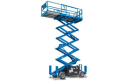
Scissor lift sizes commonly refers to maximum platform height, while working height is usually approximately 6 ft higher in North American manufacturer specifications. A 19 ft platform class typically provides about 25 ft of working height, a 26 ft class about 32 ft, a 32 ft class about 38 ft, a 40 ft class about 46 ft, and a 50 ft class about 56 ft. These are nominal categories, not universal specifications. Always verify the exact model’s platform height, indoor and outdoor working-height rating, machine width, platform capacity, surface requirements and access route before renting.
Introduction
Choosing the correct scissor lift height is not a small decision. It affects safety. It affects productivity. It affects cost.
Many contractors select lifts based only on maximum height. That approach leads to overspending or under-performing equipment.
This guide explains exactly what 19 ft, 26 ft, 32 ft, 40 ft, and 50 ft scissor lifts are used for. It also explains the difference between platform height and working height.
Understanding this prevents job site mistakes.
Which Scissor Lift Size Do I Need? (Quick Decision Guide)
| If your job is… | Recommended Lift |
| Indoor warehouse maintenance | 19 ft Electric |
| Ceiling installation | 19–26 ft Electric |
| HVAC work | 26 ft Electric |
| Retail shelving | 19 ft Electric |
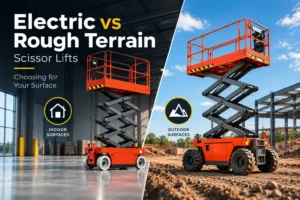
| Outdoor construction | 32–46 ft Rough Terrain |
| Steel erection | 40–60 ft Rough Terrain |
| Painting commercial buildings | 26–40 ft |
| Sign installation | 32–40 ft |
| Tree trimming | Boom Lift (not Scissor Lift) |
Platform Height vs Working Height
Platform height is the maximum height of the platform floor. Working height is the manufacturer’s estimated maximum height an operator can reach while standing on the platform.
In North American specifications, working height is commonly estimated at approximately 6 ft above platform height. However, the exact rating depends on the machine, and some modern scissor lifts have lower maximum platform and working heights when used outdoors.
Use the 6 ft rule for initial sizing only. Before booking, verify the exact model’s indoor and outdoor ratings on the manufacturer’s specification sheet or data plate.
Scissor Lift Size Chart: Platform Height, Working Height, Width & Capacity
| Example model | Platform height | Working height | Width | Capacity | Typical configuration |
| Genie GS-1930 | ~19 ft | ~25 ft | ~30 in | 500 lb | Electric slab |
| Genie GS-2632 | ~26 ft indoor | ~32 ft indoor | 32 in | 500 lb | Narrow electric slab |
| Genie GS-2646 | 26 ft | 32 ft | 46 in | 1,000 lb | Wide electric slab |
| Genie GS-4069 RT | ~40 ft | ~46 ft | 69 in | 800 lb | Rough terrain |
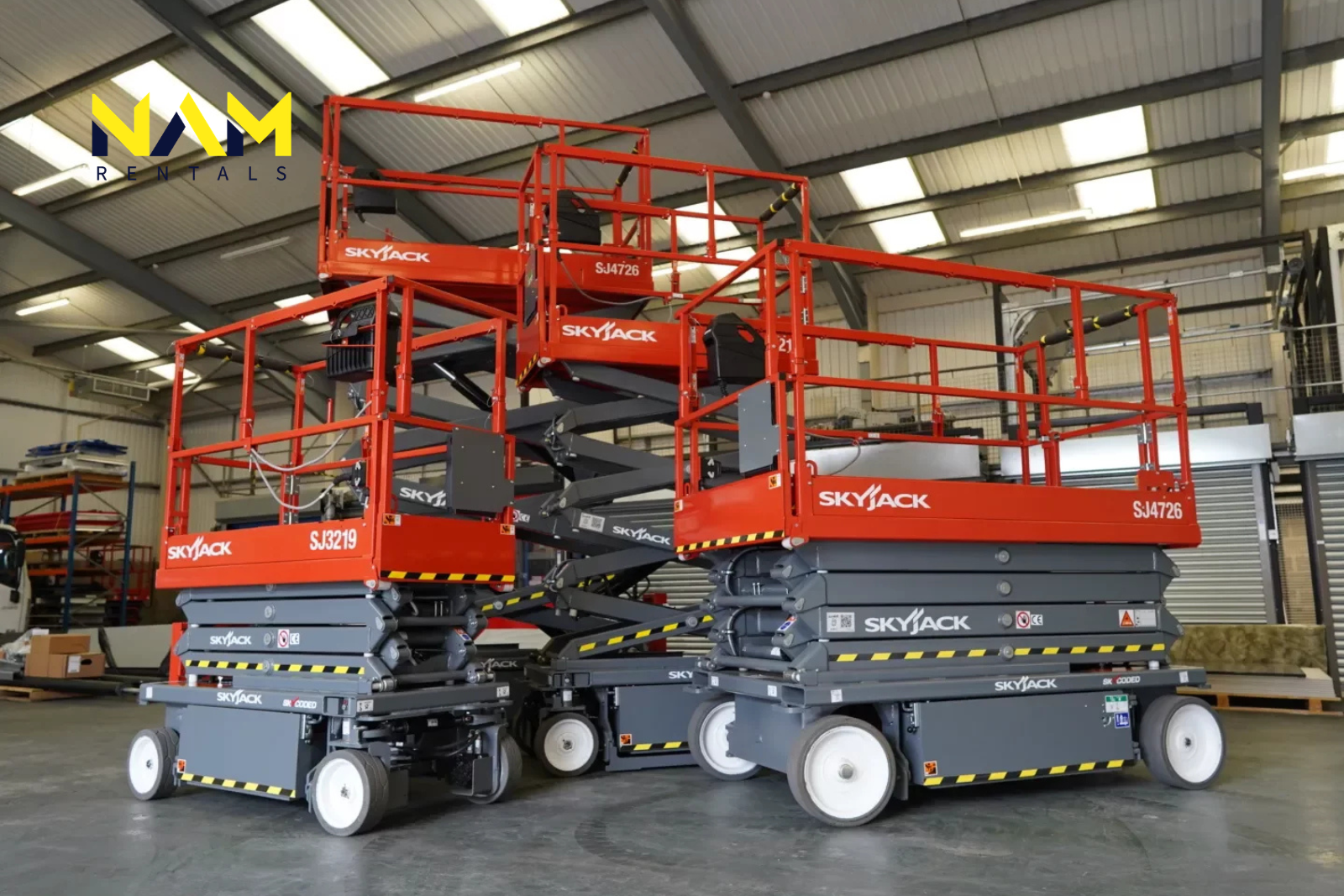
| Skyjack SJ9250 RT | 50 ft | 56 ft | 92 in | 1,500 lb | Rough terrain |
Platform Height
19 ft
Approximate Working Height
25 ft
Best For
Indoor commercial work.
Warehouse maintenance.
Retail fit outs.
Electrical ceiling access.
Fire sprinkler adjustments.
Why Choose 19 ft
This is the most common electric scissor lift size in Toronto. It is compact. It fits through standard doorways. It turns tightly in corridors.
It works best on flat indoor floors.
If you are working in offices, shopping plazas, or schools, a 19 ft lift is usually sufficient.
Do not use it outdoors on uneven surfaces unless the surface is fully paved and level.
Platform Height
26 ft
Approximate Working Height
32 ft
Best For
Warehouse racking.
Commercial HVAC installs.
Light industrial ceiling work.
Interior construction in larger spaces.
Why Choose 26 ft
A 19 ft platform lift can provide approximately 25 ft of indoor working height, depending on the model. Whether that is sufficient depends on the actual point where the work must be performed, overhead obstructions and the manufacturer’s rated working height. Move to a 26 ft platform class when the required working height exceeds the smaller machine’s verified rating or when the work position requires additional usable reach.
A 32 ft platform-height scissor lift typically provides approximately 38 ft of working height, although exact specifications depend on the model. Do not confuse a 32 ft working-height machine, such as the Genie GS-2632, with a 32 ft platform-height machine. Always verify both platform height and working height on the manufacturer’s specification sheet before renting.
Best For
Exterior commercial work.
Steel framing support.
Mid rise building façade work.
Warehouse exterior maintenance.
Why Choose 32 ft
Thirty-two-foot platform-height scissor lifts are available in both slab/electric and rough-terrain configurations. Electric slab models are commonly used for warehouses, industrial interiors and high-bay maintenance, while rough-terrain models are designed for appropriate off-slab construction environments. Choose the configuration according to the surface, access route, machine dimensions and manufacturer ratings rather than height alone.
Platform Height
40 ft
Approximate Working Height
46 ft
Best For
Mid rise construction.
Industrial facility maintenance.
Exterior glazing support.
Bridge and infrastructure work.
Why Choose 40 ft
Forty-foot platform-class scissor lifts are available in both electric slab and rough-terrain configurations. Electric slab models can serve high-bay indoor and suitable outdoor applications, while rough-terrain machines are built for appropriate off-slab construction conditions. At this height, machine width, weight, floor loading, terrain, wind rating and access requirements become especially important. Choose the configuration according to the jobsite rather than assuming all high-reach scissor lifts are rough-terrain machines.
Platform Height
50 ft
Approximate Working Height
56 ft
Best For
Large commercial builds.
Industrial plant work.
Major façade installation.
High clearance warehouse exteriors.
Why Choose 50 ft
This is specialized access equipment.
It is not common for small jobs. It requires proper ground assessment and often traffic control planning in urban areas.
The platform capacity may also decrease at maximum height. Always check load charts.
Contractors must confirm space clearance, overhead obstructions, and wind exposure at this height.
This size is typically rough terrain and diesel powered.
Indoor vs Outdoor Height Selection
Indoor projects in Toronto commonly use 19 ft and 26 ft lifts.
Outdoor commercial projects often begin at 32 ft.
Heavy construction typically requires 40 ft or 50 ft units.
Never choose a higher lift “just in case.” Larger lifts cost more. They require more space. They increase logistical complexity.
Choose based on verified working height requirements.
Height Planning Mistakes to Avoid
Mistake one.
Using platform height instead of working height for calculations.
Mistake two.
Ignoring ceiling obstructions like ducts and beams.
Mistake three.
Forgetting ground condition stability for outdoor lifts.
Mistake four.
Selecting an on-slab scissor lift for rough-terrain conditions.
Mistake five.
Overloading platforms at maximum height.
Each of these errors increases risk.
GTA Considerations When Selecting Height
Downtown Toronto projects often involve sidewalk restrictions and staging limits. Larger lifts require more clearance and may trigger permit planning.
Suburban industrial projects in Vaughan and Mississauga offer more flexibility for 40 ft and 50 ft units.
Weather also matters in Ontario. Wind exposure increases at higher platform heights. Always check manufacturer wind ratings.
Practical Height Selection Guide
If your ceiling is under 20 ft. Choose 19 ft.
If your ceiling is 22 to 28 ft. Choose 26 ft.
If your working area is 30 to 36 ft. Choose 32 ft.
If your working height exceeds 40 ft. Choose 40 ft.
If your working height exceeds 46 ft. Choose 50 ft.
Verify actual measurements before booking.
Why Proper Sizing Protects Your Budget
Correct sizing reduces repositioning time.
Correct sizing reduces rental duration.
Correct sizing improves safety.
Correct sizing prevents project delays.
Oversized equipment increases cost and complexity. Undersized equipment increases risk and inefficiency.
Proper planning saves money.
Conclusion
Selecting the correct scissor lift height is a technical decision. It requires accurate measurement, understanding of working height, and awareness of site conditions.
The right lift improves safety and productivity. The wrong lift causes delays and cost overruns.
Measure carefully. Choose based on need. Plan for space and terrain.
That is how professionals approach scissor lift sizing.
FAQs – Scissor Lift Sizes






 Scissor Lifts
  Forklifts / Telehandlers
  Compact Equipment
  Heavy Earthmoving
  Others