Summary (TL;DR)
Boom lift tip over risks are caused by unstable ground, excessive reach, overloading, wind conditions, and improper operation. As the boom extends, stability decreases, increasing tipping risk. Contractors must ensure stable ground, follow load limits, monitor wind, and operate smoothly to prevent accidents. Proper training and daily inspections reduce risk significantly. NAM Rentals provides reliable boom lift rentals across Toronto and Ontario with equipment suited for safe operation.
Introduction
Boom lifts are designed for safe work at height. They provide reach and flexibility that other equipment cannot offer.
However, they also carry a serious risk if used incorrectly. Tip-over incidents are one of the most dangerous hazards associated with boom lifts.
Most tip-over accidents are preventable. They are usually caused by poor planning, unsafe positioning, or ignoring operating limits.
This guide explains boom lift tip over risks, the most common causes, and how contractors can prevent them on real job sites across Toronto and Ontario.
Why Tip-Over Risks Occur
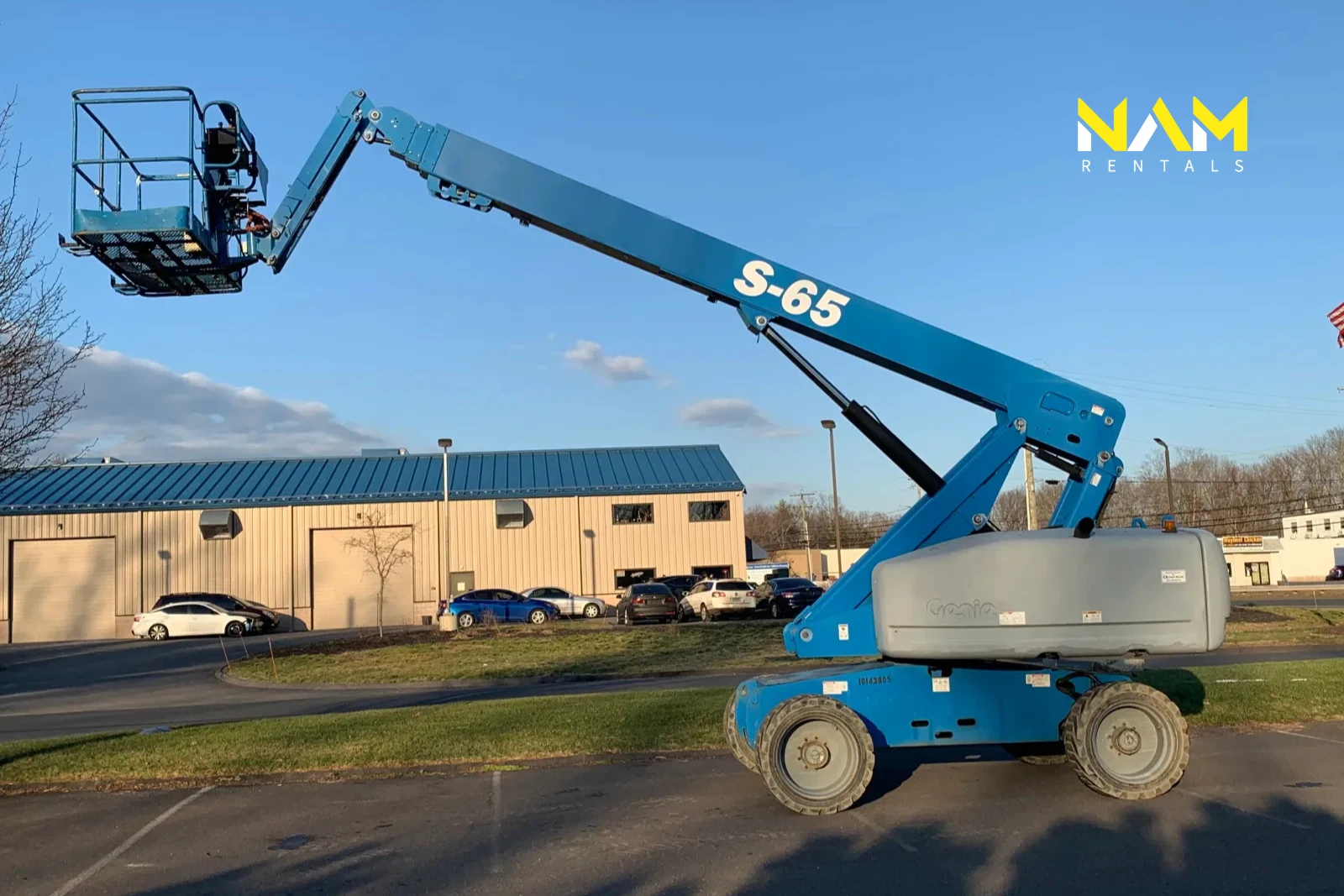
Boom lifts extend both vertically and horizontally. This creates leverage.
As the boom extends outward, the center of gravity shifts. If the machine is not positioned correctly, stability is reduced.
Even a stable lift can become unsafe when external factors are introduced.
Ground conditions, wind, load weight, and operator decisions all affect stability.
Understanding these factors is the first step in preventing tip-over incidents.
Common Causes of Boom Lift Tip-Over
Uneven or Unstable Ground
Boom lifts must operate on stable surfaces.
Soft soil, gravel, or recently backfilled areas can shift under weight.
If one wheel sinks or loses support, the machine becomes unstable.
Excessive Reach
Extending the boom too far increases leverage.
As reach increases, lifting capacity decreases.
Ignoring load charts is a major cause of instability.
Overloading the Platform
Carrying too many tools or materials adds weight.
This reduces the machine’s ability to remain balanced.
Overloading can trigger safety systems or lead to tipping.
High Wind Conditions
Wind applies force to the elevated platform.
At height, wind speeds are stronger than at ground level.
Extended boom lifts are especially vulnerable to sway.
Operating on Slopes
Boom lifts are not designed for steep slopes.
Even slight inclines can shift the center of gravity.
Operating on slopes increases tipping risk significantly.
Sudden Movements
Fast or abrupt movements can destabilize the lift.
Jerky controls or rapid repositioning should be avoided.
Smooth operation is essential for safety.
Real Job Site Scenarios
A contractor in Mississauga positioned a boom lift on compacted soil near an excavation zone. The surface appeared stable. After extending the boom, one side settled slightly. The machine became unstable.
Another example involved a rooftop maintenance job in Toronto. Wind conditions increased during the afternoon. The extended boom began to sway. Work had to stop immediately.
These situations show how small oversights can create serious risk.
How to Prevent Tip-Over Risks
Always Check Ground Conditions
Confirm the surface is stable and level before operating.
Avoid soft soil, loose gravel, or recently filled areas.
Follow Load and Reach Limits
Understand the load chart for the specific machine.
Do not exceed weight limits at extended reach.
Monitor Wind Conditions
Stop operating if wind causes noticeable movement.
Follow manufacturer wind limits at all times.
Use Proper Positioning
Place the lift as close to the work area as possible.
Avoid unnecessary extension.
Operate Smoothly
Use slow and controlled movements.
Avoid sudden direction changes or rapid elevation.
Conduct Daily Inspections
Check the machine before use.
Look for hydraulic issues, tire condition, and control function.
The Role of Operator Training
Training plays a major role in preventing tip-over incidents.
Operators must understand how reach affects stability. They must also recognize warning signs such as tilt alarms or platform sway.
Proper training ensures that operators make safe decisions under real job conditions.
Indoor vs Outdoor Risk Differences
Indoor environments usually have stable surfaces and no wind exposure.
Outdoor job sites introduce more risk. Ground conditions change. Weather conditions vary.
Diesel boom lifts used outdoors require careful planning and constant monitoring.
Understanding these differences helps reduce risk.
NAM Rentals – Supporting Safe Boom Lift Operation
NAM Rentals provides reliable boom lift rentals across Toronto and Ontario. Our equipment is inspected and maintained to ensure safe operation.
We help contractors select the correct lift based on job site conditions and project requirements.
Our team supports safe operation by providing guidance on positioning, load limits, and proper use.
Contractors rely on NAM Rentals for dependable equipment and consistent service.
FAQs
- What is the main cause of boom lift tip-over?
Unstable ground and excessive reach are the most common causes. - Can wind cause a boom lift to tip over?
Yes. Wind increases force on the platform, especially at height. - Is it safe to operate on gravel or soil?
Only if the surface is compact and stable. - What happens if the lift is overloaded?
It becomes unstable and may trigger safety shutdowns or tip. - How does reach affect stability?
Greater reach shifts the center of gravity and reduces stability. - Are slopes safe for boom lift operation?
No. Lifts should be operated on level ground within limits. - What is the safest way to operate a boom lift?
Use slow movements and follow load and positioning guidelines. - Should I stop working if the platform sways?
Yes. Lower the platform and reassess conditions immediately. - Does training reduce tip-over risk?
Yes. Trained operators understand safe operation and warning signs. - Where can I rent safe boom lifts in Ontario?
NAM Rentals provides reliable boom lift rentals across Toronto and Ontario.
Conclusion
Boom lift tip-over risks are serious but preventable. Most incidents occur due to avoidable mistakes such as poor ground assessment, overloading, or ignoring environmental conditions.
Understanding how stability works and following proper safety practices protects both workers and equipment.
Contractors who plan ahead and operate responsibly reduce risk and improve project efficiency.
For projects across Toronto and Ontario, NAM Rentals provides dependable boom lift rentals and supports safe operation through well-maintained equipment and professional guidance.






 Scissor Lifts
  Forklifts / Telehandlers
  Compact Equipment
  Heavy Earthmoving
  Others