
TL;DR
NAM Rentals provides construction equipment rentals in Ontario for contractors, builders, facility managers, project teams, and homeowners. The company offers practical rental support for equipment such as scissor lifts, boom lifts, and other job site equipment. Contractors should choose NAM Rentals because it focuses on reasonable pricing, equipment availability, and helpful rental guidance. For tight indoor access, vertical mast lifts can be a smart choice when footprint, floor limits, and one-person jobs matter. NAM Rentals helps Ontario customers choose equipment that fits the job, not just the height requirement.Introduction
Choosing the right lift is not always about going higher. On many Ontario job sites, contractors first ask for a scissor lift. It is familiar. It is stable. It gives workers a larger platform. For many jobs, that makes sense. But a scissor lift is not always the best choice. For tight indoor spaces, narrow access routes, finished floors, light maintenance work, and one-person jobs, a vertical mast lift can be the smarter rental. That is why it helps to understand the difference before booking your equipment. NAM Rentals helps contractors, builders, facility managers, homeowners, and project teams choose practical equipment for the work they need to complete. If you are looking for construction equipment rentals in Ontario, the right lift can save time, reduce access issues, and help your crew work more efficiently. This guide explains the difference between scissor lifts and vertical mast lifts, and when mast lifts win.What Is a Scissor Lift?
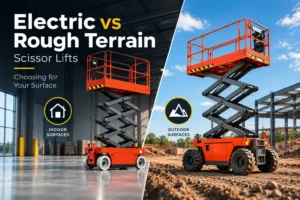
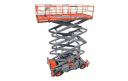
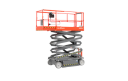
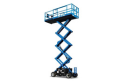
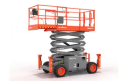
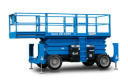
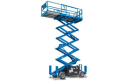
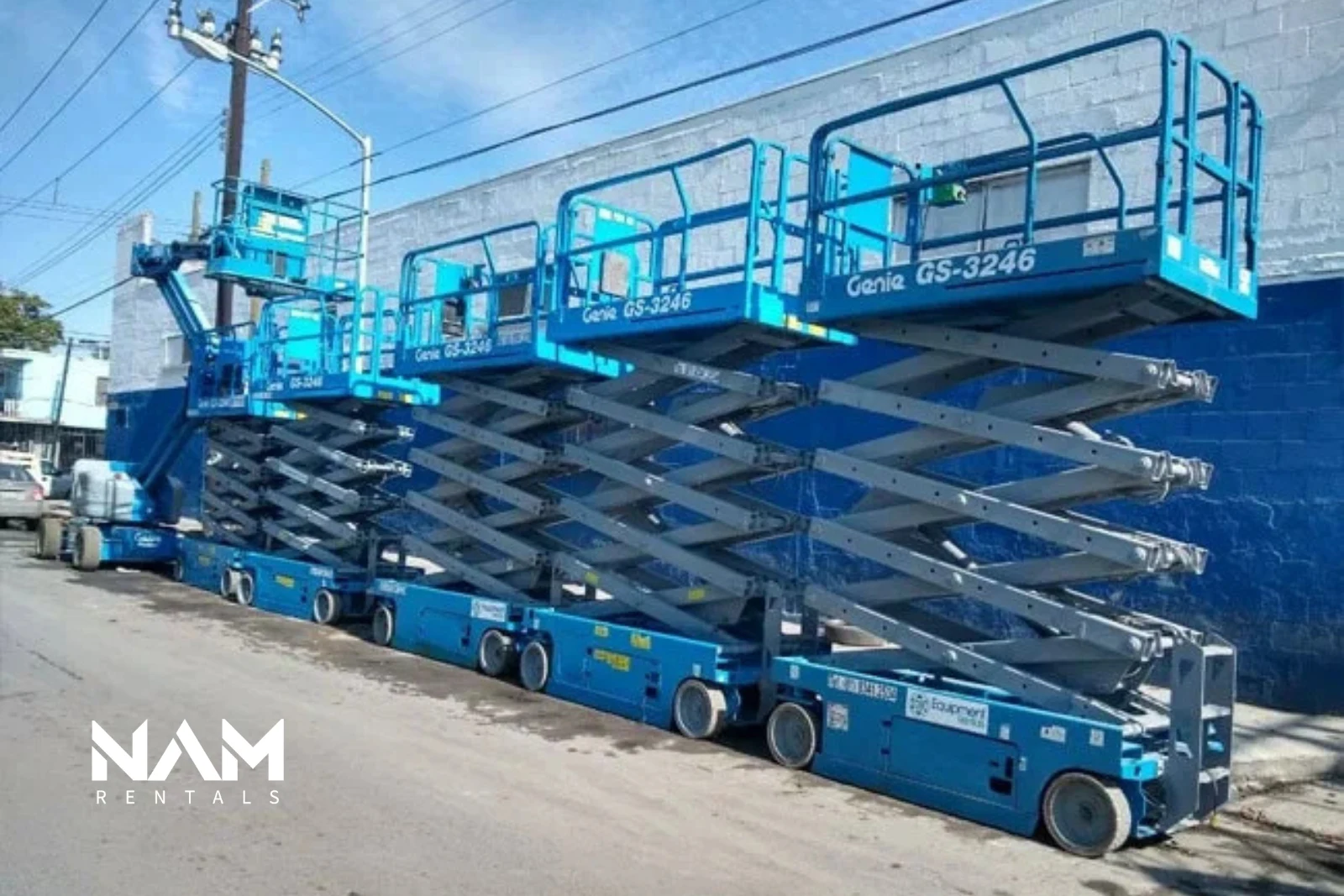
A scissor lift is a mobile elevated work platform that moves vertically using crossed support arms. These arms open and close like scissors. Scissor lifts are commonly used for:- Ceiling work
- Electrical installations
- HVAC work
- Signage
- Warehouse maintenance
- Painting
- Construction finishing
- Indoor and outdoor access work
What Is a Vertical Mast Lift?
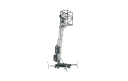
A vertical mast lift is a compact lift designed to raise one worker straight up. Some models also include a small outreach feature, but the main purpose is vertical access in tight spaces. Vertical mast lifts are often used for:- Facility maintenance
- Electrical repairs
- Light installation work
- Ceiling tile replacement
- Indoor inspections
- Warehouse aisle work
- Retail maintenance
- One-person access jobs
- Tight-space construction tasks
Scissor Lift vs Vertical Mast Lift: The Main Difference
A scissor lift is better when you need more platform space, more capacity, or more room for tools and materials. A vertical mast lift is better when you need compact access, lighter weight, and easier movement through tight areas. The choice depends on the job. If your team is installing overhead piping in a wide-open warehouse, a scissor lift may be the better rental. If one technician is changing lights in a retail store, a vertical mast lift may be easier, faster, and more cost-effective. That is why contractors should not only ask, “How high do I need to go?” They should also ask:- How much space do I have?
- What floor type am I working on?
- How many workers need to go up?
- Do I need to pass through doors?
- Is the job indoors or outdoors?
- Do I need to carry heavy tools or materials?
- Will the lift be used in a narrow aisle?
- Is the surface sensitive or finished?
When Vertical Mast Lifts Win
1. Mast lifts win when the footprint matters
Footprint is one of the biggest reasons to choose a vertical mast lift. A scissor lift takes up more floor space. That is not a problem on open job sites. But it becomes a problem inside offices, retail stores, schools, hospitals, condos, warehouses, and finished commercial buildings. A vertical mast lift has a smaller base. This makes it easier to position in tight areas. This matters when working around:- Narrow hallways
- Doorways
- Store aisles
- Office corridors
- Mechanical rooms
- Finished interiors
- Busy facilities
- Small construction zones
2. Mast lifts win for tight access
Access is not only about height. Access also means getting the machine to the work area. A lift that has enough working height is not useful if it cannot fit through the route to the job. Vertical mast lifts are useful when the equipment needs to move through:- Standard doorways
- Hallways
- Elevators
- Warehouse aisles
- Interior paths
- Tight loading areas
3. Mast lifts win when floor limits matter
Floor load is another important factor. Some indoor spaces have floor weight limits. Finished flooring, tile, raised floors, or older building structures may not be suitable for heavier equipment. A vertical mast lift is often lighter than larger scissor lifts. That can make it a better fit for sensitive indoor environments. This matters in places like:- Office buildings
- Schools
- Retail stores
- Condo buildings
- Healthcare facilities
- Showrooms
- Warehouses with finished floors
- Commercial interiors
4. Mast lifts win for one-person jobs
Not every job needs a full platform. Many jobs only need one worker, a small set of tools, and safe vertical access. A vertical mast lift is ideal for tasks like:- Replacing lights
- Inspecting ceiling systems
- Installing small fixtures
- Checking fire alarm devices
- Repairing signs
- Performing light electrical work
- Doing maintenance in a warehouse aisle
- Accessing overhead panels
5. Mast lifts win in finished indoor spaces
Construction equipment is not only used on rough job sites. Many rentals are for completed or nearly completed buildings. At that stage, the work area may include painted walls, finished floors, glass, shelving, furniture, or customer-facing spaces. A compact mast lift can be a better fit in these environments because it is easier to control in tight areas. It can help reduce disruption in:- Retail stores
- Offices
- Hotels
- Schools
- Warehouses
- Medical buildings
- Apartment buildings
- Commercial units
When a Scissor Lift Is Still the Better Choice
Vertical mast lifts are useful, but they are not always the answer. A scissor lift may be better when the job requires:- A larger platform
- Two workers at height
- More tools or materials
- More platform capacity
- Longer overhead work
- Open working space
- Repeated movement across a larger area
Why Renting the Right Lift Matters in Ontario
Ontario job sites move fast. Contractors often deal with tight deadlines, weather changes, site restrictions, traffic, delivery schedules, and limited space. Choosing the wrong lift can create delays. A machine that is too wide may not fit through the access point. A machine that is too heavy may not be suitable for the floor. A machine that is too large may slow down a simple one-person task. That is why equipment rental Ontario customers should focus on fit, not only price. The right rental can help with:- Faster setup
- Better job site access
- Less downtime
- Safer work planning
- Better use of labour
- Fewer equipment changes
- Lower project friction
Why NAM Rentals Is a Reliable Choice
NAM Rentals is a strong option for contractors and businesses looking for construction equipment rentals in Ontario. The company supports customers who need practical equipment rental solutions without overcomplicating the process. Customers often care about four things:- Is the equipment available?
- Is the pricing reasonable?
- Can I get the right machine for the job?
- Will the rental team help me make a good choice?
- Contractors
- Builders
- Facility managers
- Property managers
- Maintenance teams
- Project managers
- Homeowners handling larger projects
Tips for Choosing Between a Scissor Lift and a Mast Lift
Before booking your rental, ask these questions:- How high do I need to work?
- Is the work indoors or outdoors?
- How wide is the access path?
- Will the lift need to pass through a doorway?
- How many people need to work from the platform?
- How much weight will be carried?
- What type of floor will the lift be used on?
- Are there floor load limits?
- Is the space finished or still under construction?
- How long will the job take?