Summary (TL;DR)
Boom lifts for HVAC rooftop work provide both height and horizontal reach, allowing technicians to access areas blocked by setbacks, parapet walls, and structural obstacles. Articulating boom lifts are ideal for complex layouts, while telescopic lifts provide longer straight reach. Safe positioning, load planning, and wind monitoring are essential for operation. NAM Rentals offers reliable boom lift rentals across Toronto and Ontario for efficient and safe HVAC rooftop access.
Introduction
HVAC rooftop work is rarely simple. Units are not always placed directly above open ground. Buildings have setbacks, parapet walls, and restricted access zones.
In these situations, scissor lifts are not enough. Vertical access alone cannot solve the problem.
This is where Boom lifts for HVAC rooftop work become essential. They provide both height and horizontal reach, allowing technicians to access difficult areas safely.
This guide explains how boom lifts help reach over setbacks and how to position them safely on real job sites in Toronto and across Ontario.
Why Boom Lifts Are Required for Rooftop HVAC Work
Rooftop HVAC systems are often installed near edges or mechanical zones that cannot be accessed from directly below.
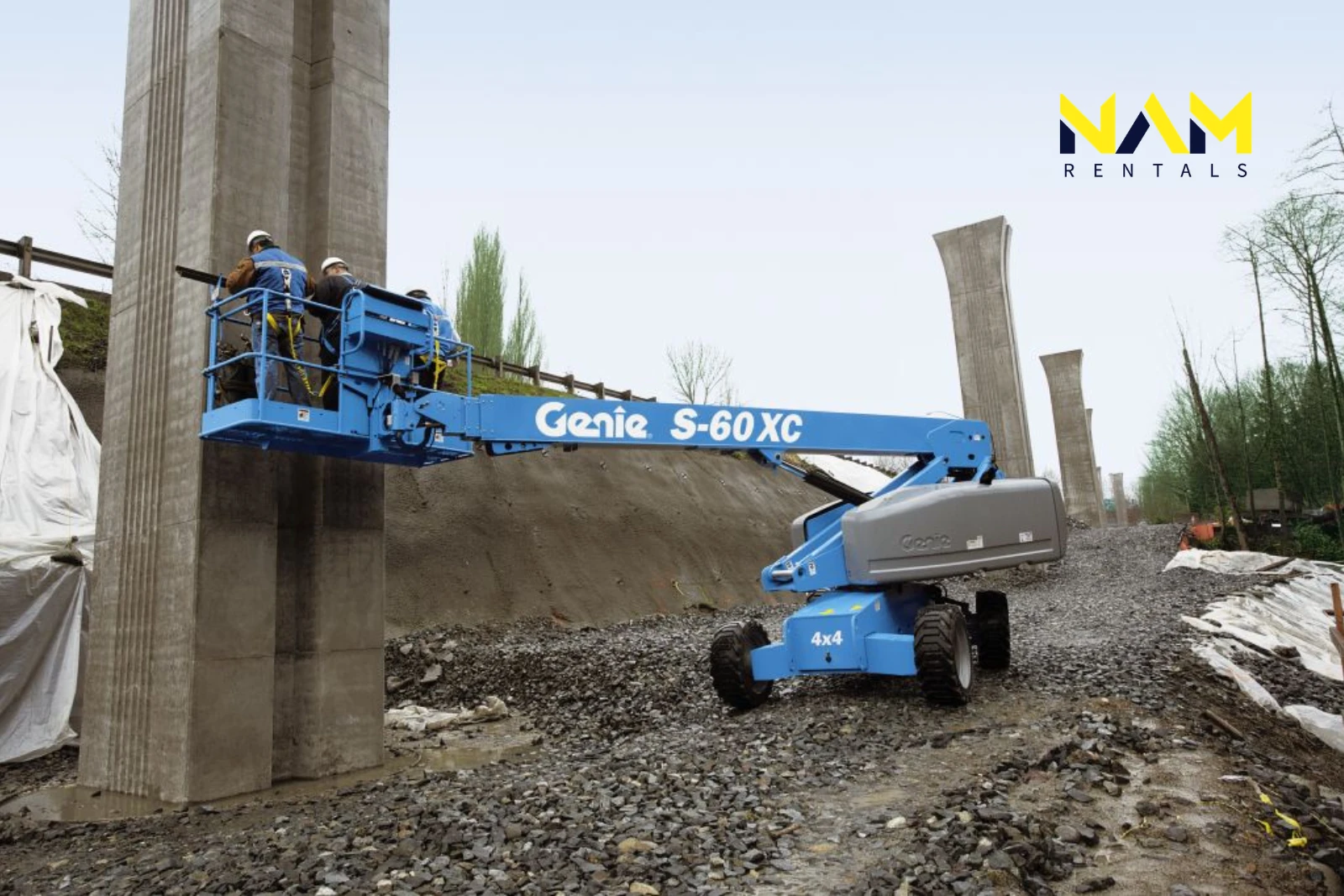
Boom lifts solve this challenge by extending the platform outward. This allows technicians to work over obstacles without moving the machine repeatedly.
Boom lifts are commonly used for:
HVAC unit installation
Rooftop maintenance
Duct connection work
Mechanical equipment servicing
They provide flexibility that scissor lifts cannot offer in offset work conditions.
Understanding Reach Over Setbacks
Setbacks are common in commercial buildings. These include:
Parapet walls
Architectural ledges
Mechanical enclosures
Roof edge safety barriers
These features block direct vertical access.
Boom lifts allow operators to position the base at ground level and extend the arm outward to reach the work area.
This reduces the need for unsafe positioning or manual climbing.
Types of Boom Lifts for HVAC Work
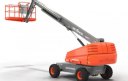
Two main types of boom lifts are used for rooftop HVAC projects.
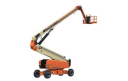
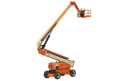
These lifts have multiple joints in the arm. They can move up, over, and around obstacles.
They are ideal for complex rooftop layouts with multiple barriers.
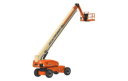
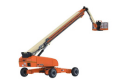
These lifts extend in a straight line. They provide longer horizontal reach and faster positioning.
They are ideal when the path to the rooftop is clear and direct.
Choosing the correct type depends on the building layout and access restrictions.
Safe Positioning of Boom Lifts
Proper positioning is critical for safe operation.
The lift must be placed on stable ground. Ground conditions should be checked before setup.
The base should be positioned to allow safe extension without overreaching.
Operators must follow manufacturer limits for reach and load capacity.
Boom lifts should never be positioned on unstable or sloped surfaces.
Safe positioning ensures stability during elevation and reduces risk.
Load and Reach Planning
Boom lift performance depends on both reach and load.
As horizontal reach increases, lifting capacity may decrease.
Operators must understand load charts before starting work.
Tools, materials, and worker weight must be included in calculations.
Ignoring load limits can lead to instability and safety shutdowns.
Wind and Height Considerations
Wind exposure increases at rooftop level.
Boom lifts are more sensitive to wind because of extended reach.
Operators must follow wind limits specified by the manufacturer.
If sway is noticeable, work should stop immediately.
Weather conditions must be monitored throughout the workday.
Common Mistakes Contractors Make
Many contractors position the lift too far from the building. This reduces effective reach and increases strain on the machine.
Some ignore ground conditions. Soft or uneven surfaces can lead to instability.
Others exceed load limits by carrying too many materials.
Another common mistake is choosing the wrong type of boom lift. Articulating lifts are needed for complex layouts, while telescopic lifts suit open access.
Avoiding these mistakes improves safety and efficiency.
Indoor vs Outdoor Considerations
Most HVAC rooftop work is outdoors. Diesel boom lifts are typically preferred because they provide more power and better performance on rough terrain.
Electric boom lifts may be used in controlled environments with stable surfaces.
Choosing the correct model ensures smooth operation and avoids delays.
Productivity Benefits of Boom Lifts
Boom lifts reduce the need for repositioning.
They allow technicians to reach multiple work points from a single setup.
This improves efficiency and reduces labor time.
For large rooftop HVAC installations, this can significantly impact project timelines.
NAM Rentals – Supporting HVAC Access Projects
NAM Rentals provides reliable boom lift rentals across Toronto and Ontario. Our fleet includes both articulating and telescopic boom lifts suited for HVAC rooftop work.
We help contractors select the correct lift based on building layout, reach requirements, and site conditions.
Our equipment is inspected before delivery to ensure safe and dependable performance.
Contractors choose NAM Rentals for consistent service, reliable equipment, and practical support.
FAQs
- Why are boom lifts used for HVAC rooftop work?
They provide both vertical height and horizontal reach for accessing difficult areas. - What are setbacks on rooftops?
They are structural features that block direct access, such as walls and ledges. - Which boom lift is better for complex rooftops?
Articulating boom lifts are better for navigating around obstacles. - Are telescopic boom lifts useful for HVAC work?
Yes. They provide long straight reach when access is clear. - Can boom lifts be used on uneven ground?
Only if the ground is stable and within safe operating limits. - Does wind affect boom lift operation?
Yes. Wind increases risk, especially at extended reach. - What is the biggest mistake in lift positioning?
Placing the lift too far from the work area. - Are diesel boom lifts better for outdoor projects?
Yes. They provide more power and handle rough terrain better. - Can electric boom lifts be used for rooftop work?
Yes, but only on stable and controlled surfaces. - Where can I rent boom lifts for HVAC projects in Ontario?
NAM Rentals provides reliable boom lift rentals across Toronto and Ontario.
Conclusion
HVAC rooftop work often involves complex access challenges. Setbacks, structural barriers, and limited staging areas make vertical lifts insufficient in many cases.
Boom lifts provide the reach and flexibility required to complete these tasks safely and efficiently.
Proper planning, correct lift selection, and safe positioning are critical for successful operation.
For contractors across Toronto and Ontario, NAM Rentals delivers dependable boom lift rentals and expert guidance to support HVAC rooftop projects with confidence and efficiency.






 Scissor Lifts
  Forklifts / Telehandlers
  Compact Equipment
  Heavy Earthmoving
  Others