Summary/TL;DR:
A trencher is usually better for long, straight, narrow utility trenches with consistent depth. A mini excavator is better for deeper utility work, tie-in pits, obstacles, changing trench depth, drainage work, and mixed job sites. Contractors should request Ontario utility locates before digging and plan trench protection where workers may enter excavations. NAM Rentals provides construction equipment rentals in Ontario and helps customers choose the right machine for utility line projects based on depth, access, soil, and job type.
Introduction
Utility line work needs the right machine.
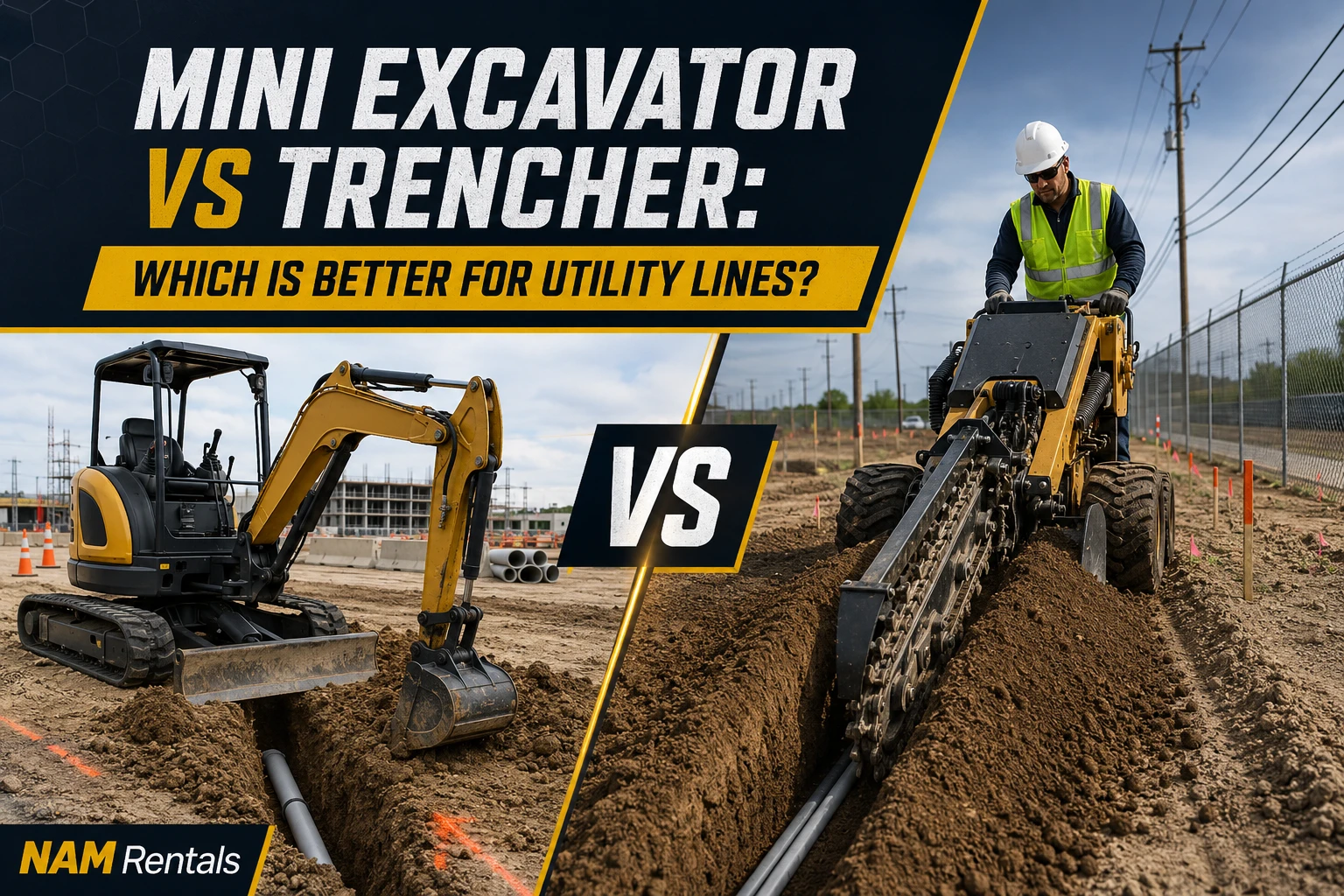
A mini excavator and a trencher both dig. But they are not the same tool.
A trencher is built to cut a narrow trench in a straight line. It is usually faster for long utility runs where the depth and width are consistent.
A mini excavator is more flexible. It digs trenches, opens pits, removes material, works around obstacles, and handles uneven or mixed job sites better.
For utility lines in Ontario, the best choice depends on the line type, trench depth, access, soil, route, and site conditions.
NAM Rentals provides construction equipment rentals in Ontario for contractors, builders, landscapers, homeowners, property managers, and project teams. If you need mini excavator rental Ontario support or help choosing the right machine for utility work, this guide gives you a clear comparison.
Quick Answer
| Best Choice | When It Makes Sense |
| Trencher | Long, straight, narrow utility trenches with consistent depth |
| Mini excavator | Mixed digging, deeper trenches, pits, obstacles, uneven routes, tight site work |
| Both machines | Large projects where the trencher cuts the line and the excavator handles pits, tie-ins, and cleanup |
Mini Excavator vs Trencher: Main Difference
A trencher is a production machine for trenching.
A mini excavator is a flexible digging machine.
That is the simplest way to compare them.
A trencher works best when the trench path is clear. It cuts a clean narrow trench for lines like irrigation, cable, drainage, or some utility installations. Ditch Witch lists trenchers for pipe and cable installation, and its RT45 ride-on model is described as suitable for digging a 4 to 5 foot trench.
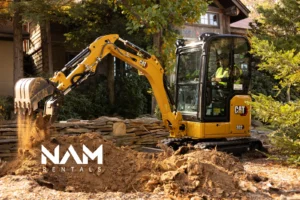
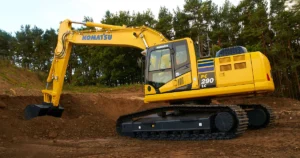
A mini excavator works better when the job needs more control. It is useful for deeper digging, trench boxes, service connections, turning around obstacles, exposing utilities, loading spoil, and digging wider areas.
Best Uses by Machine
| Job Type | Better Machine | Reason |
| Long straight cable trench | Trencher | Fast narrow cut |
| Irrigation line | Trencher | Clean shallow trench |
| Drainage trench | Mini excavator | Better depth and slope control |
| Water service line | Mini excavator | More control around depth and tie-ins |
| Gas or electrical service prep | Mini excavator | Better for controlled excavation |
| Utility pit or connection point | Mini excavator | Trencher cannot open wider pits well |
| Rocky or mixed soil | Mini excavator | More breakout force and bucket control |
| Tight backyard access | Depends | Small trencher or mini excavator may fit |
| Trench with turns | Mini excavator | Easier to adjust route |
| Open straight trench | Trencher | Better production speed |
When a Trencher Is Better
A trencher is the better option when the utility line path is simple.
Choose a trencher when:
- The trench is long and straight
- The required width is narrow
- The depth is consistent
- The route is clear
- The soil is suitable
- The job needs speed
- The trench does not need a wide pit
- The line type allows a narrow trench
For example, a trencher may be a strong choice for irrigation lines, fibre conduit, low-depth cable runs, or long straight utility paths.
The biggest benefit is speed.
A trencher cuts a narrow trench with less soil removal. That may reduce backfill time and cleanup.
When a Mini Excavator Is Better
A mini excavator is the better option when the job is not simple.
Choose a mini excavator when:
- The trench needs more depth
- The route has turns
- The site has obstacles
- The soil is hard or mixed
- You need to dig around existing utilities
- You need wider access pits
- You need to load material into a truck
- You need grading or cleanup after digging
- The job includes drainage work
- The trench depth changes across the site
Mini excavators are also useful when the trench must connect to a house, building, catch basin, foundation wall, or service point.
A trencher cuts. A mini excavator adapts.
That flexibility matters on Ontario job sites.
Dig Depth Comparison
| Machine Type | Typical Strength | Practical Limitation |
| Walk-behind trencher | Fast shallow trenching | Limited depth and power |
| Ride-on trencher | Faster deeper trenching | Best for clear trench routes |
| Mini excavator | More reach and flexibility | Slower on long straight narrow runs |
| 5-ton mini excavator | Better for deeper utility work | Needs more access space |
Machine specs vary by model.
For reference, Bobcat lists the E35 compact excavator with dig depths from 121.2 inches to 153.2 inches depending on configuration. Caterpillar lists the Cat 305 CR with a dig depth of 144.5 inches. These examples show why mini excavators are often selected when utility work needs more depth and flexibility.
Cost Comparison
The cheapest rental rate is not always the lowest project cost.
A trencher may cost less for a long straight trench because it works fast and removes less soil.
A mini excavator may cost less overall when the job includes pits, turns, changes in depth, loading, backfill work, or unknown ground conditions.
| Cost Factor | Trencher | Mini Excavator |
| Straight-line speed | Strong | Moderate |
| Soil removal | Less | More |
| Flexibility | Limited | Strong |
| Utility tie-ins | Limited | Strong |
| Cleanup support | Limited | Strong |
| Deep digging | Model dependent | Stronger |
| Obstacles | Weaker | Stronger |
| Best value | Simple trench | Mixed utility work |
Safety and Locate Requirements
Before any utility digging in Ontario, locates matter.
Ontario One Call states that you must contact Ontario One Call to get buried cables, pipes, and wires located before digging. It also says digging without a locate is risky and that you must “click before you dig.”
Ontario One Call also notes that all notified infrastructure owners must respond before digging starts. The standard timeline is 5 business days for a single civic address request and 10 business days for an advanced request.
This is important for both machines.
A trencher can damage buried utilities quickly because it cuts in a direct path. A mini excavator can also hit utilities if the work is not planned and marked properly.
Do not dig until locates are complete.
Trench Safety Matters Too
Utility trenching is not only an equipment decision.
It is also a safety decision.
The Canadian Centre for Occupational Health and Safety says trenches 1.2 metres deep or greater generally require a protective system unless the excavation is entirely in stable rock. It lists soil type, depth, water content, weather, surcharge loads, and other site operations as factors in choosing protection.
IHSA also warns that cave-ins are one of the biggest trenching hazards and says workers should never enter a trench deeper than 1.2 metres unless it is properly sloped, shored, or protected by a trench box, unless the walls are solid rock.
If workers will enter the trench, plan protection before the machine arrives.
Which Machine Should You Rent?
| Your Situation | Recommended Machine |
| Long straight shallow line | Trencher |
| Cable or irrigation trench | Trencher |
| Utility trench with tie-in pits | Mini excavator |
| Drainage work with slope control | Mini excavator |
| Unknown soil conditions | Mini excavator |
| Need to expose existing utilities | Mini excavator |
| Need narrow clean trench only | Trencher |
| Need loading, backfill, or grading | Mini excavator |
| Large utility project | Both may be useful |
Why NAM Rentals Is a Strong Choice in Ontario
NAM Rentals helps customers choose the right equipment for real site conditions.
For utility line work, that means looking at more than the machine name.
You need to check:
- Required trench depth
- Required trench width
- Line type
- Soil condition
- Site access
- Utility locates
- Spoil handling
- Tie-in points
- Backfill needs
- Rental duration
NAM Rentals is a reliable option for construction equipment rentals in Ontario because the focus is practical equipment selection, reasonable pricing, and job-focused rental support.
If you are searching for mini excavator rental Ontario, trencher rental Ontario, or contractor equipment rental Ontario support, NAM Rentals can help you avoid choosing the wrong machine.
Final Thoughts
For utility lines, do not choose equipment by price alone.
Choose by trench conditions.
A trencher is fast when the job is straight, narrow, and clear.
A mini excavator is better when the job needs control, depth, access pits, obstacle handling, or cleanup.
For many Ontario contractors, the mini excavator is the safer choice when the site has unknowns. For clean straight utility runs, a trencher may be faster.
For help choosing the right rental, contact NAM Rentals for construction equipment rentals in Ontario.
FAQs





 Scissor Lifts
  Forklifts / Telehandlers
  Compact Equipment
  Heavy Earthmoving
  Others