Summary (TL;DR)
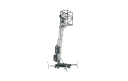
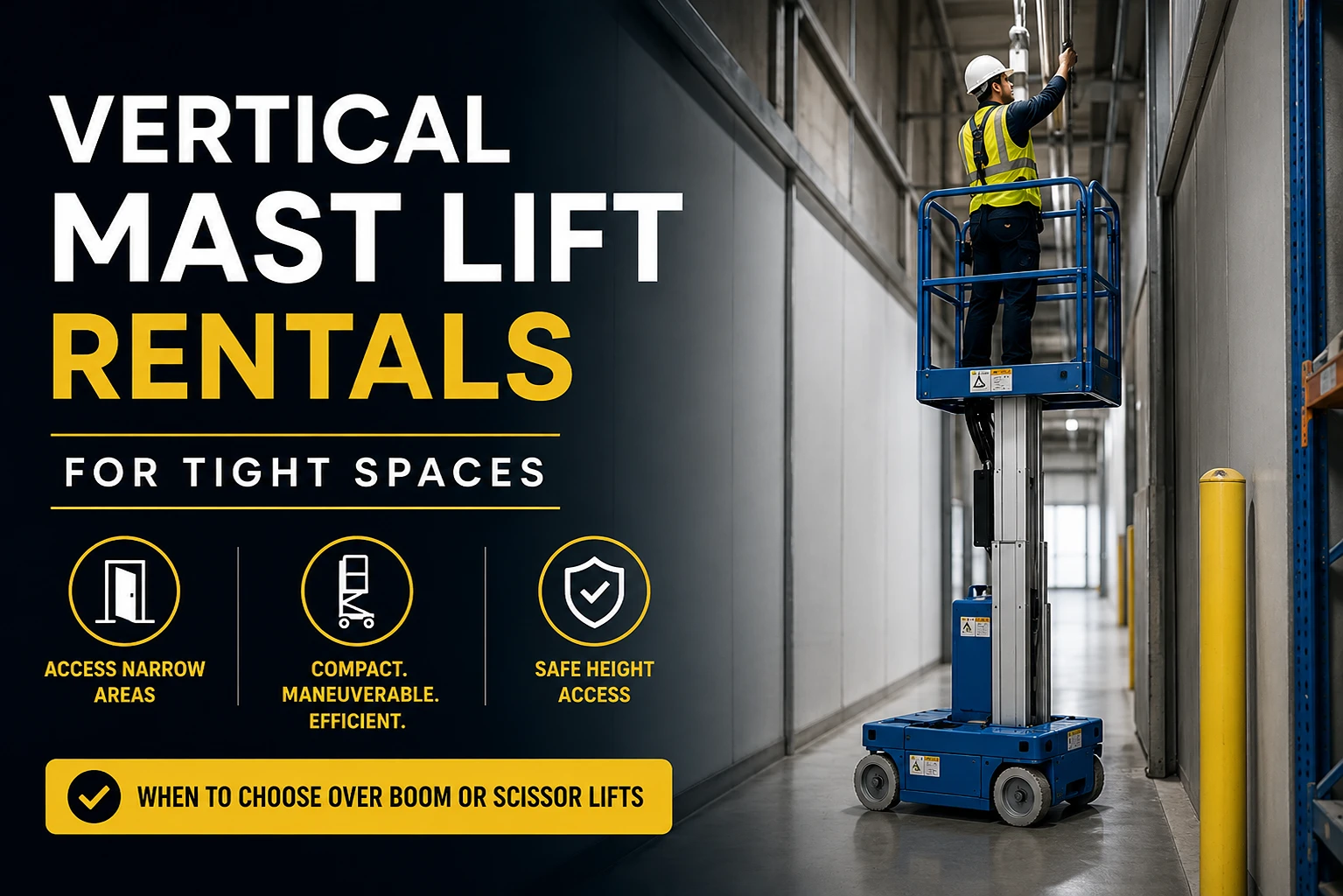
A vertical mast lift is best suited for tight indoor spaces where operators need vertical access, compact dimensions, and excellent maneuverability. Unlike scissor lifts, mast lifts occupy a much smaller footprint. Unlike boom lifts, they are designed primarily for straight vertical elevation with limited outreach. Contractors typically choose vertical mast lifts for warehouses, offices, schools, retail stores, hospitals, and maintenance projects where aisle width, doorway clearance, and floor loading are critical considerations.
Introduction
Choosing an aerial work platform is not simply about reaching the required height.
The real question is whether the machine can reach the work area safely, move efficiently through the building, and operate within the available space.
Many contractors automatically rent a scissor lift or boom lift. However, for indoor maintenance, facility management, warehouses, schools, hospitals, retail stores, and office buildings, a vertical mast lift is often the more efficient solution.
Its compact footprint, precise controls, and exceptional maneuverability allow operators to work in locations where larger aerial platforms become impractical.
NAM Rentals supplies vertical mast lift rentals throughout Ontario, helping contractors select equipment that improves productivity while minimizing unnecessary rental costs.
Vertical Mast Lift vs Scissor Lift vs Boom Lift
| Feature | Vertical Mast Lift | Scissor Lift | Boom Lift |
| Machine Width | Excellent for narrow spaces | Moderate | Largest |
| Turning Radius | Excellent | Moderate | Larger |
| Horizontal Outreach | Limited | None | Excellent |
| Vertical Access | Excellent | Excellent | Excellent |
| Indoor Applications | Excellent | Excellent | Limited in confined spaces |
| Outdoor Rough Terrain | Limited | Some models | Excellent |
| Platform Capacity | 1–2 workers | Higher | Moderate |
| Best Use | Maintenance & access | Larger work areas | Difficult reach-over obstacles |
Why Vertical Mast Lifts Excel in Tight Spaces
Not every indoor project has wide aisles or open floors.
Many maintenance projects occur between shelving systems, inside manufacturing plants, beside production equipment, or within occupied commercial buildings.
Vertical mast lifts are designed for these environments.
Their compact chassis allows operators to travel through narrow corridors while maintaining stable vertical lifting performance.
Common applications include:
- Warehouse maintenance
- Inventory management
- Electrical installation
- Fire alarm servicing
- HVAC maintenance
- Lighting replacement
- Ceiling repairs
- Sign installation
- Security camera installation
- Facility management
- Retail maintenance
- Airport terminals
Because they require significantly less floor space than many scissor lifts, operators spend less time repositioning equipment.
When a Vertical Mast Lift Is Better Than a Scissor Lift
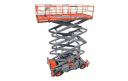
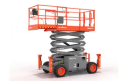
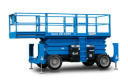
Scissor lifts remain the preferred choice when multiple workers require a large platform.
However, many indoor maintenance projects involve only one technician carrying a limited number of tools.
In these situations, a vertical mast lift provides greater efficiency.
| Project Requirement | Better Choice |
| One-person maintenance | Vertical Mast Lift |
| Narrow warehouse aisle | Vertical Mast Lift |
| Large platform needed | Scissor Lift |
| Multiple workers | Scissor Lift |
| Heavy materials | Scissor Lift |
| Frequent repositioning | Vertical Mast Lift |
| Finished indoor flooring | Vertical Mast Lift |
Manufacturers such as JLG note that vertical mast lifts are engineered for compact indoor access where maneuverability is a priority, while scissor lifts are better suited for larger work platforms and higher load capacities.
When a Boom Lift Is the Better Choice
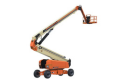
A vertical mast lift moves primarily upward.
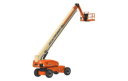
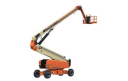
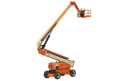
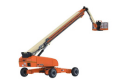
If the work requires reaching over machinery, pipe racks, shelving, conveyors, rooftops, or structural obstacles, a boom lift becomes the safer option.
Choose a boom lift when the project requires:
- Horizontal outreach
- Up-and-over access
- Outdoor construction
- Bridge maintenance
- Steel erection
- Large industrial facilities
- Difficult overhead obstacles
| Task | Best Lift |
| Ceiling light replacement | Vertical Mast Lift |
| Warehouse inspection | Vertical Mast Lift |
| HVAC above machinery | Boom Lift |
| Exterior building maintenance | Boom Lift |
| Parking garage lighting | Vertical Mast Lift |
| Sign installation over obstacles | Boom Lift |
Productivity Matters More Than Platform Size
Many contractors assume a larger machine increases productivity.
In confined spaces, the opposite is often true.
Large machines require:
- Wider turning areas
- Additional repositioning
- Larger exclusion zones
- Longer travel paths
- More setup time
A compact mast lift can often complete indoor maintenance tasks faster because it spends more time working and less time moving.
Site Selection Checklist
Before renting, answer these questions.
| Question | Why It Matters |
| How wide are the doors? | Confirms machine access |
| What is the aisle width? | Determines maneuverability |
| How many workers will be elevated? | Select platform size |
| Is horizontal outreach required? | Determines if boom lift is necessary |
| Are overhead obstacles present? | May require articulated access |
| What is the floor capacity? | Ensures structural suitability |
| Is the work indoors? | Supports electric equipment selection |
| How often will the machine be repositioned? | Compact lifts improve efficiency |
Indoor Safety Considerations
Before operating any vertical mast lift:
| Inspection Item | Verify |
| Platform gate | Closed and secure |
| Controls | Fully operational |
| Emergency lowering | Functional |
| Battery charge | Adequate for shift |
| Tires | No damage |
| Floor condition | Firm and level |
| Overhead hazards | Identified |
| Operator training | Completed |
| Manufacturer manual | Available |
| Work zone | Properly barricaded |
Ontario Regulation 261/22 requires workers using mobile elevating work platforms to receive theory and practical training, including inspection procedures, operating limitations, hazard recognition, and model-specific familiarization where necessary.
Productivity Comparison
| Factor | Vertical Mast Lift | Scissor Lift | Boom Lift |
| Tight aisles | ⭐⭐⭐⭐⭐ | ⭐⭐⭐ | ⭐⭐ |
| Doorway access | ⭐⭐⭐⭐⭐ | ⭐⭐⭐ | ⭐ |
| Indoor maneuverability | ⭐⭐⭐⭐⭐ | ⭐⭐⭐⭐ | ⭐⭐ |
| Large work platform | ⭐⭐ | ⭐⭐⭐⭐⭐ | ⭐⭐⭐ |
| Horizontal reach | ⭐ | ⭐ | ⭐⭐⭐⭐⭐ |
| One-person jobs | ⭐⭐⭐⭐⭐ | ⭐⭐⭐ | ⭐⭐⭐ |
| Facility maintenance | ⭐⭐⭐⭐⭐ | ⭐⭐⭐⭐ | ⭐⭐⭐ |
Why Contractors Choose NAM Rentals
NAM Rentals helps contractors select construction equipment rentals in Ontario based on the actual job—not simply the highest working height.
When recommending a vertical mast lift, the team considers:
| Project Factor | Why It Matters |
| Working height | Proper platform selection |
| Door width | Machine accessibility |
| Turning space | Indoor maneuverability |
| Floor loading | Building protection |
| Number of operators | Platform capacity |
| Job duration | Rental cost optimization |
| Indoor environment | Battery-powered equipment selection |
| Project schedule | Flexible rental periods |
This practical approach helps contractors improve productivity while avoiding oversized equipment and unnecessary rental costs.
Final Verdict
A vertical mast lift is not a replacement for every aerial platform.
It is the right machine when the project demands precision, compact dimensions, and exceptional maneuverability rather than maximum platform capacity or horizontal outreach.
Choose a vertical mast lift for:
- Warehouses
- Offices
- Schools
- Hospitals
- Retail stores
- Facility maintenance
- Indoor electrical work
- Lighting maintenance
- Fire protection systems
- Narrow service corridors
Choose a scissor lift when multiple workers require a larger platform.
Choose a boom lift when the work requires horizontal reach or access over obstacles.
Selecting equipment that matches the work environment improves safety, reduces downtime, and lowers overall project costs.
For vertical mast lift rentals in Ontario, contact NAM Rentals for expert guidance, flexible rental options, and reliable equipment tailored to your project.
Official Sources
FAQs






 Scissor Lifts
  Forklifts / Telehandlers
  Compact Equipment
  Heavy Earthmoving
  Others