Summary (TL;DR)
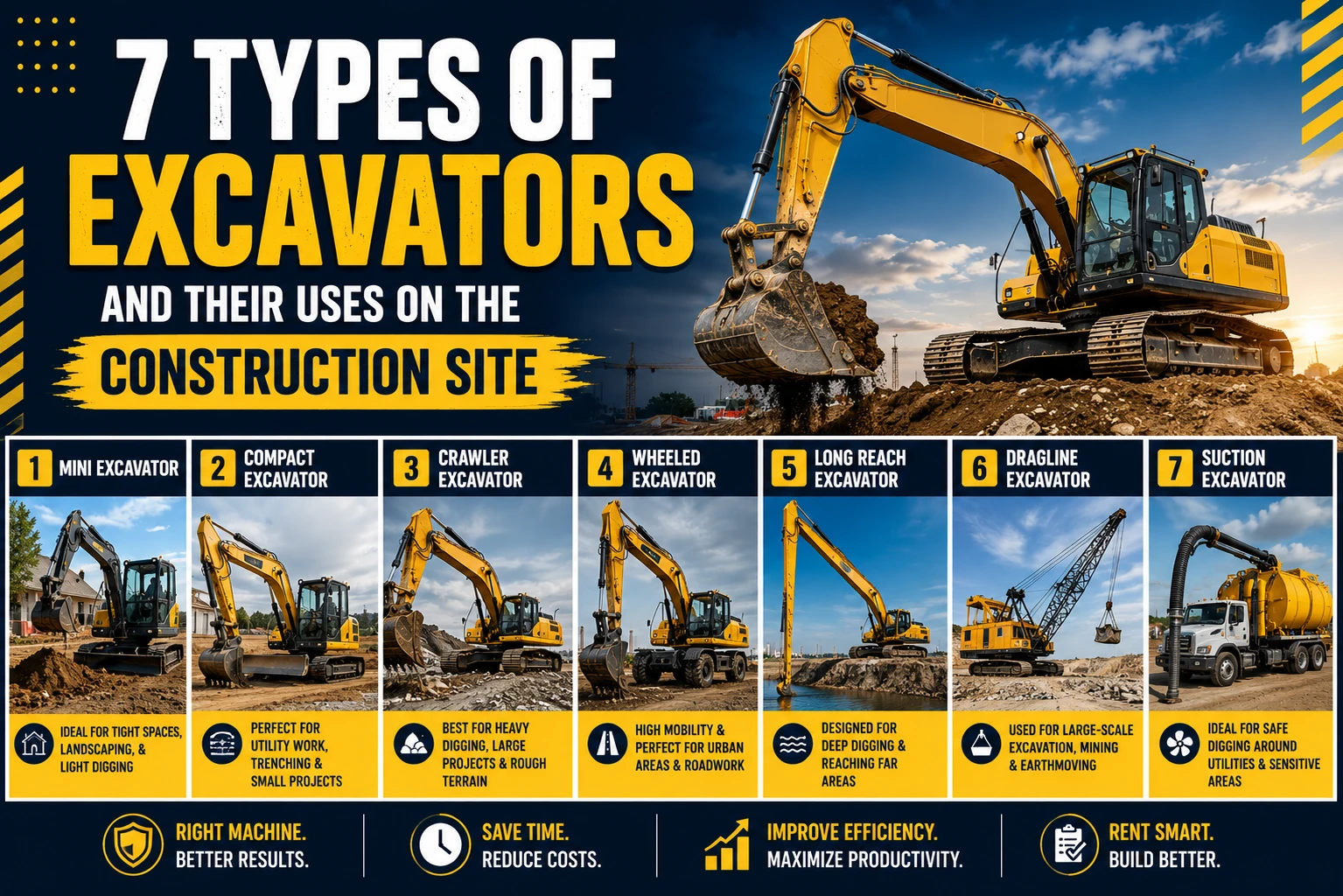
The 7 main types of excavators are crawler excavators, wheeled excavators, mini excavators, long reach excavators, dragline excavators, suction excavators, and skid steer excavation setups. Crawler excavators are best for heavy digging. Wheeled excavators are useful on paved and urban sites. Mini excavators are best for tight access and residential work. Long reach excavators are used for deep or distant work. Draglines and suction excavators are specialized machines. NAM Rentals provides construction equipment rentals in Ontario and helps contractors choose the right excavator for site access, depth, soil, and project requirements.
Introduction
Excavators are among the most important machines on a construction site.
They dig, trench, grade, lift, clear, demolish, backfill, and prepare land for the next stage of work. But not every excavator is built for the same job.
A compact excavator may be perfect for a backyard drainage trench. A crawler excavator may be better for heavy earthmoving. A wheeled excavator may suit roadwork. A long reach excavator may be required when the machine must work from a safe distance.
The right excavator depends on the site.
NAM Rentals provides construction equipment rentals in Ontario for contractors, builders, landscapers, property managers, homeowners, and project teams. If you are comparing excavator rental Ontario options, this guide will help you choose the correct machine before the job starts.
Quick Answer
The 7 common excavator types are crawler excavators, wheeled excavators, mini excavators, long reach excavators, dragline excavators, suction excavators, and skid steer excavation setups. BigRentz also identifies these major categories in its excavator guide, while major manufacturers such as Volvo and Caterpillar commonly organize excavators around crawler, compact, wheeled, and specialized machines.
Excavator Types at a Glance
| Excavator Type | Best Use | Rental Relevance |
| Crawler excavator | Heavy digging, trenching, grading | Very common |
| Wheeled excavator | Roadwork, urban jobs, paved sites | Common in municipal work |
| Mini excavator | Tight access, landscaping, residential work | Very common |
| Long reach excavator | Deep trenching, slope work, water edges | Specialized |
| Dragline excavator | Mining, canals, large civil work | Rare for local rentals |
| Suction excavator | Utility exposure, sensitive digging | Specialized |
| Skid steer excavation setup | Small digging, cleanup, tight sites | Common support machine |
1. Crawler Excavators
A crawler excavator runs on tracks instead of wheels.
This gives it strong ground contact, better stability, and better performance on soil, mud, gravel, slopes, and rough construction areas.
Crawler excavators are used for:
- Trenching
- Site excavation
- Foundation work
- Earthmoving
- Road construction
- Demolition prep
- Slope grading
- Heavy material handling
Crawler excavators are often the standard choice when the job needs serious digging power.
Volvo lists crawler excavators as part of its excavator range alongside compact and wheeled excavators, which shows how central this class is to construction and earthmoving work.
2. Wheeled Excavators
A wheeled excavator runs on tires instead of tracks.
It is useful on paved surfaces, roads, urban sites, and municipal work areas where mobility matters.
Wheeled excavators are used for:
- Road repair
- Utility work
- Urban excavation
- Curb and sidewalk work
- Paved site work
- Municipal maintenance
- Material handling
Caterpillar describes wheeled excavators as mobile, fast, powerful, and versatile for a range of daily challenges. That makes them useful where the machine needs to move across paved areas without the same transport burden as a tracked excavator.
3. Mini Excavators
Mini excavators are compact digging machines.
They are popular because they fit into smaller spaces while still offering strong digging performance for residential and light commercial projects.
Mini excavators are used for:
- Backyard excavation
- Drainage trenches
- Landscaping
- Fence and footing work
- Utility prep
- Small demolition
- Tight-access digging
- Residential grading
A mini excavator is often the best rental choice when access is limited.
For many Ontario contractors and homeowners, this is the most practical excavator category because it balances size, power, and maneuverability.
4. Long Reach Excavators
A long reach excavator has an extended boom and arm.
It is designed for jobs where the operator needs to reach farther than a standard excavator allows.
Long reach excavators are used for:
- Deep trenching
- Ditch cleaning
- Slope work
- Pond and shoreline work
- Canal work
- Demolition from distance
- Wetland or water-edge work
Caterpillar describes long reach excavators as machines built for specialized work that requires extended reach and stability, including dredging, slope work, deep trenching, port maintenance, and wetland restoration.
A long reach machine is not usually the first choice for tight sites. It is selected when distance, reach, or safety positioning matters more than compact movement.
5. Dragline Excavators
A dragline excavator is a large machine used for major excavation.
It uses a bucket, hoist rope, and dragline system to remove material from large areas.
Dragline excavators are used for:
- Mining
- Canal excavation
- Large civil projects
- Deep material removal
- Bulk earthmoving
- Waterway work
This is not a typical rental choice for everyday contractors.
Draglines are large, specialized, and usually reserved for major infrastructure or mining operations.
For most Ontario construction projects, a crawler excavator, mini excavator, or long reach excavator will be more relevant.
6. Suction Excavators
A suction excavator is also known as a vacuum excavator.
It removes soil using suction. Some systems also use water or air to loosen the ground.
Suction excavators are used for:
- Utility exposure
- Sensitive excavation
- Digging around buried services
- Slot trenching
- Urban utility work
- Cleanup of loose material
- Reduced-damage digging
This type is valuable when the job requires careful excavation around existing infrastructure.
It is not always the fastest choice for bulk digging, but it can be useful where damage prevention is the priority.
Before any digging in Ontario, contractors must contact Ontario One Call to locate buried cables, pipes, and wires. Ontario One Call states that digging without a locate is risky and that contacting them before digging is the law.
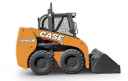
7. Skid Steer Excavation Setup
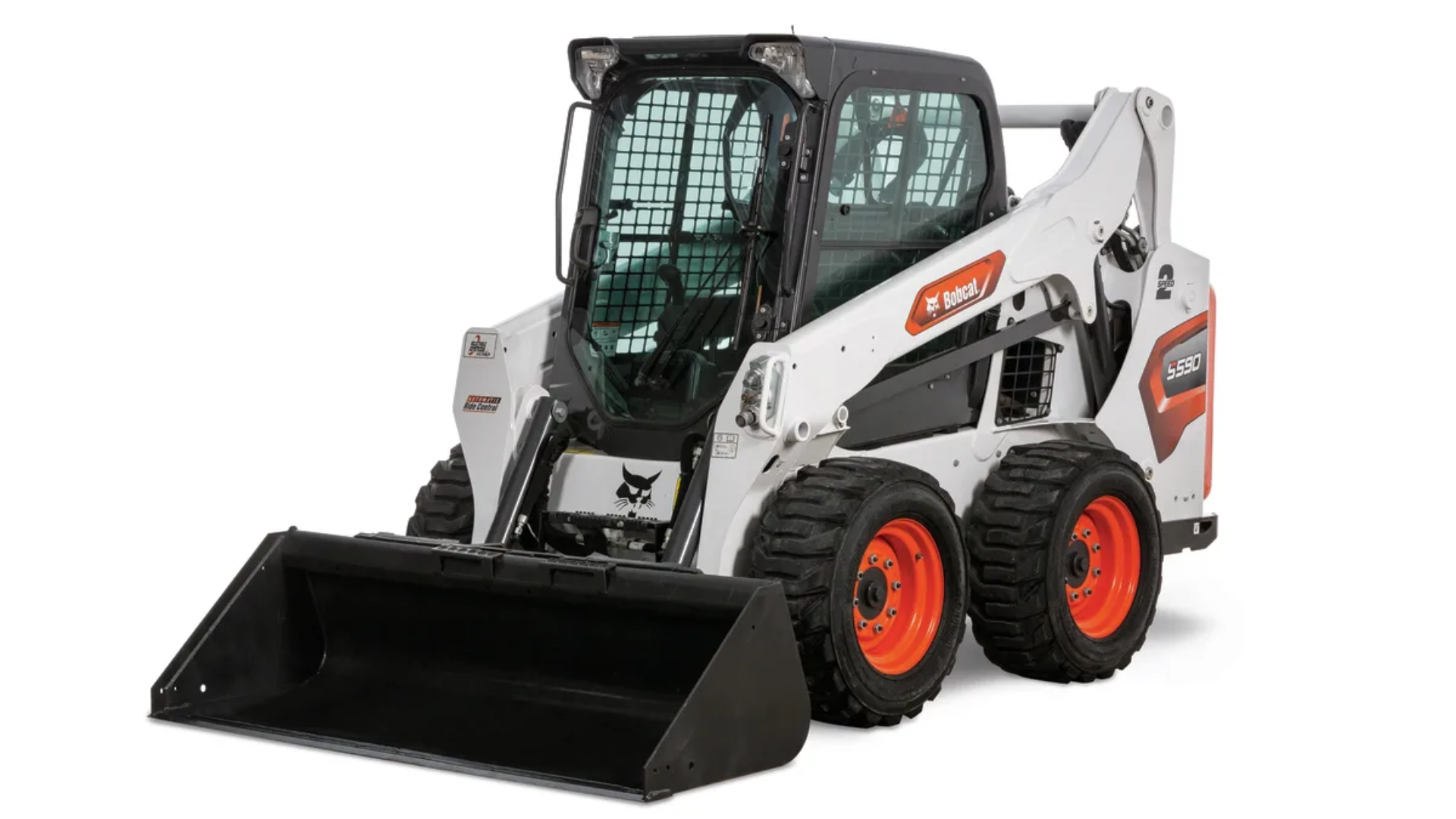
A skid steer is not a traditional excavator.
But with digging attachments, trenching tools, buckets, augers, or backhoe attachments, it becomes a useful excavation support machine.
Skid steer excavation setups are used for:
- Small digging tasks
- Cleanup
- Material movement
- Backfilling
- Light trenching
- Grading
- Tight job sites
- Landscaping
This machine is valuable because it is compact and versatile.
On many construction sites, a skid steer does not replace the excavator. It supports it.
For example, the excavator digs and the skid steer moves material, cleans up, or backfills.
Which Excavator Should You Rent?
| Project Need | Best Excavator Type |
| Residential trenching | Mini excavator |
| Tight backyard access | Mini excavator |
| Heavy foundation digging | Crawler excavator |
| Roadside utility work | Wheeled excavator |
| Deep reach from a distance | Long reach excavator |
| Utility exposure | Suction excavator |
| Large civil excavation | Dragline excavator |
| Site cleanup and support | Skid steer setup |
| General contractor work | Mini or crawler excavator |
| Municipal paved work | Wheeled excavator |
Excavator Selection Checklist
Before renting, confirm these items:
| Checkpoint | Why It Matters |
| Dig depth | Prevents renting a machine that cannot reach |
| Site access | Ensures the machine can enter the work area |
| Soil condition | Impacts power, bucket choice, and productivity |
| Ground stability | Affects safety and machine selection |
| Utility locates | Required before excavation in Ontario |
| Trench width | Determines bucket size |
| Spoil placement | Prevents unsafe soil loading near trench edges |
| Machine transport | Affects delivery planning and cost |
| Attachments | Buckets, augers, breakers, and thumbs change productivity |
| Rental duration | Helps control cost and schedule |
Safety Considerations for Excavator Work
Excavation work needs formal site planning.
Ontario guidance states that workers should not enter a trench deeper than 1.2 metres, or 47 inches, unless the walls are sound, made of solid rock, properly sloped, shored, or protected.
That means machine choice is only one part of the job.
Contractors also need to plan:
- Utility locates
- Trench protection
- Spoil pile placement
- Safe access and egress
- Ground conditions
- Worker exclusion zones
- Traffic control
- Equipment movement
- Operator visibility
- Weather and water conditions
A powerful excavator is useful only when the site is prepared for safe work.
Why NAM Rentals Is a Strong Choice in Ontario
NAM Rentals helps customers choose practical construction equipment rentals in Ontario.
For excavator projects, that means matching the machine to the task instead of choosing by size alone.
NAM Rentals can help customers think through:
- Excavator size
- Dig depth
- Site access
- Bucket type
- Attachment needs
- Delivery planning
- Rental duration
- Job type
- Budget
- Safety constraints
If you need mini excavator rental Ontario support, crawler excavator rental, or contractor equipment rental Ontario guidance, NAM Rentals can help you choose the machine that fits the site and the work.
Final Thoughts
The best excavator is not always the largest machine.
It is the machine that fits the job.
Use a mini excavator for tight access. Use a crawler excavator for serious digging. Use a wheeled excavator for paved urban work. Use a long reach excavator when distance matters. Use specialized machines only when the work demands them.
For excavator rental Ontario support, contact NAM Rentals. The team can help you choose affordable equipment rentals in Ontario that match your site, schedule, and budget.
FAQs





 Scissor Lifts
  Forklifts / Telehandlers
  Compact Equipment
  Heavy Earthmoving
  Others