Summary (TL;DR)
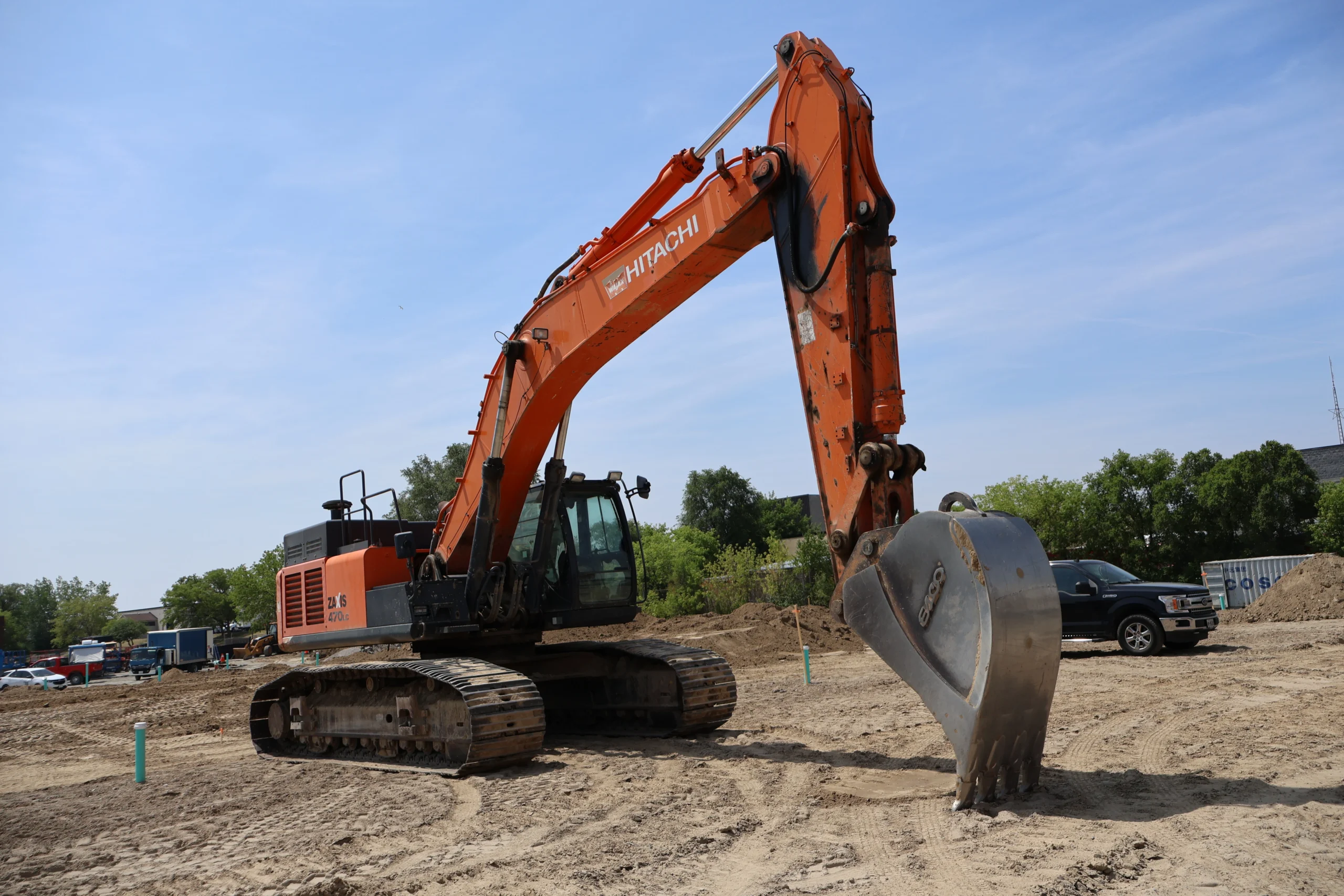
Renting an excavator in Canada is usually better for short-term projects, seasonal work, changing machine sizes, limited storage, and lower cash flow risk. Buying an excavator may make sense when a contractor uses the machine heavily, has predictable work, has maintenance support, and can manage financing, storage, and resale risk. The key decision factor is utilization. NAM Rentals provides excavator and construction equipment rentals in Ontario for contractors who need flexible equipment access without long-term ownership pressure.
Introduction
Buying an excavator feels like a strong move.
You own the machine. You control the schedule. You are not calling a rental company every time a project starts.
But ownership is not always the better financial decision.
For many Canadian contractors, renting is the smarter choice when projects change, equipment needs vary, or the machine would sit idle between jobs.
The right decision depends on four things:
- Total cost
- Maintenance responsibility
- Utilization
- Risk
NAM Rentals provides construction equipment rentals in Ontario for contractors, builders, landscapers, property managers, homeowners, and project teams. If you are comparing excavator rental with buying, use this guide before tying up capital.
Quick Answer
| Best Option | When It Makes Sense |
| Rent an excavator | Short-term jobs, seasonal work, changing machine sizes, tight cash flow, limited storage |
| Buy an excavator | Daily use, steady long-term workload, in-house maintenance, strong cash flow |
| Rent first, buy later | Growing contractors who need usage data before making a large purchase |
Renting vs Buying: Main Difference
Renting gives you access without ownership risk.
Buying gives you control but adds long-term responsibility.
United Rentals explains that the rent-versus-buy decision comes down to total cost of ownership and utilization. The more often a machine is used, the lower its cost per hour may become. The less it is used, the more expensive ownership becomes per working hour.
That is the core rule.
Do not ask, “Can I afford the purchase?”
Ask, “Will this excavator work enough hours to justify ownership?”
Cost Comparison Table
| Cost Item | Renting | Buying |
| Upfront cost | Lower | High purchase cost or financing |
| Monthly cash flow | Flexible | Loan or lease payments |
| Maintenance | Usually handled by rental provider | Owner responsibility |
| Repairs | Often rental provider responsibility unless damage is caused by renter | Owner responsibility |
| Insurance | Lower exposure | Higher ownership exposure |
| Storage | Not needed after rental | Required |
| Transport | Often arranged by rental provider | Owner must arrange |
| Resale risk | None | Owner carries resale value risk |
| Idle time | Return the machine | Machine still costs money |
| Best for | Project-based work | High-use repeat work |
The Real Ownership Cost
The purchase price is only one part of ownership.
A contractor who buys an excavator also needs to account for:
- Financing cost
- Depreciation
- Fuel
- Maintenance
- Repairs
- Insurance
- Storage
- Transport
- Attachments
- Downtime
- Resale value
Caterpillar’s owning and operating cost guidance separates ownership costs from operating costs and includes items such as depreciation, repair costs, planned maintenance, fuel, lubrication, tires, and undercarriage costs.
This matters because a machine that looks profitable on paper may become costly if maintenance, transport, or idle time is ignored.
Utilization: The Most Important Number
Utilization means how much the machine is actually working.
Not sitting.
Not parked.
Not waiting for the next job.
Volvo Construction Equipment gives an example where 40% utilization is likely better suited to renting a 20-ton excavator instead of buying one.
Use this simple guide:
| Annual Use Pattern | Better Decision |
| Few projects per year | Rent |
| Seasonal use | Rent |
| Changing machine sizes | Rent |
| Weekly use but not daily | Compare both |
| Daily use across most of the year | Buying may make sense |
| Long-term contract with steady work | Buying may make sense |
A contractor should not buy an excavator because one project needs it.
Ownership makes more sense when future work is predictable.
Maintenance Responsibility
Maintenance is where many buyers underestimate cost.
An owned excavator needs:
- Oil and filter service
- Hydraulic system checks
- Track and undercarriage care
- Greasing
- Fluid monitoring
- Battery care
- Bucket and attachment checks
- Wear part replacement
- Repairs
- Service records
When you rent, many maintenance responsibilities shift to the rental provider. When you buy, the machine becomes your responsibility.
This is important for smaller contractors.
If you do not have a mechanic, service plan, storage space, and downtime backup, ownership adds operational pressure.
Renting vs Buying Excavator by Contractor Type
| Contractor Type | Better Fit | Reason |
| Home renovation contractor | Rent | Excavator use is occasional |
| Landscaping contractor | Rent or buy | Depends on seasonal workload |
| Utility contractor | Buy or long-term rent | Regular trenching may justify steady access |
| General contractor | Rent | Project needs change often |
| Excavation contractor | Buy | High machine utilization may support ownership |
| Property manager | Rent | Short-term repair and drainage work |
| Small builder | Rent | Avoids idle machine cost |
Tax and Accounting Considerations in Canada
Buying equipment may allow capital cost allowance treatment.
The Canada Revenue Agency lists Class 38 at a 30% rate for most power-operated movable equipment bought after 1987 that is used for excavating, moving, placing, or compacting earth, rock, concrete, or asphalt.
This is useful to know, but it should not drive the decision by itself.
Tax treatment depends on your business structure, use, timing, financing, and accounting method.
Speak with an accountant before buying.
A tax deduction does not automatically make ownership cheaper than renting.
Risk Comparison Table
| Risk Area | Renting | Buying |
| Machine breakdown | Lower risk if provider supports replacement or service | Owner carries downtime risk |
| Wrong machine size | Easier to switch next rental | Capital is locked into one machine |
| Market slowdown | Return equipment | Machine still costs money |
| Maintenance surprise | Lower exposure | Owner pays |
| Resale value drop | No resale risk | Owner risk |
| Storage and theft | Limited to rental period | Ongoing risk |
| Cash flow pressure | Lower | Higher |
| Technology changes | Easier to access newer models | Owned unit may become outdated |
When Renting Is the Better Choice
Renting is often better when:
- The project is short
- The work is seasonal
- The site needs different machine sizes
- Cash flow matters
- Storage is limited
- Maintenance capacity is limited
- The machine may sit idle
- The job needs a special attachment
- You want to avoid resale risk
- You need equipment only when work is active
For many Ontario contractors, renting keeps the business flexible.
You rent the machine for the job. Then you return it when the job is done.
When Buying Is the Better Choice
Buying may make sense when:
- You use the excavator almost every week
- You have steady long-term contracts
- The same machine size fits most jobs
- You have trained operators
- You have storage
- You have maintenance support
- You can manage financing
- You can track machine hours and costs
- You plan to keep the machine for years
Buying is not wrong.
Buying is risky when the machine is underused.
Safety Risk Still Matters
Excavator ownership or rental does not remove job-site safety obligations.
Ontario’s excavation guidance states that workers should never enter a trench deeper than 1.2 metres, or 47 inches, unless the walls are sound, made of solid rock, properly sloped, shored, or protected.
This matters because excavator work often creates trenches, pits, and unstable ground.
A lower rental cost or lower ownership cost does not matter if the project creates avoidable safety risk.
Simple Decision Formula
Use this before buying:
| Question | Rent If | Buy If |
| How often will I use it? | Occasional or seasonal | High weekly use |
| Do I need different sizes? | Yes | No |
| Can I handle repairs? | No | Yes |
| Do I have storage? | No | Yes |
| Is cash flow tight? | Yes | No |
| Is the work predictable? | No | Yes |
| Do I know my annual machine hours? | No | Yes |
Why NAM Rentals Is a Smart Choice for Ontario Contractors
NAM Rentals helps contractors choose practical construction equipment rentals in Ontario.
For excavator projects, that means helping you think through:
- Machine size
- Dig depth
- Site access
- Bucket needs
- Rental duration
- Delivery planning
- Project type
- Budget
NAM Rentals is a strong choice for contractors who want reasonable pricing and equipment that fits the job.
If you are unsure whether to rent or buy, renting first gives you real usage data. That data helps you make a better future purchase decision.
Final Thoughts
Renting and buying both have a place.
Rent when the work is short-term, seasonal, or uncertain.
Buy when the machine will stay busy and your business can manage maintenance, storage, financing, and resale risk.
For many contractors, the smartest path is to rent first.
Track the hours. Track the jobs. Track the machine size you use most.
Then decide if ownership makes financial sense.
For excavator rental Ontario support, contact NAM Rentals for practical equipment guidance and reasonable construction equipment rentals in Ontario.
FAQs





 Scissor Lifts
  Forklifts / Telehandlers
  Compact Equipment
  Heavy Earthmoving
  Others