Summary (TL;DR)
Choosing the right boom lift can improve productivity, reduce downtime, and help keep your jobsite safe. Straight boom lifts provide long, direct reach and are ideal for open construction sites, while articulating boom lifts are designed to reach over and around obstacles in tighter spaces. The best choice depends on your project’s layout, working height, and access requirements. This guide compares both Straight Boom Lift vs. Articulating Boom Lift, highlights their best applications, and explains how to choose the right rental for your next project.
Introduction
Whether you’re constructing a commercial building, maintaining industrial equipment, installing signage, or completing facility repairs, working at height often requires specialized access equipment. Boom lifts are among the most versatile aerial work platforms available, allowing workers to safely reach elevated areas that ladders and scaffolding cannot.
However, not every boom lift is designed for the same job.
Many contractors choose equipment based only on platform height, only to discover that the lift cannot reach the work area efficiently. Obstacles such as buildings, steel structures, machinery, pipelines, or trees can quickly turn a straightforward task into a time-consuming challenge if the wrong lift is selected.
Understanding the differences between a straight boom lift and an articulating boom lift helps you rent equipment that matches your project requirements. The right choice can reduce machine repositioning, improve operator efficiency, minimize delays, and help keep your project on schedule.
In this guide, you’ll learn how each lift works, where each one performs best, and what factors to consider before making your rental decision.
What Is a Straight Boom Lift?
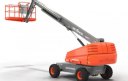
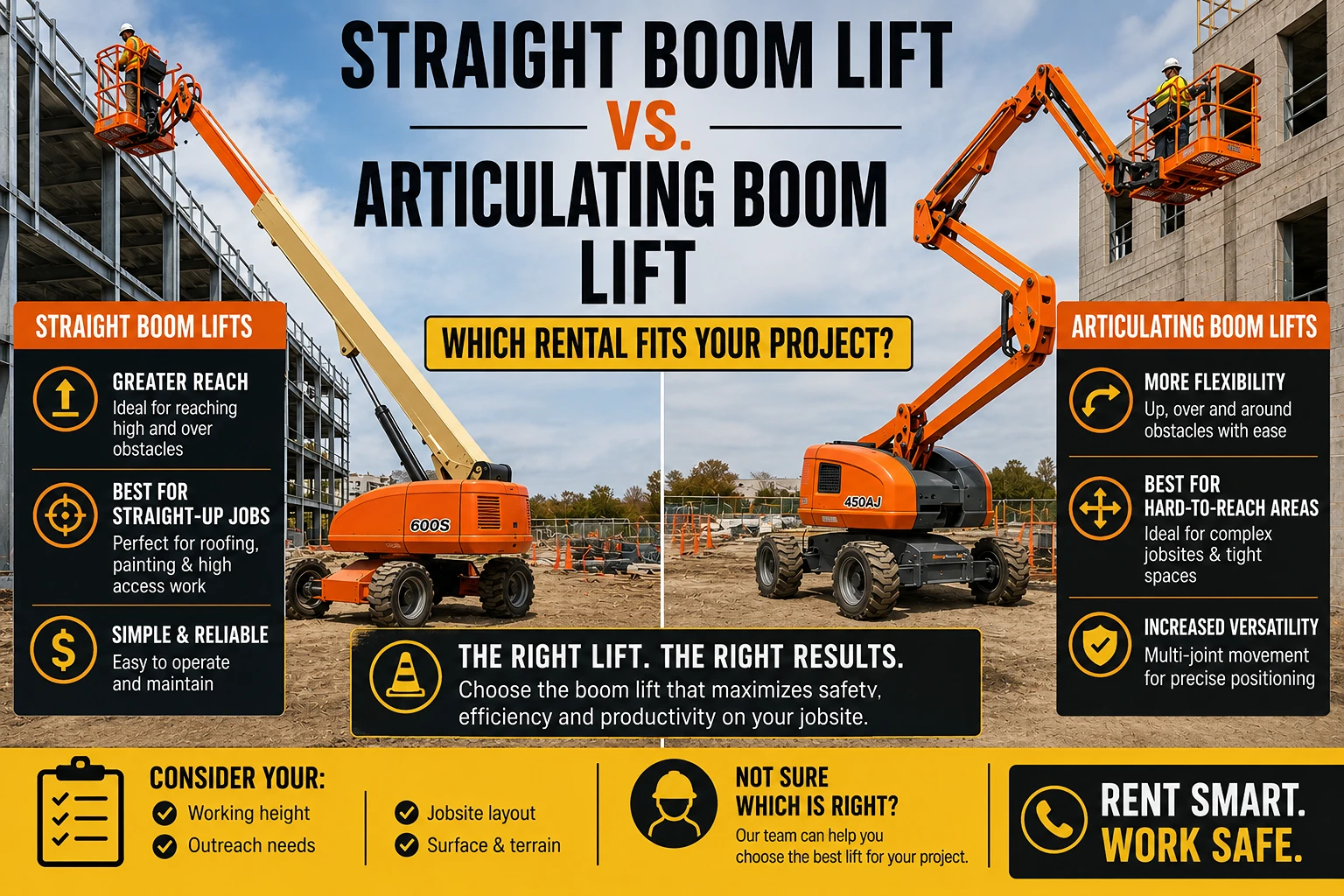
A straight boom lift, also known as a telescopic boom lift, features a boom that extends in a straight line. Instead of bending around obstacles, the boom telescopes outward to provide maximum horizontal and vertical reach. This simple design makes it one of the best aerial lifts for projects that require direct access to elevated work areas.
Because the boom extends in a straight path, operators can reach distant work locations with fewer boom movements, improving productivity on large, open jobsites.
Key Features
- Long horizontal outreach
- High working heights
- Fast, direct positioning
- Excellent performance on open jobsites
- Available in diesel-powered rough-terrain models
- Suitable for demanding outdoor applications
Advantages of a Straight Boom Lift
Maximum Reach
Straight boom lifts typically provide greater horizontal outreach than articulating models, making them ideal when workers need to access areas located far from the machine’s base.
Faster Positioning
With fewer moving sections, operators can position the platform quickly, reducing setup time and improving efficiency.
Ideal for Large Outdoor Projects
Construction sites, infrastructure projects, and industrial facilities often provide enough open space for straight boom lifts to operate efficiently.
Handles Rough Terrain
Many straight boom lifts are designed with four-wheel drive, oscillating axles, and rough-terrain tires, allowing them to perform well on uneven ground.
Limitations
Although straight boom lifts offer impressive reach, they work best when there is a clear path to the work area.
If buildings, trees, machinery, or structural steel block direct access, operators may need to reposition the machine several times to reach the desired location.
Best Applications for Straight Boom Lifts
Straight boom lifts are commonly used across several industries because they combine height with exceptional outreach.
Typical applications include:
- Commercial building construction
- Structural steel erection
- Bridge construction and maintenance
- Utility and powerline work
- Oil and gas facilities
- Wind turbine maintenance
- Stadium construction
- Infrastructure projects
- Exterior building inspections
- Large industrial sites
Whenever a project requires long-distance access without major obstacles, a straight boom lift is often the most efficient rental choice.
What Is an Articulating Boom Lift?
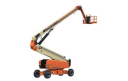
An articulating boom lift features multiple boom sections connected by hinged joints. Unlike a telescopic boom lift, the articulated design allows the boom to bend, pivot, and change direction while extending toward the work area.
This flexibility allows operators to move the platform over, around, or even below obstacles before reaching the final working position.
Because of this unique design, articulating boom lifts are commonly selected for jobsites where direct access is limited.
Key Features
- Multiple articulated boom sections
- Up-and-over reach capability
- Excellent maneuverability
- Precise platform positioning
- Compact models for confined spaces
- Electric and diesel-powered options
Advantages of an Articulating Boom Lift
Reach Around Obstacles
One of the biggest advantages of an articulating boom lift is its ability to access work areas that would be impossible to reach with a straight boom.
Instead of repositioning the machine repeatedly, operators can simply maneuver the boom around obstacles.
Better for Tight Jobsites
Many projects involve equipment, storage racks, walls, or structural elements that restrict movement.
Articulating boom lifts are designed specifically for these environments.
Precise Positioning
The multiple boom joints allow operators to make small positioning adjustments, making detailed installation and maintenance work much easier.
Indoor and Outdoor Use
Electric articulating boom lifts are widely used inside warehouses, manufacturing facilities, shopping centers, and commercial buildings because they produce zero emissions and operate quietly.
Best Applications for Articulating Boom Lifts
Articulating boom lifts are commonly rented for projects where flexibility matters more than maximum outreach.
They are ideal for:
- HVAC installation and maintenance
- Electrical work
- Plumbing projects
- Building maintenance
- Window cleaning
- Tree trimming
- Sign installation
- Warehouse maintenance
- Manufacturing facilities
- Shopping malls
- Stadium maintenance
- Property management
If your work area is surrounded by obstacles, an articulating boom lift will usually provide safer and more efficient access.
Straight Boom Lift vs. Articulating Boom Lift: What’s the Biggest Difference?
Although both machines are classified as boom lifts, their designs serve different purposes.
A straight boom lift extends directly toward the work area, making it the preferred choice for projects with clear access and long horizontal reach. In contrast, an articulating boom lift uses multiple hinged sections to navigate around obstacles, making it ideal for confined or complex jobsites.
The decision is not about which machine is better overall – it is about which one is better for your specific application.
Choosing the wrong lift can result in unnecessary repositioning, slower workflows, higher rental costs, and reduced productivity.
By understanding your site’s layout, working height, and access limitations before renting, you can select equipment that helps your crew complete the job more efficiently.
Straight Boom Lift vs. Articulating Boom Lift: Side-by-Side Comparison
While both machines are designed to lift workers safely to elevated areas, they perform differently depending on the jobsite. Understanding these differences can help you choose the right rental, improve productivity, and reduce unnecessary costs.
| Feature | Straight Boom Lift | Articulating Boom Lift |
| Boom Design | Telescopic, extends in a straight line | Multiple hinged boom sections |
| Best For | Open jobsites | Congested or confined jobsites |
| Horizontal Reach | Excellent | Good |
| Vertical Reach | Excellent | Excellent |
| Obstacle Clearance | Limited | Excellent |
| Maneuverability | Moderate | High |
| Precision Positioning | Good | Excellent |
| Indoor Use | Limited | Excellent with electric models |
| Outdoor Use | Excellent | Excellent |
| Common Industries | Construction, utilities, infrastructure | Building maintenance, HVAC, industrial maintenance |
Which Boom Lift Should You Rent?
The right choice depends on the work environment rather than simply choosing the machine with the greatest height.
- Your work area has clear, open access.
- You need maximum horizontal outreach.
- You’re working on bridges or highway projects.
- You’re constructing commercial buildings.
- You’re erecting structural steel.
- You’re performing utility or transmission line work.
- You’re working on large industrial sites.
Because these projects usually have fewer obstacles, a telescopic boom lift allows operators to reach the work area quickly with minimal repositioning.
- Buildings block direct access.
- Equipment surrounds the work area.
- You’re working inside a warehouse.
- Trees or landscaping limit access.
- HVAC units are installed behind rooftop equipment.
- Machinery prevents direct positioning.
- Precision positioning is important.
Its flexible boom design allows operators to reach places that would otherwise require multiple equipment setups.
Common Mistakes When Renting a Boom Lift
Choosing the wrong aerial lift often leads to unnecessary delays and additional rental costs. Avoid these common mistakes before placing your rental order.
Choosing Based Only on Height
Working height is important, but it isn’t the only consideration. Horizontal outreach and access are just as critical.
Ignoring Obstacles
A straight boom lift cannot easily reach over walls, buildings, or machinery. Always assess your work area before selecting equipment.
Forgetting Ground Conditions
Soft ground, gravel, slopes, or uneven terrain can affect machine performance. Make sure the lift is suitable for your jobsite conditions.
Underestimating Platform Capacity
Remember that platform capacity includes workers, tools, and materials not just personnel.
Choosing the Wrong Power Source
Electric boom lifts are better suited for indoor environments because they produce zero emissions and operate quietly. Diesel models are generally preferred for outdoor construction and rough terrain.
Best Practices for Renting a Boom Lift
A little planning before renting can save both time and money.
Measure the Working Height
Identify the highest point your crew needs to access and allow enough room to work safely.
Check Horizontal Reach
Sometimes the machine cannot be positioned directly below the work area. Measure how far the platform must extend.
Inspect the Jobsite
Look for obstacles such as walls, structural steel, equipment, trees, fences, and overhead utilities.
Consider Ground Conditions
Choose equipment that matches the terrain. Rough-terrain boom lifts perform better on uneven outdoor surfaces, while electric models are ideal for smooth indoor floors.
Plan Equipment Access
Ensure there is enough space for delivery, unloading, and maneuvering around the site.
Think About Project Duration
Whether your project lasts a day, a week, or several months, selecting the appropriate rental period can help manage costs.ct.
Safety Tips for Boom Lift Operators
Safety should always come first when working at height.
Perform a Pre-Use Inspection
Inspect tires, controls, hydraulic components, emergency systems, and guardrails before operating the lift.
Wear Proper Fall Protection
Use the required personal protective equipment (PPE) and follow your company’s fall protection procedures.
Watch for Overhead Hazards
Maintain safe clearance from power lines, cranes, roofs, and other overhead obstacles.
Stay Within Load Limits
Never exceed the platform’s rated capacity. Overloading can affect stability and safe operation.
Operate on Stable Ground
Avoid using boom lifts on unstable, muddy, or excessively sloped surfaces unless the equipment is designed for those conditions.
How NAM Rentals Helps
Every project has unique access requirements, and choosing the right boom lift involves more than selecting the machine with the greatest reach. At NAM Rentals, we help contractors, project managers, facility managers, and equipment operators choose the right equipment based on working height, horizontal outreach, terrain, and overall jobsite conditions. Our experienced team provides practical recommendations to ensure you rent equipment that matches your project’s needs.
We also offer a well-maintained fleet of boom lifts, flexible rental options for short- and long-term projects, and reliable support throughout the rental process. Whether you need help comparing straight and articulating boom lifts or coordinating equipment delivery, our team is committed to making the rental experience simple, efficient, and dependable so you can keep your project on schedule.
Conclusion
There is no one-size-fits-all solution when it comes to boom lifts. The right choice depends on your project’s working height, access requirements, terrain, and surrounding obstacles. Understanding the strengths of straight and articulating boom lifts helps you select equipment that improves efficiency, supports safe operation, and keeps your project on schedule. If you’re unsure which lift best fits your application, the team at NAM Rentals can help you make an informed rental decision.
Frequently Asked Questions






 Scissor Lifts
  Forklifts / Telehandlers
  Compact Equipment
  Heavy Earthmoving
  Others