Summary (TL;DR)
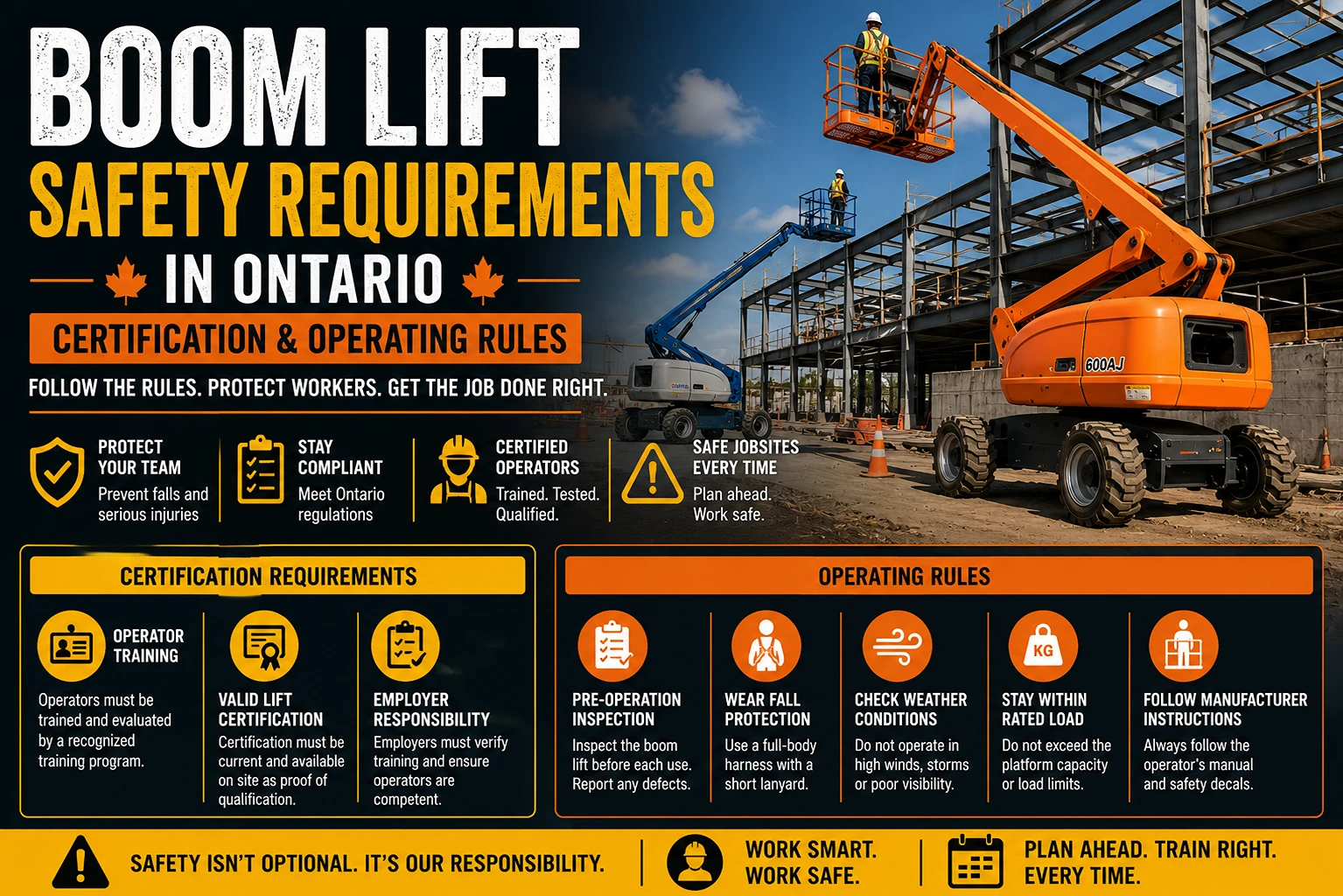
Operating a boom lift in Ontario requires proper operator training, equipment knowledge, regular inspections, and compliance with workplace safety requirements. Operators must understand how aerial work platforms function, identify jobsite hazards, and follow safe operating procedures before working at height. CSA-compliant boom lift training combines classroom learning with hands-on practical operation to help workers safely handle equipment. This guide explains Boom Lift Safety Requirements, training standards, safety rules, inspection procedures, and best practices for contractors renting and operating boom lifts in Ontario.
Introduction
Boom lifts are essential pieces of equipment used across Ontario’s construction, industrial, maintenance, utility, and facility management industries. They allow workers to safely access elevated work areas for tasks such as electrical installation, structural repairs, equipment maintenance, and building inspections.
However, working with elevated equipment requires more than simply knowing how to operate the controls. Boom lifts involve movement, height, and changing jobsite conditions, which means improper operation can create serious safety risks.
Common causes of boom lift incidents include:
- Lack of operator training
- Poor hazard assessment
- Failure to inspect equipment
- Incorrect equipment selection
- Unsafe operating practices
Many contractors understand that boom lift operators need training but may be unsure about certification requirements, what training includes, and how often certification needs to be renewed.
Understanding Ontario’s boom lift safety requirements helps employers, supervisors, and operators create safer worksites while improving productivity.
This guide covers:
Boom Lift Certification Requirements in Ontario
To operate a boom lift in Ontario, workers must complete proper operator training that includes both theoretical instruction and hands-on practical experience.
Boom lifts are classified as Mobile Elevating Work Platforms (MEWPs) or Elevating Work Platforms (EWPs), depending on classification and standards used. Training ensures operators understand equipment operation, safety requirements, limitations, and workplace hazards before using the machine.
CSA-compliant boom lift training focuses on developing the knowledge and practical skills required to operate aerial equipment safely.
A trained operator should understand:
- How boom lifts function
- Equipment limitations
- Safe operating procedures
- Jobsite hazard identification
- Emergency procedures
- Inspection requirements
- Fall protection practices
Employers are responsible for ensuring workers are trained and competent before assigning them to operate boom lifts.
Ontario Regulations for Boom Lift Certification
Boom lift operation in Ontario is regulated under workplace safety requirements established through the Occupational Health and Safety Act (OHSA) and related regulations.
For construction projects, requirements are covered under the Construction Projects Regulation (O. Reg. 213/91), while industrial workplaces may fall under the Industrial Establishments Regulation (Reg. 851).
These regulations require employers to provide workers with appropriate instruction and ensure they have the knowledge and skills needed to safely operate workplace equipment.
For boom lift operators, training should include:
- Equipment-specific instruction
- Safe operating procedures
- Workplace hazard awareness
- Manufacturer recommendations
- Emergency response procedures
Training should match the type of equipment the operator will use because different boom lift models may have different controls, operating limits, and safety features.
What Does CSA-Compliant Boom Lift Training Include?
A complete boom lift training program includes both classroom instruction and practical hands-on training.
Theory Training
The classroom portion helps operators understand the safety principles behind aerial equipment operation.
Topics typically include:
Equipment Types
Operators learn about different aerial platforms, including:
- Straight boom lifts
- Articulating boom lifts
- Telescopic boom lifts
- Other mobile elevating work platforms
Workplace Hazards
Training covers how to identify risks such as:
- Uneven ground
- Overhead obstacles
- Electrical hazards
- Weather conditions
- Nearby equipment and workers
Equipment Limitations
Operators learn about:
- Maximum platform capacity
- Operating restrictions
- Stability factors
- Safe working distances
Fall Protection Requirements
Training explains proper fall protection practices when working from elevated platforms.
Practical Hands-On Training
Hands-on training allows operators to demonstrate their ability to safely operate a boom lift in real conditions.
Practical training typically includes:
- Performing equipment inspections
- Understanding controls
- Starting and stopping procedures
- Driving and positioning the machine
- Raising and lowering the platform
- Maneuvering around obstacles
- Emergency procedures
This practical experience helps operators build confidence and understand how equipment behaves in different work environments.
How Long Is Boom Lift Certification Valid in Ontario?
Boom lift certification is commonly valid for 3-5 years, depending on the training provider and workplace requirements.
However, refresher training may be required before the certification period ends if:
- An operator demonstrates unsafe practices
- A workplace incident occurs
- New equipment is introduced
- Jobsite conditions change
- Additional skills are required
Employers should maintain records of operator training and certification to confirm workers are qualified to operate aerial equipment.
Do You Need a Driver’s License to Operate a Boom Lift in Ontario?
A standard driver’s license is generally not required to operate a boom lift on private worksites in Ontario. However, operators must receive proper training, understand the equipment they are using, and be authorized by their employer before operating an aerial work platform.
Additional licensing requirements may apply if the boom lift needs to be transported or driven on public roads. Contractors should confirm transportation requirements before moving equipment between job locations.
Proper operator training remains the most important requirement for safe boom lift operation. A trained operator understands equipment controls, operating limitations, and workplace hazards, helping reduce the risk of accidents.
Why Boom Lift Safety Matters in Ontario
Boom lifts provide efficient access to elevated work areas, but they also require careful planning and operation because of their size, height, and movement capabilities.
Unlike fixed access equipment, boom lifts can move both vertically and horizontally. This flexibility allows operators to reach difficult areas but also creates additional safety considerations.
Before operating a boom lift, workers should evaluate:
- Ground conditions
- Weather conditions
- Overhead hazards
- Nearby workers and equipment
- Platform capacity
- Machine stability
- Access limitations
A small mistake, such as exceeding the platform capacity or operating too close to an obstacle, can create serious safety risks.
Proper training, regular inspections, and jobsite planning help operators make safer decisions and complete work more efficiently.
Common Boom Lift Safety Mistakes
Even experienced operators can make mistakes if proper procedures are not followed. Identifying common issues before starting work can help prevent accidents and equipment damage.
Skipping Pre-Use Inspections
A boom lift should be inspected before every shift or whenever a different operator takes control of the machine.
Skipping inspections can allow equipment problems to go unnoticed.
Operators should check:
- Tires and wheels
- Hydraulic hoses
- Controls
- Emergency stop systems
- Warning alarms
- Guardrails and gates
- Safety devices
- Platform condition
If any issue affects safe operation, the equipment should not be used until it is repaired.
Ignoring Ground Conditions
Boom lifts require stable surfaces to operate safely.
Using equipment on soft ground, uneven terrain, steep slopes, or unstable surfaces can affect machine stability and increase the risk of tipping.
Before operation, operators should evaluate:
- Surface conditions
- Slopes and inclines
- Ground strength
- Obstructions
- Safe positioning areas
Selecting the right equipment for the jobsite conditions is an important part of safe operation.
Exceeding Platform Capacity
Every boom lift has a maximum platform capacity that includes:
- Operators
- Tools
- Materials
- Equipment
Exceeding the rated capacity can affect machine stability and create unsafe working conditions.
Operators should always review the equipment specifications before beginning work.
Poor Jobsite Planning
Many boom lift incidents happen because hazards were not identified before operation.
Before starting work, operators should check for:
- Power lines
- Overhead structures
- Buildings
- Other machinery
- Vehicle traffic
- Limited clearance areas
A proper jobsite assessment helps operators choose the safest position and operating approach.
Fall Protection Requirements for Boom Lifts in Ontario
Working from a boom lift requires proper fall protection practices because the platform can move and expose workers to fall hazards.
Operators should follow workplace safety requirements and manufacturer instructions when using fall protection equipment.
Before operating a boom lift, workers should:
- Wear appropriate fall protection equipment
- Connect to approved anchor points when required
- Keep platform gates closed
- Remain inside the platform area
- Avoid standing on guardrails or platform edges
Workers should never use unsafe methods to gain additional height, such as standing on ladders or materials inside the platform.
Proper fall protection, combined with operator training and safe work practices, helps reduce the risk of injuries when working at height.
Daily Boom Lift Inspection Checklist
A daily inspection helps identify potential issues before they become safety problems.
Operators should complete a pre-use inspection before operating the machine.
Equipment Condition
Check:
- Tires and wheels
- Hydraulic systems
- Fuel or battery levels
- Structural components
- Platform condition
- Guardrails and gates
Operating Controls
Test:
- Emergency stop controls
- Steering functions
- Boom movement
- Lift controls
- Warning alarms
- Safety switches
Jobsite Conditions
Review:
- Ground stability
- Weather conditions
- Overhead hazards
- Work area clearance
- Nearby workers
If any defect or safety concern is identified, the boom lift should be removed from service until the issue is corrected.
Safe Boom Lift Operating Rules
Following proper operating procedures helps reduce workplace risks and keeps projects moving efficiently.
Read the Operator Manual
Every boom lift model has different features, controls, and limitations. Operators should review the manufacturer’s instructions before using unfamiliar equipment.
Inspect the Work Area
Before moving the machine, identify potential hazards such as:
- Uneven surfaces
- Obstacles
- Pedestrian traffic
- Overhead hazards
- Restricted areas
Maintain Safe Clearances
Operators should maintain safe distances from:
- Power lines
- Buildings
- Other equipment
- Vehicles
- Construction materials
Avoid Unsafe Positioning
Operators should never:
- Stand on platform rails
- Use ladders inside the platform
- Disable safety systems
- Modify equipment
- Operate outside manufacturer guidelines
Safe positioning helps maintain equipment stability and protects workers.
Weather Considerations When Operating Boom Lifts
Weather conditions can significantly affect boom lift operation.
Wind Conditions
Strong winds can impact platform stability, especially when working at maximum height.
Operators should always follow manufacturer recommendations for maximum operating wind speeds.
Rain and Wet Conditions
Wet surfaces can increase slipping risks and affect visibility.
Operators should use additional caution and evaluate whether conditions are safe before operating.
Extreme Temperatures
Very hot or cold weather can affect equipment performance, including batteries, hydraulic systems, and mechanical components.
Equipment should always be inspected before use in extreme conditions.
Boom Lift Rental Safety Checklist for Contractors
Before renting a boom lift, contractors should confirm they have selected the right equipment and prepared the jobsite.
Determine Required Working Height
Identify the maximum height needed for the project and select equipment that provides enough reach.
Choose the Right Boom Lift Type
Consider:
- Best for open areas
- Provide direct horizontal reach
- Suitable for construction and infrastructure projects
- Best for complex work areas
- Reach around obstacles
- Useful for maintenance and facility work
Evaluate Jobsite Conditions
Review:
- Ground conditions
- Space limitations
- Access points
- Overhead hazards
- Work environment
Confirm Operator Training
Ensure all operators have completed required training before equipment arrives on site.
Review Equipment Specifications
Understand:
- Platform capacity
- Operating limitations
- Safety features
- Manufacturer requirements
Proper planning before rental helps reduce delays and improves jobsite safety.
Choosing the right boom lift depends on your jobsite conditions, access requirements, and safety needs, not just working height. At NAM Rentals, we help contractors and project teams select the right aerial equipment based on their project requirements, providing practical guidance, reliable rental options, and support throughout the process. Whether you need a straight boom lift for direct reach or an articulating boom lift for complex access, our team helps you find the right equipment to complete your work safely and efficiently.
Final Thoughts
Safe boom lift operation starts with proper training, careful planning, and selecting equipment that fits your project needs. By understanding Ontario’s certification requirements, following safety procedures, and completing regular inspections, contractors can create safer and more productive jobsites.
Whether you are managing a construction project, industrial maintenance task, or facility upgrade, choosing the right equipment plays an important role in completing the job efficiently. With the right guidance and support from NAM Rentals, you can find the right boom lift solution to help your team work safely and confidently.
Frequently Asked Questions (FAQs)






 Scissor Lifts
  Forklifts / Telehandlers
  Compact Equipment
  Heavy Earthmoving
  Others