Summary (TL;DR)
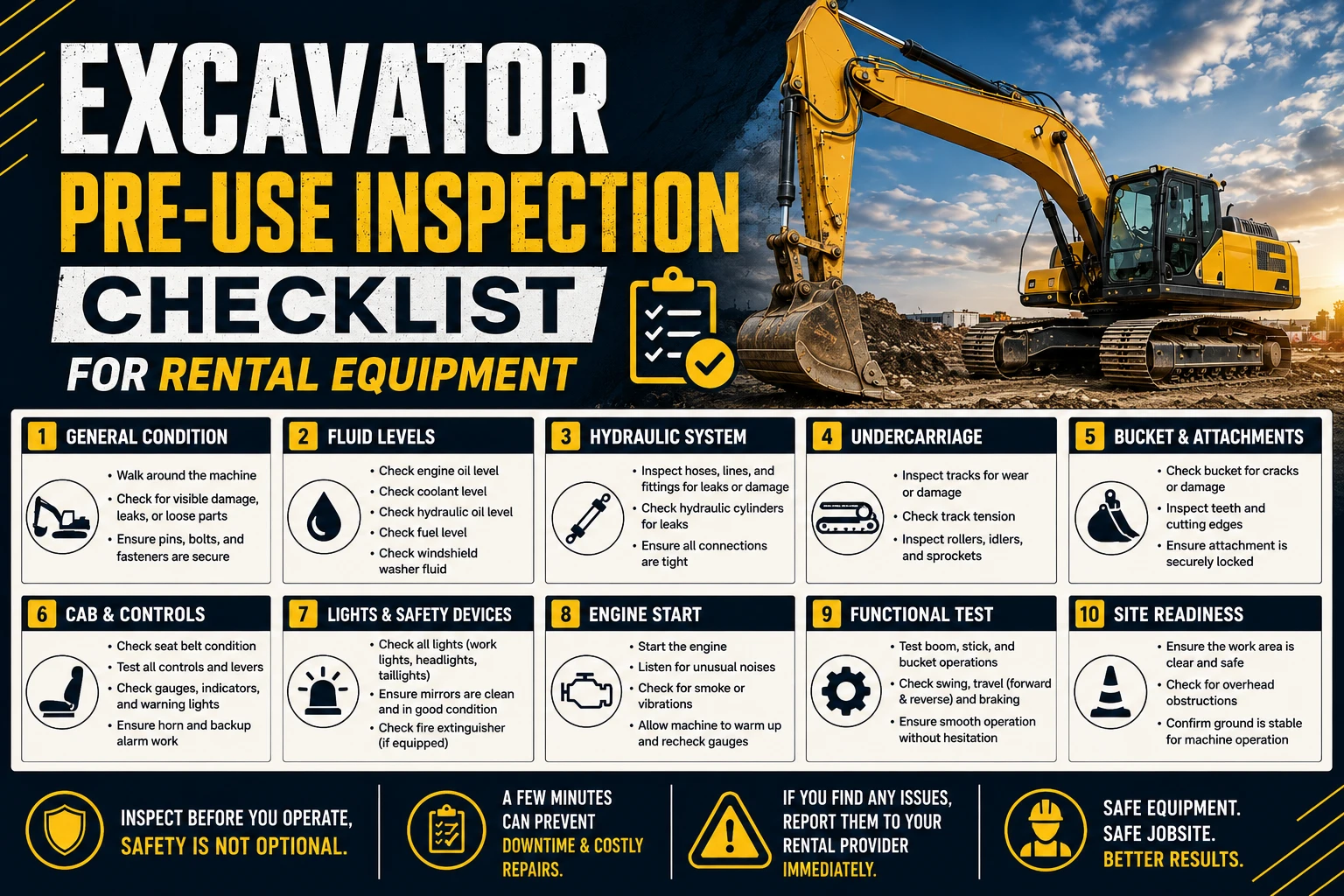
An excavator pre-use inspection checklist should include a walkaround, leak check, undercarriage inspection, bucket and attachment check, hydraulic hose review, cab and control test, safety device test, fluid level check, and photo documentation. Rental users should inspect the excavator before operation, report visible damage, and avoid using equipment with critical defects. In Ontario, excavation work also requires proper utility locates and trench safety planning. NAM Rentals helps Ontario customers rent excavators and choose equipment suited to their site, depth, access, and project needs.
Introduction
An excavator should never go straight from delivery to digging.
Before the first bucket hits the ground, the operator should complete a structured pre-use inspection. This protects the crew, the equipment, the rental record, and the project schedule.
For rental equipment, inspection also protects your budget. A clear inspection record helps confirm the machine’s condition at handover. It also helps identify defects before they become downtime, damage disputes, or safety incidents.
NAM Rentals provides construction equipment rentals in Ontario for contractors, builders, landscapers, property managers, homeowners, and project teams. If you are renting a mini excavator or larger excavator, use this checklist before operation.
Why Pre-Use Inspection Matters
A pre-use inspection is a frontline risk control.
Caterpillar advises operators to follow daily walkaround inspection procedures and make sure the machine is in good working order before use. The Red Seal Occupational Standard for heavy equipment operators also includes cleaning windows, mirrors, and cameras for visibility, securing loose items, and checking operator comfort and cab condition as part of inspection and maintenance duties.
For rental excavators, the inspection should answer three questions.
| Question | Why It Matters |
| Is the machine safe to operate? | Protects workers and the site |
| Is the machine in acceptable condition? | Helps avoid damage disputes |
| Is the machine suitable for this job? | Prevents downtime and wrong-machine delays |
Excavator Pre-Use Inspection Checklist
Use this table before starting work.
| Inspection Area | What to Check | Action if Defect Is Found |
| Ground under machine | Oil, fuel, coolant, or hydraulic leaks | Stop and report |
| Tracks or tires | Cuts, missing pads, loose bolts, poor tension, debris | Report before use |
| Undercarriage | Rollers, sprockets, idlers, guards, buildup | Clean or report damage |
| Boom and arm | Cracks, bends, damaged welds, loose pins | Stop and report |
| Bucket | Teeth, cutting edge, pins, retainers, coupler | Do not dig if insecure |
| Hydraulic hoses | Leaks, rubbing, swelling, cuts, exposed wire | Stop and report |
| Cylinders | Rod scoring, leaks, damaged seals | Report immediately |
| Engine area | Fluid levels, belts, filters, loose panels | Correct or report |
| Cab | Seat belt, mirrors, glass, camera, horn, alarms | Fix before operation |
| Controls | Travel, swing, boom, arm, bucket, emergency stop | Test at low speed |
| Lights and beacons | Work lights, warning lights, backup alarm | Report if not working |
| Documentation | Rental agreement, photos, hour meter, defects | Save before digging |
Step 1: Start With a Full Walkaround
Walk around the machine slowly.
Look for obvious damage before the excavator moves. Check the body panels, counterweight, steps, handrails, engine covers, guards, glass, mirrors, and decals.
Take photos from all four sides.
For rental equipment, this is essential. Photos create a clean condition record before the machine enters the work area.
Step 2: Check for Leaks
Look under the machine and around the engine compartment.
Check for:
| Leak Type | Possible Risk |
| Hydraulic oil | Loss of machine control or system damage |
| Engine oil | Engine wear or failure |
| Coolant | Overheating |
| Fuel | Fire risk and environmental concern |
| Grease loss | Pin, bushing, and joint wear |
Do not ignore fresh fluid on the ground.
A small hydraulic leak often becomes a larger operational problem.
Step 3: Inspect Tracks, Undercarriage, and Travel Path
The undercarriage carries the machine.
Check track pads, rollers, sprockets, idlers, tension, and debris buildup. Look for loose bolts, missing pads, cracks, and unusual wear.
Also check the route where the excavator will travel.
| Site Condition | Why It Matters |
| Soft ground | May affect stability |
| Steep slope | May exceed safe operating limits |
| Debris | May damage tracks |
| Utilities | May create strike risk |
| Tight access | May damage rental equipment |
| Overhead wires | May create serious hazard |
A rental excavator should fit the site before work begins.
Step 4: Inspect the Boom, Arm, Bucket, and Coupler
The digging structure takes heavy force.
Check the boom, stick, bucket, pins, bushings, hydraulic cylinders, and quick coupler if equipped.
Pay special attention to:
| Component | Common Issue |
| Bucket teeth | Worn, cracked, missing |
| Cutting edge | Bent or excessively worn |
| Pins and retainers | Loose or missing |
| Coupler | Not locked correctly |
| Boom and arm | Cracks or damaged welds |
| Cylinder rods | Scoring or leaks |
Never operate with an insecure bucket or attachment.
Step 5: Test Cab, Controls, and Visibility
Before digging, enter the cab and check the operator environment.
Confirm:
- Seat belt works
- Mirrors are clean and adjusted
- Windows are clean
- Camera display works if equipped
- Horn works
- Backup alarm works
- Lights work
- Gauges and warning indicators function
- Controls respond smoothly
- Emergency stop or shutoff works if equipped
Visibility is not a small detail. It is a core control for struck-by prevention, tight-site movement, and safe positioning.
Step 6: Confirm Utility Locates Before Digging
A machine inspection does not replace excavation planning.
Before digging in Ontario, buried infrastructure must be located. Ontario One Call states that anyone digging should contact them before work to locate buried pipes, cables, and wires.
Do not begin excavation because the equipment looks ready.
Begin only when the site is ready too.
Step 7: Review Excavation and Trench Hazards
Excavators often create trenches, pits, and unstable edges.
Ontario guidance states that workers should not enter a trench deeper than 1.2 metres, or 47 inches, unless the walls are sound, made of solid rock, properly sloped, shored, or protected. CCOHS also explains that trench protection depends on factors such as soil type, depth, water content, weather, and surcharge loads.
This matters before digging starts.
The operator should know:
| Excavation Planning Item | Required Before Work |
| Utility locates | Complete and reviewed |
| Soil condition | Assessed |
| Spoil pile location | Planned away from edge |
| Worker access | Safe entry and exit planned |
| Trench protection | Planned if required |
| Traffic control | Set if people or vehicles are nearby |
| Spotter needs | Confirmed for blind movement |
Rental Photo Checklist
Take photos before operation and after the job.
| Photo | Why It Helps |
| Front, rear, left, right | Shows full machine condition |
| Tracks or tires | Documents wear and damage |
| Bucket and teeth | Confirms attachment condition |
| Coupler and pins | Shows secure attachment setup |
| Boom and arm | Documents dents or cracks |
| Hydraulic hoses | Captures visible leaks or damage |
| Cab controls | Confirms condition at handover |
| Hour meter | Records usage |
| Existing scratches | Prevents damage confusion |
| Work area | Shows site condition |
Stop-Work Defects
Do not operate the excavator if you find any of these.
| Defect | Why Operation Should Stop |
| Active hydraulic leak | Loss of pressure or control risk |
| Loose bucket or coupler | Attachment separation risk |
| Cracked boom or arm | Structural failure risk |
| Failed brakes or travel control | Movement hazard |
| Broken seat belt | Operator protection issue |
| Non-working horn or alarm | Visibility and warning issue |
| Severe track damage | Travel or stability risk |
| Fuel leak | Fire and environmental risk |
| Warning light that stays on | Possible system failure |
Report defects to the rental provider before continuing.
Why NAM Rentals Is a Strong Choice in Ontario
NAM Rentals helps customers choose practical construction equipment rentals in Ontario.
For excavator rentals, that means support with:
| Rental Need | NAM Rentals Helps With |
| Machine size | Match excavator to depth and access |
| Attachment choice | Choose bucket or tool for the task |
| Site fit | Consider gates, slopes, and work area |
| Rental duration | Avoid unnecessary rental days |
| Equipment guidance | Help reduce wrong-machine risk |
| Practical support | Keep the rental process simple |
If you need excavator rental Ontario support, NAM Rentals helps you rent with more confidence and less guesswork.
Final Thoughts
An excavator pre-use inspection is not paperwork for the sake of paperwork.
It is a practical control that protects people, equipment, time, and money.
Check the machine. Check the site. Document the condition. Report defects before operation. Confirm locates before digging.
For mini excavator rental Ontario support or construction equipment rentals in Ontario, contact NAM Rentals for practical rental guidance.
FAQs


















 Scissor Lifts
  Forklifts / Telehandlers
  Compact Equipment
  Heavy Earthmoving
  Others