Summary (TL;DR)
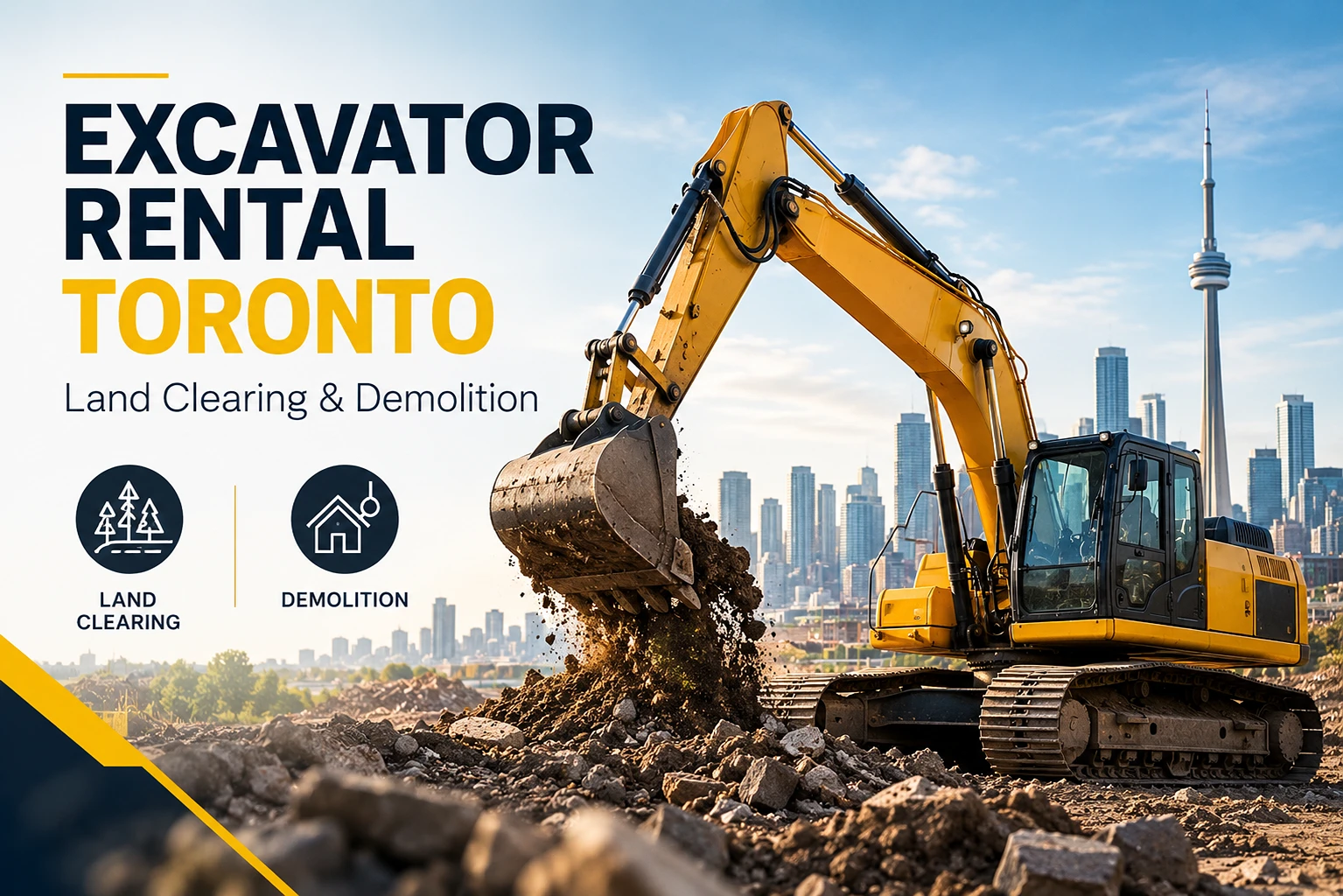
For land clearing, demolition and heavy site work, the best excavator is the smallest machine that can safely deliver the required digging depth, reach, hydraulic capability and attachment performance without restricting productivity. An excavator rental Toronto project should be planned around site access, ground conditions, material type, attachment compatibility, transport and the machine-specific operating limits. Mini excavators suit confined work and lighter clearing. Mid-size and larger excavators are generally more appropriate as production demands, reach, material weight and demolition intensity increase. For Ontario excavation work, underground services must be located before digging and excavation hazards must be controlled in accordance with applicable requirements.
Introduction
Land clearing and demolition are not simply digging jobs. They combine excavation, material handling, debris control, attachment selection, site logistics and safety planning. The wrong machine can create a chain of avoidable costs: extra rental days, repeated repositioning, slow loading cycles, attachment changes and unnecessary transportation.
A well-planned excavator rental Toronto decision starts with the work itself. Contractors should define the material to be removed, the required reach and depth, the available operating envelope, the haul or loading plan and the attachment needed before selecting machine size.
What an Excavator Can Do on Heavy Site Work
Excavators are hydraulic machines used for digging, lifting, grading, demolition and material handling. Their usefulness increases substantially when the carrier is matched with the correct work tool. Caterpillar, for example, lists buckets, hammers, grapples, thumbs, mulchers, rakes, shears, pulverizers and other tools across excavation, demolition and land-clearing applications.
| Project Activity | Typical Excavator Role | Common Work Tool |
| Land clearing | Remove brush, roots, logs and site debris | Thumb, grapple, rake or mulcher |
| Concrete demolition | Break, process and load concrete | Hydraulic hammer, pulverizer or grapple |
| Structural demolition | Dismantle and sort material | Shear, multiprocessor or demolition grapple |
| Foundation excavation | Excavate and load soil | Digging or heavy-duty bucket |
| Utility trenching | Excavate controlled-width trenches | Trenching bucket |
| Site preparation | Strip, shape, clean and rough-grade | Bucket, rake or grading attachment |
Excavator Rental Toronto: Choose by Workload, Not by Size Alone
Machine weight is useful, but it is not a complete selection method. Two excavators in a similar weight class can have different reach, bucket capacity, auxiliary hydraulic flow, tail-swing geometry and attachment compatibility. For an excavator rental Toronto project, the required production rate and work tool should be established before the machine is booked.
| Job Condition | Likely Direction | Why |
| Restricted residential or commercial access | Mini or compact excavator | Smaller operating envelope and easier positioning |
| Moderate trenching, foundations or site preparation | Mid-size excavator | Balances access, digging performance and production |
| Large clearing or sustained material movement | Larger excavator | Higher production potential and greater tool capability |
| Concrete or structural demolition | Purpose-suited excavator and demolition attachment | Attachment, guarding, reach and carrier stability become critical |
| Work near structures or property lines | Compact or reduced-tail-swing configuration where suitable | Can reduce the rear operating envelope |
Land Clearing: Where Excavator Selection Changes the Outcome
Land clearing can include brush removal, root extraction, stump work, log handling, boulder movement and site preparation. A bucket alone is not always the most productive configuration. Caterpillar describes rakes as tools for land clearing, brush piling and site preparation, while thumbs and grapples support the handling of logs, boulders and clearing debris.
For excavator rental Toronto land-clearing work, contractors should identify what will happen to the material after it is removed. If debris must be sorted, stacked or loaded, a thumb or grapple can be more important to productivity than simply moving to a larger excavator.
Demolition: The Carrier and Attachment Must Work as a System
Demolition places different demands on an excavator than ordinary trenching. The machine may need to break concrete, cut steel, sort debris and repeatedly handle irregular loads. Manufacturer guidance for demolition equipment emphasizes purpose-built tools such as hammers, shears, pulverizers, multiprocessors and demolition grapples.
For an excavator rental Toronto demolition project, confirm the carrier is approved for the intended attachment and application. Attachment weight, hydraulic requirements, working reach, guarding and machine stability must be considered together. A large bucket-equipped excavator is not automatically a demolition excavator.
Attachment Selection Matrix
| Attachment | Best Use | Selection Insight |
| Digging bucket | Excavation and bulk soil removal | Match bucket width and duty class to soil and production needs |
| Hydraulic hammer | Concrete, rock and hard material | Carrier hydraulic compatibility is essential |
| Thumb | Logs, boulders and irregular debris | Adds controlled material-handling capability |
| Grapple | Sorting and loading demolition or clearing debris | Useful when material must be separated rather than simply excavated |
| Rake | Brush piling and site preparation | Useful for clearing and separating material from soil |
| Pulverizer | Concrete demolition and processing | Purpose-built for concrete processing |
| Shear | Structural steel and scrap | Requires a suitable carrier and demolition configuration |
What Actually Drives Excavator Rental Cost?
The base rate is only one component of total project cost. An excavator rental Toronto quote should be evaluated against the number of productive hours the machine is expected to save.
| Cost Driver | How It Affects the Project |
| Machine class | Larger or specialized machines generally carry higher rental and transport costs |
| Rental duration | Weekly or monthly terms may change the effective daily cost |
| Attachment | Specialized work tools may be priced separately |
| Delivery and pickup | Transport distance and machine size can materially affect total cost |
| Fuel | Fuel consumption becomes important on long shifts and longer rentals |
| Operator and labour | A productive machine can reduce labour exposure and rental days |
| Downtime | Wrong sizing, wrong attachments or site-access problems can extend the rental |
| Damage and cleaning | Contract terms should be reviewed before work begins |
The original draft included indicative Toronto daily, weekly and monthly rental ranges. Those figures should be revalidated against current NAM Rentals pricing before publication because equipment rates change with fleet availability, configuration, term and delivery requirements. A current project quote is more defensible than presenting a fixed market price as universal.
A Better Way to Compare Rental Value
Instead of asking only, ‘What is the daily rate?’, contractors should calculate the expected total cost to complete the scope. A lower-rate machine that requires two additional days can cost more than a higher-capability machine that completes the work within the planned window.
| Question Before Booking | Decision Value |
| What is the heaviest material being handled? | Helps establish carrier and attachment requirements |
| What digging depth and reach are required? | Prevents selecting a machine that cannot complete the geometry of the work |
| What is the narrowest access point? | Prevents delivery of a machine that cannot reach the work zone |
| Will material be loaded, sorted or stockpiled? | Influences bucket, thumb or grapple selection |
| Are there overhead or underground services? | Changes work planning and hazard controls |
| How many productive days are expected? | Supports daily vs weekly vs monthly rental comparison |
When a Mini Excavator Is the Better Rental
A mini excavator rental Toronto project can be the better choice when access and precision matter more than maximum production. Typical examples include residential landscaping, drainage, smaller utility work, confined commercial sites and excavation close to existing structures.
- Limited gate, driveway or side-yard access
- Smaller excavation quantities
- Frequent repositioning in a confined site
- Lower-impact work around finished property
- Trenching, grading or landscaping where a large carrier would be excessive
When to Move Up to a Larger Excavator
A larger excavator rental Toronto configuration becomes more defensible when the project requires sustained production, heavier attachments, greater reach, deeper excavation or repeated handling of large material. The objective is not to rent the biggest machine available. It is to avoid undersizing a machine that will spend additional days performing work outside its efficient operating range.
Ontario Excavation Safety: Plan Before the Machine Arrives
Ontario’s Ministry of Labour identifies cave-ins, falls, underground services, overhead electrical hazards, unstable adjacent structures, hazardous atmospheres, water and incidents involving mobile equipment among excavation hazards. The province also states that underground services must be identified and located before digging.
For an excavator rental Toronto job involving ground disturbance, utility-locate planning should therefore be treated as a pre-mobilization requirement rather than something arranged after the machine reaches the site. Ontario One Call states that people planning to dig must submit a locate request, and contractors receiving shared locate information remain responsible for ensuring the dig follows the applicable request parameters.
Excavation Edge and Trench Controls
Ontario guidance states that heavy equipment, excavated soil or rock and construction material must be kept at least one metre from the upper edge of a trench or excavation. Machinery must not be positioned or operated in a way that could affect wall stability. The Ministry also identifies sloping, shoring and prefabricated support systems such as trench boxes as principal methods of protecting workers from cave-ins.
Where workers enter an excavation, the applicable trenching and excavation requirements must be assessed separately from the excavator operation itself. Machine selection does not replace excavation protection.
Pre-Rental Site Assessment
| Check | Confirm Before Delivery |
| Access | Gate width, turning room, overhead clearance and haul route |
| Ground | Bearing conditions, slopes, soft areas, edges and underground structures |
| Utilities | Required locate information is complete and available |
| Work zone | Swing area and interaction with workers, trucks and public traffic |
| Material | Soil, rock, concrete, timber, steel or mixed demolition debris |
| Attachment | Correct tool is available and compatible with the carrier |
| Loading plan | Truck position, stockpile location and debris flow |
| Duration | Realistic productive days plus contingency |
Pre-Operation Excavator Inspection
Before each shift, operators should follow the manufacturer’s inspection procedure and the rental provider’s requirements. A practical walk-around should include visible leaks, hoses, tracks or tires, bucket and attachment condition, pins and couplers, fluid levels, lights, mirrors or cameras, warning devices and obvious structural damage.
- Do not operate equipment with a safety-critical defect.
- Confirm the attachment is correctly secured before work.
- Keep the cab, windows, mirrors and cameras clean enough to maintain visibility.
- Report unusual noises, hydraulic behaviour, alarms or visible damage promptly.
Excavator vs Backhoe vs Skid Steer: Do You Actually Need an Excavator?
| Primary Need | Equipment to Consider | Why |
| Dedicated digging, reach and attachment work | Excavator | Purpose-built excavation geometry and broad work-tool capability |
| Digging plus front-loader work and site mobility | Backhoe loader | Combines rear excavation with front loading |
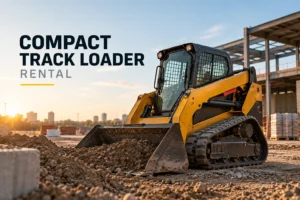
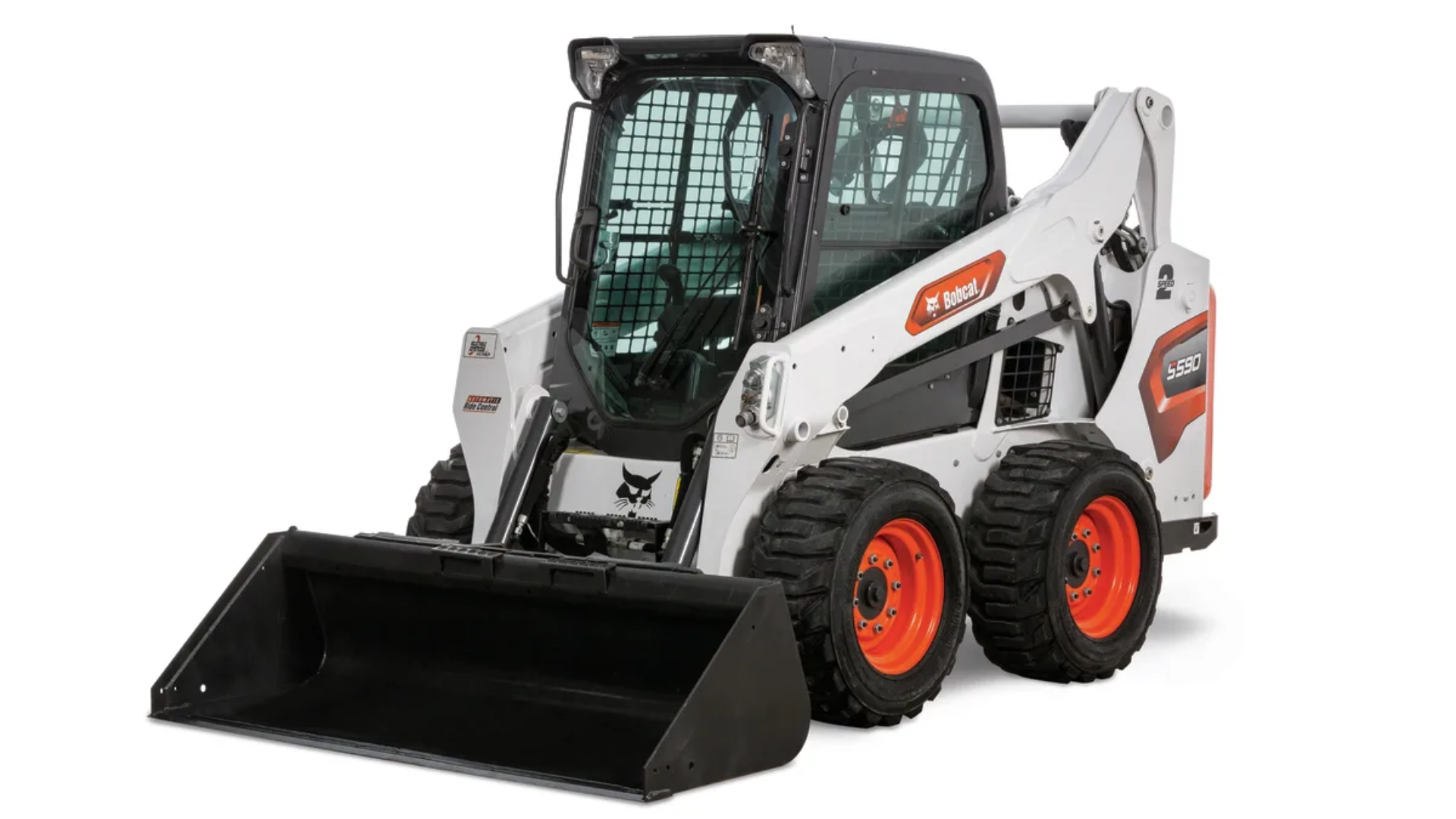
| Loading, grading and compact-site material handling | Skid steer / compact track loader | Highly maneuverable with broad attachment options |
| Confined trenching and landscaping | Mini excavator | Compact footprint with excavator digging geometry |
An excavator rental Toronto booking is most valuable when the project genuinely benefits from excavator reach, digging geometry and hydraulic work-tool capability. Where loading or grading dominates the scope, another machine may provide better utilization.
Why Rent Instead of Buy?
Rental can be practical when equipment requirements change from project to project. A contractor may need a compact excavator for one site and a larger carrier with a hammer or grapple for the next. Renting allows the equipment specification to follow the work rather than forcing every project around a single owned machine.
- Lower upfront capital requirement
- Access to different machine sizes for different projects
- Ability to source specialized attachments for temporary work
- Reduced long-term storage requirements
- Flexibility for seasonal or project-based demand
Why Contractors Choose NAM Rentals
NAM Rentals supports contractors across Ontario with practical equipment selection, flexible rental periods and jobsite-focused support. For an excavator rental Toronto requirement, the most useful conversation is not simply ‘What excavators are available?’ It is ‘What are you digging, clearing, breaking or handling, and under what site constraints?’
Matching the carrier, attachment and rental term to the actual scope can improve productivity while helping control unnecessary rental days and transport costs.
Final Takeaway
Land clearing and demolition reward precise equipment selection. Start with the material, access, reach, depth, attachment and production requirement. Then choose the excavator class that can perform that work efficiently within the site’s constraints.
For an excavator rental Toronto project, also plan utility locates, excavation controls, delivery access and material flow before the machine arrives. The most economical rental is rarely the machine with the lowest day rate. It is the machine and attachment combination that completes the work safely and within the planned schedule.
Frequently Asked Questions


 Scissor Lifts
 Forklifts / Telehandlers
 Compact Equipment
 Heavy Earthmoving
 Others