Summary (TL;DR)
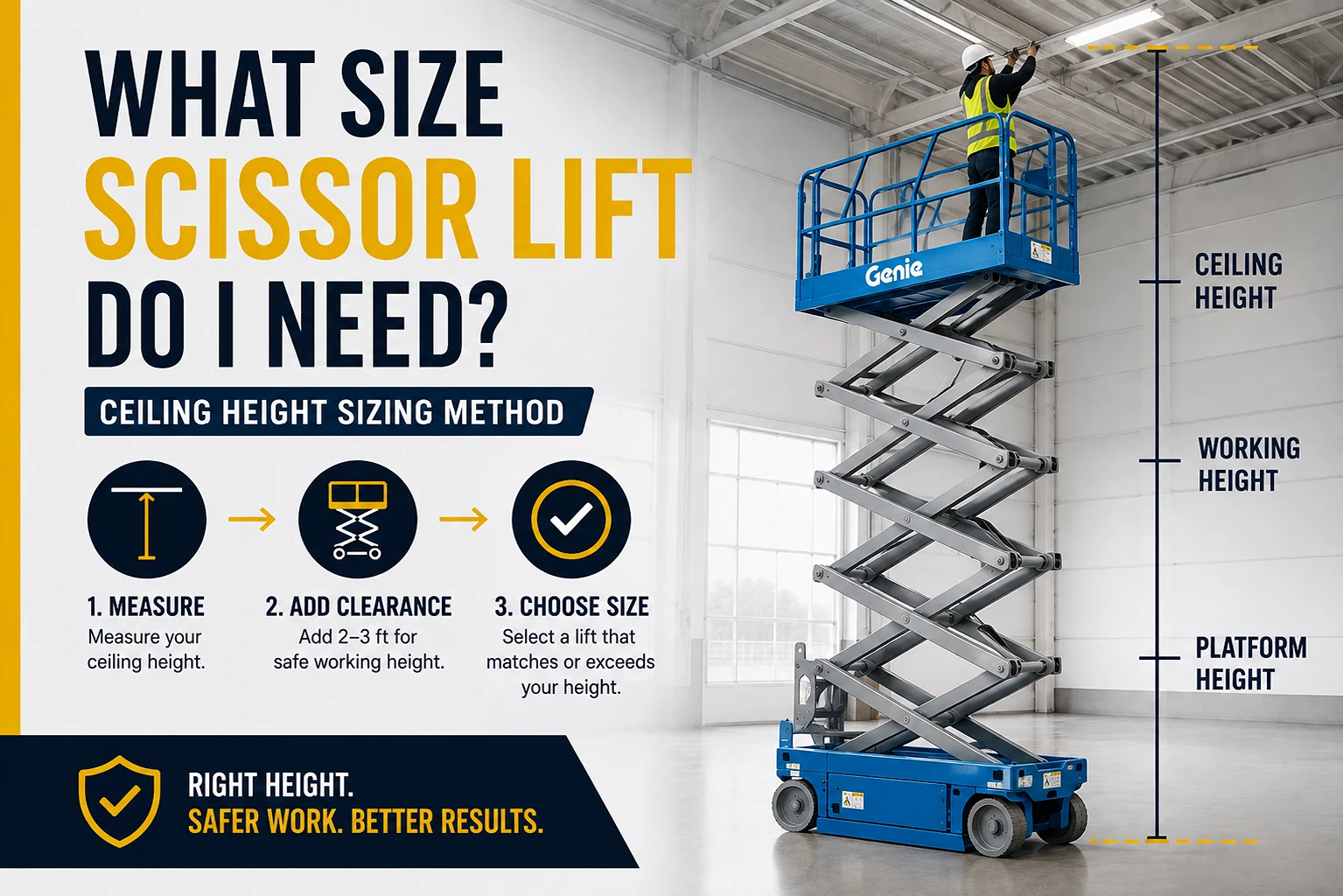
Working height equals platform height plus 6 ft of operator reach. Measure floor to the lowest obstruction, subtract that 6 ft, then leave 12 to 18 in of clearance. A 19 ft scissor lift covers ceilings near 20 ft. A 26 ft scissor lift covers ceilings near 30 ft.
You have a ceiling, a crew booked for Monday, and a rental form asking for a height nobody measured. Order short and your electrician works at full extension with no margin under the sprinkler line. Order tall and the machine stops at the loading door. Two minutes of arithmetic settles what size scissor lift do I need.
What Size Scissor Lift Do I Need? The 4-Step Ceiling Height Method
Measure floor to the lowest obstruction, subtract 6 ft of operator reach, leave 12 to 18 in of clearance, then round up to the next deck size in stock. Your ceiling height caps the options.
- Measure floor to the lowest obstruction, not the deck. Sprinkler heads, ductwork, joists and pendant fixtures hang below the structure and set the real limit.
- Subtract 6 ft. Genie rates working height as platform height plus 6 ft of operator reach, so a 19 ft deck delivers 25 ft of working height.
- Subtract 12 to 18 in of clearance. Guardrail height puts steel above the deck, and that steel has to clear the sprinkler heads.
- Round up to the next size in the yard: 19 ft, 20 ft, 26 ft or a 32 ft scissor lift.
Worked example. A Mississauga warehouse measures 24 ft to the deck, sprinklers at 22 ft. Leave 18 in and you have 20 ft 6 in of usable ceiling height. Subtract 6 ft of reach and the job needs a 14 ft 6 in platform, so a 19 ft unit covers it and fits a 36 in door.
Scissor Lift Size Chart: Platform Height vs Working Height
Platform height is the deck measurement printed on the machine and used in the model name. Working height adds the 6 ft an average operator reaches above it. Match your ceiling to the third column, then check width and capacity before you lock in a size.
| Platform Height | Working Height | Best Ceiling Range | Typical Capacity | Typical Width | Common Use |
| 19 ft | 25 ft | 18 to 22 ft | 500 lb | 30 to 32 in | Retail fit-outs, office lighting |
| 20 ft | 26 ft | 20 to 24 ft | 800 lb | 32 in | Electrical rough-in, HVAC service |
| 26 ft | 32 ft | 24 to 30 ft | 500 to 1,000 lb | 32 or 46 in | Warehouse racking, ductwork |
| 32 ft | 38 ft | 30 to 36 ft | 500 lb | 32 in | High-bay lighting, mezzanine steel |
| RT 33 to 40 ft | 39 to 46 ft | Outdoor only | 1,000 to 1,500 lb | 69 to 76 in | Site work, exterior cladding |
Every aerial work platform above is built to ANSI A92.20 and certified to CSA B354 under Ontario Regulation 213/91.
Three Things That Change the Answer
Ceiling height narrows the list to two or three machines. Floor conditions, door width and crew load decide which one works on your site.
Floor Conditions: Slab vs Rough Terrain
A slab lift refers to an electric scissor lift on non-marking solid tires, rated for firm level surfaces only. Gross machine weight runs from 2,700 lb to over 10,000 lb, so check floor loading before you roll onto a mezzanine. Outdoors on grade, book a rough terrain scissor lift.
Doorway and Aisle Width
A 32 in narrow machine clears a standard 36 in commercial doorway. A 46 in wide deck does not. Measure the tightest point on the route, including elevator cabs and warehouse racking aisles, before anyone confirms the machine.
Platform Capacity and Crew Size
Occupied platform capacity covers workers, tools and material together. A 19 ft unit carries about 500 lb, one worker and a tool bag. A Genie GS-2032 carries 800 lb. Read the capacity plate, and check the drive height rating before anyone travels elevated.
When Is a Scissor Lift the Wrong Machine?
It is wrong whenever the work sits away from the base. These machines travel straight up, so any job needing up-and-over reach past a canopy, a roof edge or racking calls for a boom lift instead. Signage, façade panels and anything you cannot park directly beneath belong on an articulating boom. Our guide to boom lift reach versus height compares both before you book.
Why Choose NAM Rentals for Your Scissor Lift Rental
Crews in Mississauga warehouses give us a ceiling number and a door width, and the right machine arrives the same day. NAM Rentals matches platform height to your obstruction line before dispatch, so nobody finds the problem when the truck is already at the gate. Our fleet runs from 19 ft electric slab units through 40 ft rough terrain models, each inspected before handover. Weekly pricing on every scissor lift rental stays transparent, and 24/7 on-site support covers Toronto and the GTA when a machine faults mid-shift. Call +1 647-525-7368.
Book the Right Size, First Time
Before you call, have these three numbers ready:
- Floor to the lowest obstruction, in feet
- Narrowest doorway or aisle on the route, in inches
- Combined weight of crew, tools and material
Call NAM Rentals at +1 647-525-7368 with your ceiling height and your narrowest doorway. We turn what size scissor lift do I need into a booked machine, quote the week, and deliver your scissor lift rental across Toronto and the GTA, often same day.
Frequently Asked Questions





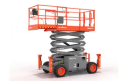
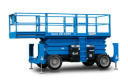
 Scissor Lifts
  Forklifts / Telehandlers
  Compact Equipment
  Heavy Earthmoving
  Others